If you are asking how big termites are, you have probably just found something small and pale in a piece of wood, or a pile of wings by the sliding door. The honest answer depends on which member of the colony you are looking at, since workers, soldiers and swarmers come in different sizes. This guide sticks to the measurements UF/IFAS publishes. If you already suspect an infestation, a termite inspection is how you confirm it.
Found wings, pellets or mud tubes already? Get a termite estimate online and keep the sample for whoever comes out.
How big is a termite?
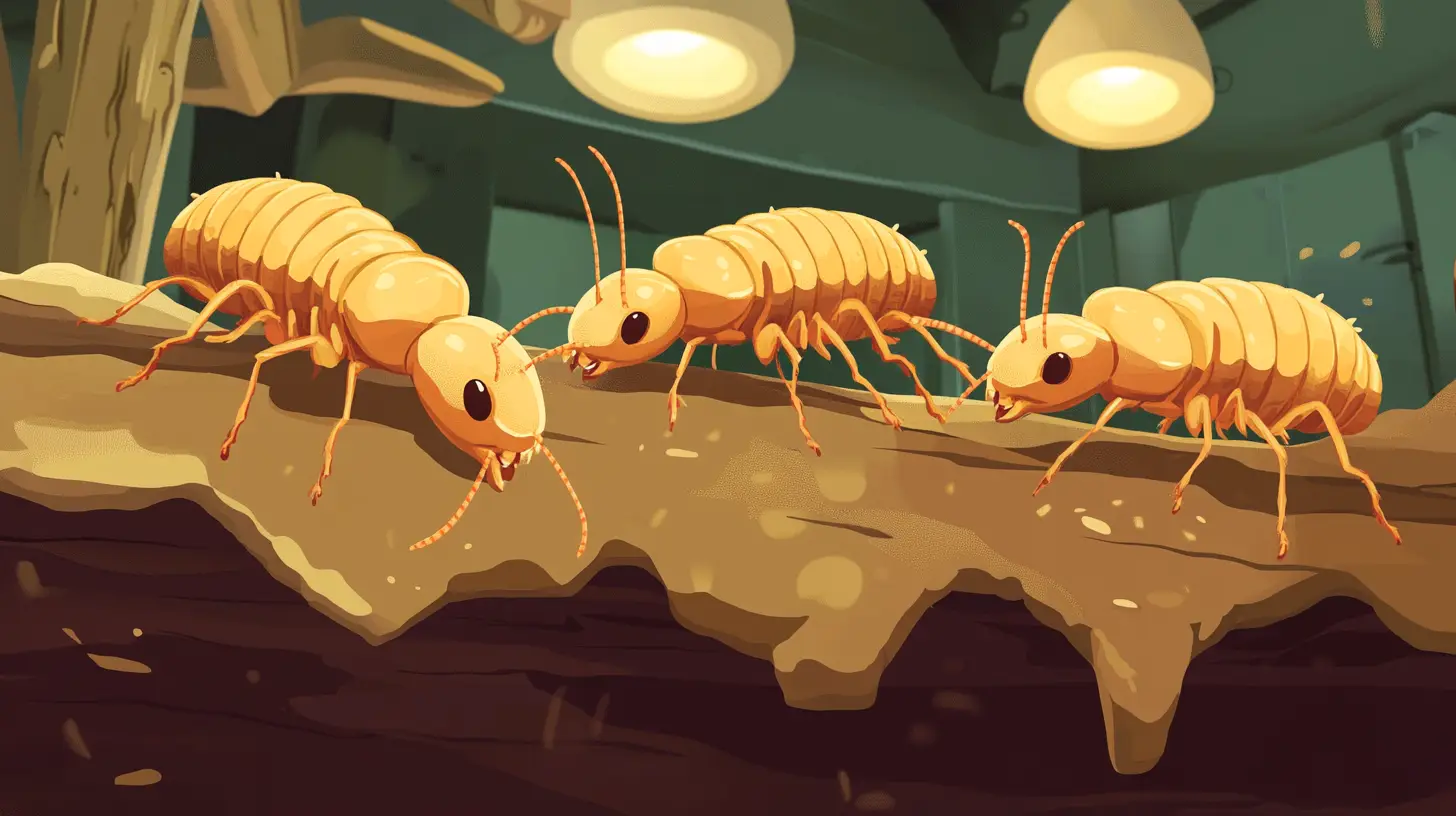
Small. UF/IFAS measures Formosan subterranean workers at about an eighth of an inch, and that species’ swarmers, wings included, at about half an inch. UF/IFAS gives the clearest caste-by-caste numbers for the Formosan subterranean termite, an invasive species, in its Formosan subterranean termite profile (revised September 2025):
- Workers: about 3 to 4 mm (0.12 to 0.16 inch), wingless, white to cream.
- Soldiers: slightly larger than workers at about 4 to 5 mm (0.16 to 0.2 inch), with a brownish-orange, teardrop-shaped head and dark curved mandibles.
- Swarmers (alates): the largest caste at about 12 to 15 mm (0.5 to 0.6 inch), with a darker body than the rest of the colony.
For the native subterranean termites found statewide, UF/IFAS lists swarmer sizes in its native subterranean termite profile (revised July 2024). Eastern subterranean termite swarmers are approximately 0.4 inch long including the wings. The two related native species run smaller, approximately 0.3 inch.
Can you see termites?
Yes, but you rarely get the chance. At 3 to 5 mm, workers and soldiers are big enough to see. They live inside wood or soil, though, and UF/IFAS notes that structural infestations by subterranean termites are usually not readily visible. Per the same UF/IFAS profile, residents often learn about an infestation when the yearly swarm happens, since hundreds to thousands of winged termites can emerge at once.
Seeing one is different from naming it. UF/IFAS’s Florida termite species distribution guide (May 2022) says that because termites are small, identification usually requires a microscope or a high-resolution camera, even for an experienced identifier.
Pro tip: Drop a few insects or wings into a zip-top bag and photograph the bag on a white sheet of paper next to a ruler. A scale in the photo does more for the identifier than a close-up of one blurry body.
How big are swarmers?
Swarmers are the winged reproductives that leave a mature colony to start new ones. After an indoor flight, UF/IFAS says most native subterranean swarmers are found dead and dried up near windows or in sinks and bathtubs, usually with their wings still attached.
Size alone can’t settle the species. The eastern subterranean swarmer at about 0.4 inch and its native relatives at about 0.3 inch are too close in size to sort by eye. UF/IFAS separates the native species by color, the shape of the plate behind the head and the size of a tiny eye spot, which takes magnification. Color helps a little: eastern subterranean swarmers are dark brown, almost black to the naked eye, while the light southern subterranean termite is yellowish brown.
If you are trying to decide between a termite and a flying ant, size is the wrong place to start. Our guide to what termites look like walks through the waist, antennae and wing checks.
Drywood or subterranean termites: what size can tell you
Drywood termites tend to be the bulkier insects. The UF/IFAS profile of Cryptotermes brevis, the species UF/IFAS calls the preeminent drywood pest in southern Florida (revised September 2020), says drywood termites have larger, more cylindrical bodies than subterranean termites, with shorter legs that make them move much more slowly.
Soldiers give another clue. Per the UF/IFAS native subterranean profile, soldiers of Florida’s subterranean termites are told apart from drywood and dampwood soldiers by their relatively smaller size and by the plate behind the head, which is narrower than the head in subterranean soldiers. In drywood soldiers that plate is as wide as the head or wider.
The signs drywood termites leave behind are measurable too:
- Kick-out holes about 1 to 2 mm across, where the termites push waste out of the wood.
- Fecal pellets that are six-sided in cross section and can be cream, red or black.
- Blistering or peeling of thin surface wood or paint over the galleries.
Cryptotermes brevis is common in coastal Southwest Florida, and on the barrier islands, from Siesta Key to Longboat Key, drywood pressure tends to dominate. In older inland Sarasota neighborhoods, subterranean termites tend to be the bigger concern.
How big is a termite colony?
One termite is tiny. The colony is the part that does the damage. UF/IFAS reports that a single native subterranean colony may contain 100,000 to 1,000,000 termites and forage up to 150 feet in search of food. Formosan subterranean colonies have been recorded foraging up to 100 meters in the field, per UF/IFAS.
They also grow slowly. UF/IFAS says a newly founded native subterranean colony may take five to ten years to mature and produce swarmers. A Cryptotermes brevis drywood colony starts producing swarmers at about five years of age and can live more than ten years. So any swarmer you find came from a mature colony. UF/IFAS adds that some native drywood and dampwood species that rarely infest buildings can fly indoors during their flight seasons, so a swarmer inside is a clue that still needs an identification.
What not to do
- Don’t judge the threat by size. A small insect can belong to a large, old colony.
- Don’t spray and toss the swarmers. The sample is what an identifier needs. UF/IFAS stresses that a termite sample should be identified to species before anyone chooses a treatment.
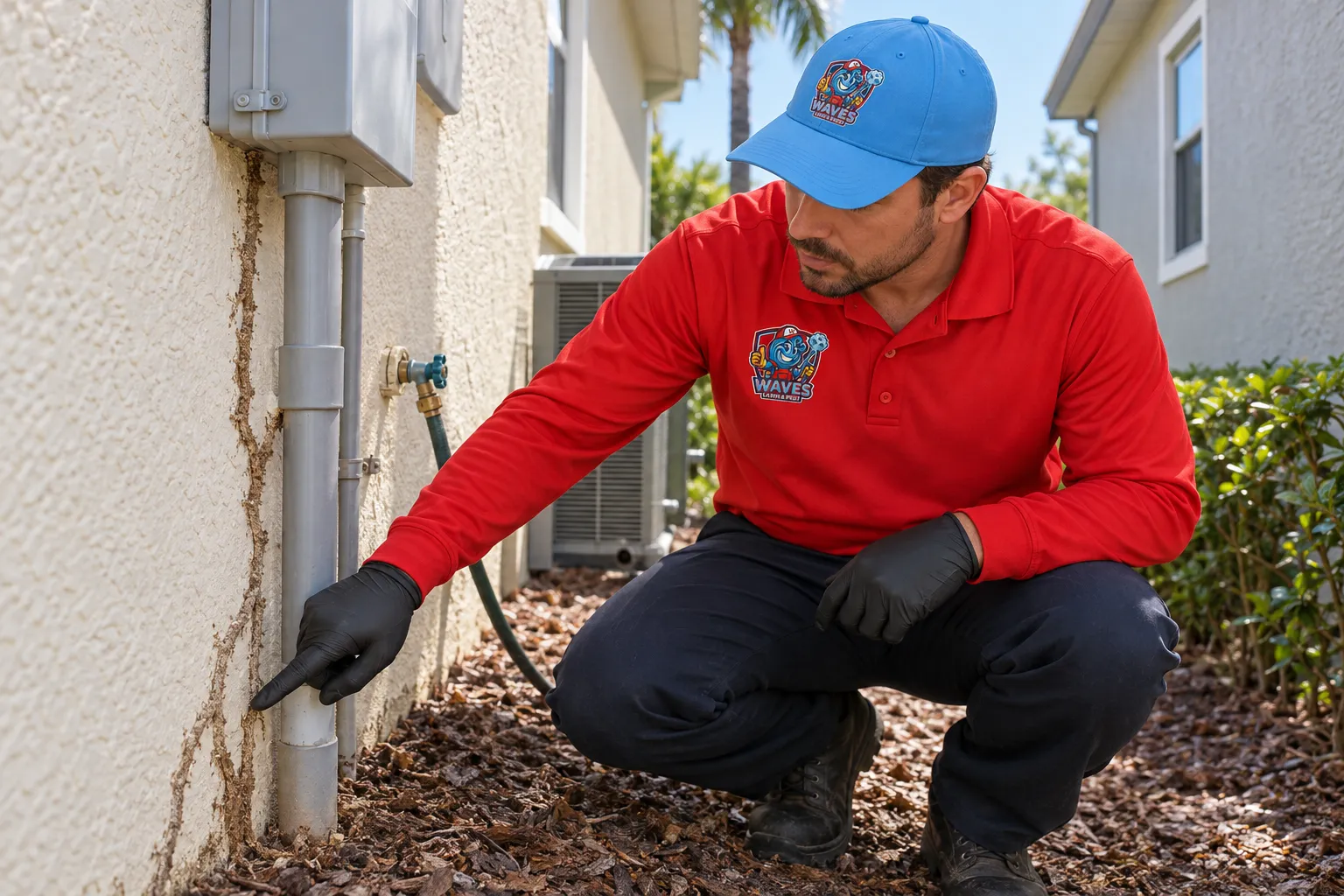
- Leave mud tubes and pellet piles in place until someone has looked at them. They show where the activity is.
- Don’t treat subterranean termites yourself. UF/IFAS says subterranean termite treatments must be applied by a licensed pest management provider.
When to call a professional
Call when you find swarmers or shed wings indoors, six-sided pellets under wood trim, mud tubes on the slab or walls, or wood with a blistered or peeling surface. UF/IFAS says badly damaged wood can look that way because termites hollow it out and leave a paper-thin surface. A sample in a sealed bag and a photo with a ruler make the identification faster. For a look at how the two main groups are handled in Manatee County, see our post on termite treatment in Bradenton.
How Waves Pest Control approaches termite identification
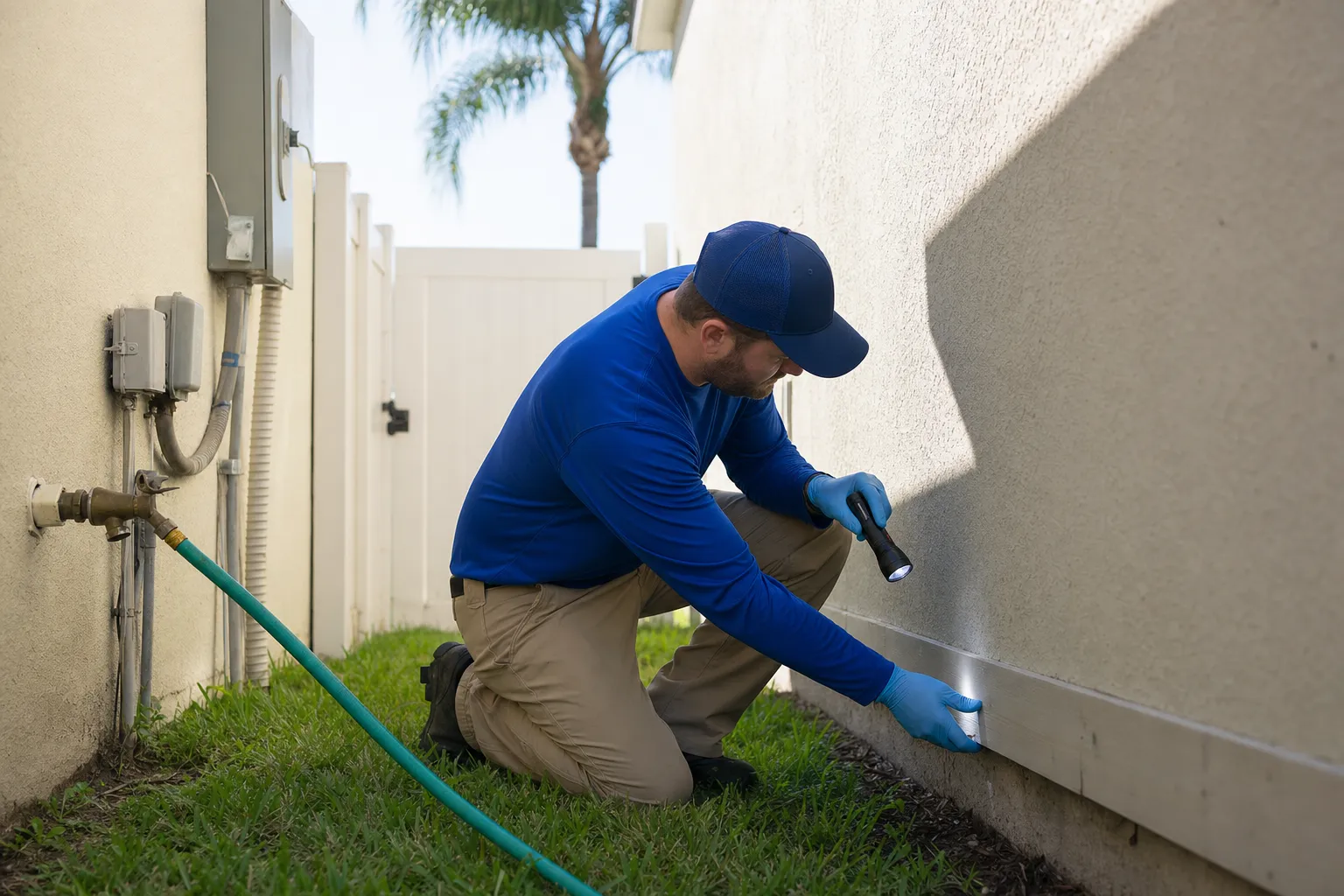
A Waves Pest Control termite inspection covers the foundation, framing, attic, crawl spaces, perimeter, moisture areas and garage. The technician identifies the termite species, documents what they find with photos and gives you a written quote, because drywood and subterranean termites need different treatment. Waves does not tent homes. If a drywood infestation is beyond what a spot treatment can reach, Waves explains that plainly and refers you to a fumigation specialist.
Found something on the sill in Sarasota or Bradenton? Book a termite inspection in Sarasota or a termite inspection in Bradenton, or get a termite estimate for your home.