
Jump to a section (10)
- 01Why wood-to-soil contact matters to subterranean termites
- 02Where wood touches soil around your home
- 03Mulch, sprinklers and damp soil count too
- 04How to fix wood-to-soil contact
- 05What not to do
- 06What wood do termites avoid?
- 07How long before termites damage wood?
- 08Drywood termites are a different problem
- 09When to call a professional
- 10How Waves Pest Control approaches wood-to-soil contact
Wood touching soil gives subterranean termites a hidden path from the ground into your house. A deck post set straight into the dirt, a form board left against the slab, or mulch piled up over the siding all let termites in the soil reach wood under cover. This guide walks through where that contact hides around a Southwest Florida home, what to fix yourself, and when a termite inspection is the better next step.
Already seeing mud tubes or wings on the windowsill? Get a termite estimate and have someone look before you move anything.
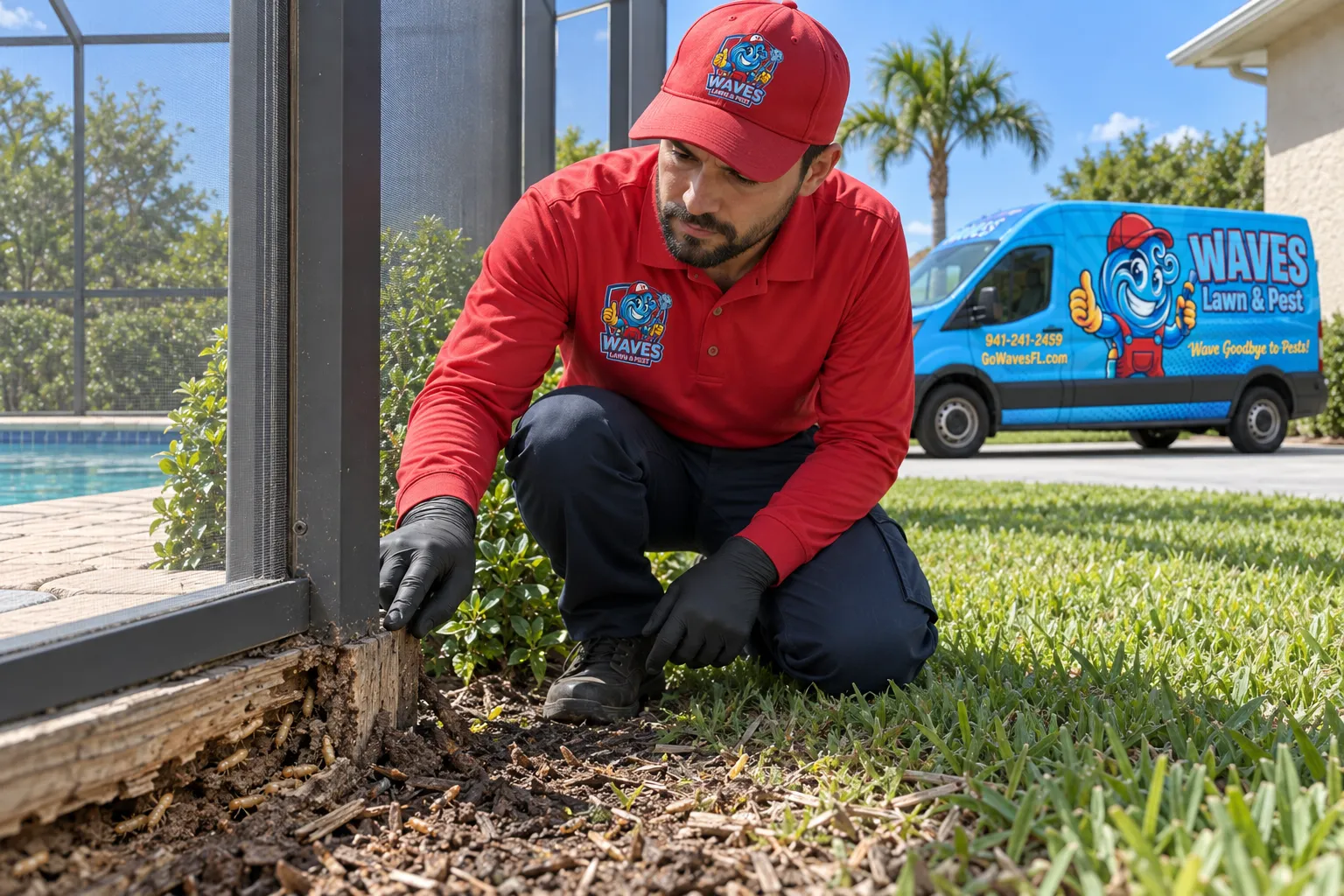
Why wood-to-soil contact matters to subterranean termites
Subterranean termites live in the ground and travel to wood from there, so any wood that touches soil gives them a hidden way in. The USDA Forest Products Laboratory’s Wood Handbook chapter on biodeterioration of wood (March 2021) explains that these termites build their colonies below ground, where they can stay undetected for years, and tunnel through earth and around obstructions to reach the wood they eat.
They also dry out easily. The same chapter says subterranean termites need a constant source of moisture from the wood they feed on or the soil they nest in, and they build mud or shelter tubes to keep humid while they forage. Those tubes are a good sign of activity. Inside the wood, the galleries follow the grain and leave a shell of sound wood on the outside, which is why damage can go unnoticed.
The Wood Handbook lists wood close to the ground or an earth fill, such as an earth-filled porch, among the places where the hazard of infestation is greatest. To control termites already in a building, it says, the contact between the colony in the soil and the woodwork must be broken.
Where wood touches soil around your home
Walk the outside of the house with a flashlight and look for any spot where wood meets dirt, mulch, or damp sand. These are the usual suspects:
- Deck, porch and pergola posts set in the ground. The Wood Handbook says posts supporting floor girders should be concrete if they bear directly on the ground, and it calls for pressure-treated wood where wood is in ground contact.
- Leftover form boards, stakes and stumps. The same chapter lists concrete forms, stakes, stumps and scrap wood as possible sources of infestation that should be removed from a building site. Check along the slab edge, where old form boards sometimes stay buried.
- Wood siding, trim or door frames that run down into the soil or mulch. UF/IFAS Extension Leon County recommends leaving an inspection space between the mulch and any wooden materials, such as siding.
- Firewood, lumber piles and wood debris against the house. Both the EPA’s termite guide and UF/IFAS Extension say to keep firewood and wood debris away from the structure.
- Wooden planters, garden edging and lattice resting on the ground near the walls.
Pro tip: Pull the mulch back from one stretch of the foundation until you can see the sandy soil and the edge of the slab. If you can’t see where the slab ends and the siding begins, an inspector can’t see mud tubes there either.
Mulch, sprinklers and damp soil count too
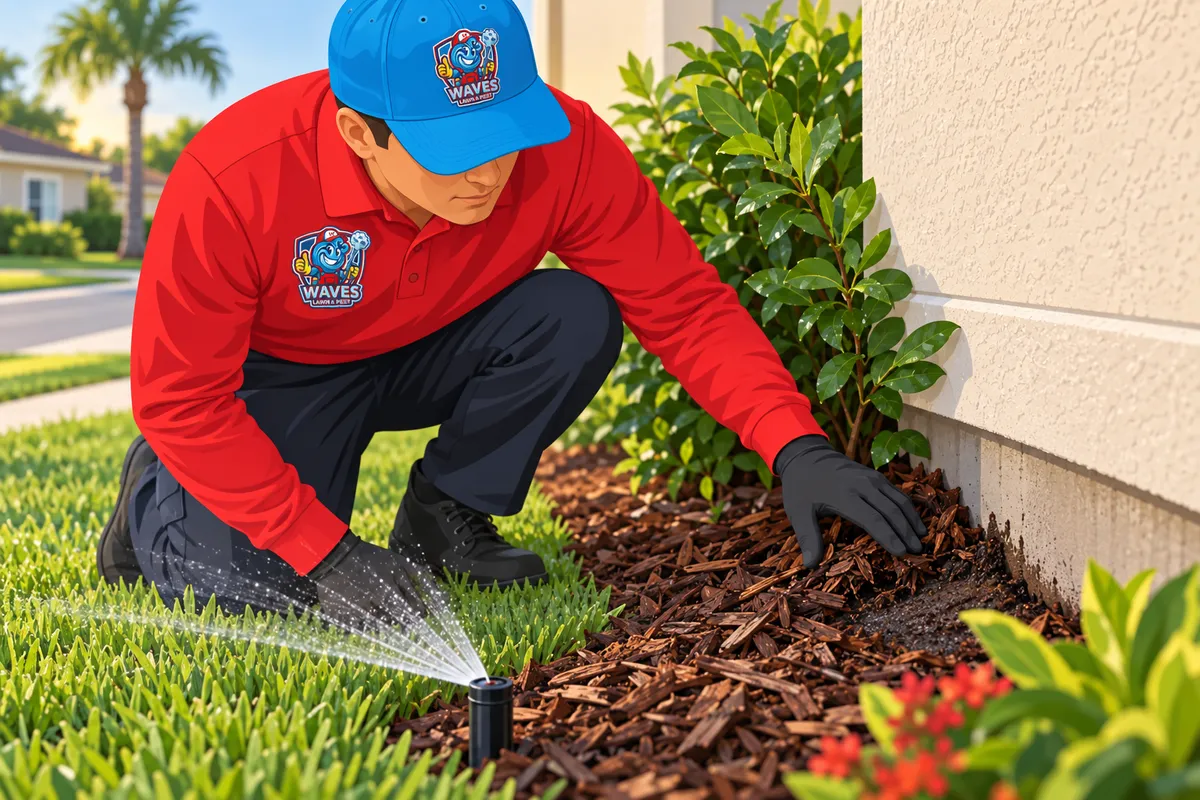
Mulch, plants and wet soil against the foundation hide the slab edge and keep the ground moist.
In termite prevention tips published May 15, 2026, UF/IFAS Extension Leon County recommends:
- Keep mulch at least one foot off the foundation, and keep any mulch near the foundation shallow, under two inches.
- Keep landscape plants at least two feet off the structure so you have an easy way to check for termites.
- Make sure water runs away from the home, including the AC drain and the gutter downspouts.
- Keep compost piles, rain barrels and other items that hold soil moisture at least two feet from the structure.
The EPA adds that trees and shrubs should not be planted so close that they grow against exposed wood, and that soil around the foundation should stay dry through grading and drainage.
That last point matters here, where afternoon storms soak the beds along your foundation, and a sprinkler head that sprays the stucco keeps that strip wet between storms. If you edge St. Augustine along the slab, look at where the irrigation lands while you’re down there.
How to fix wood-to-soil contact
Start with the cheap fixes and save the structural ones for a contractor:
- Move what can move. Stack firewood and lumber away from the house and off the ground. Pull wooden planters and edging away from the walls.
- Pull mulch and soil back. Rake mulch back from the foundation and thin it near the slab so the slab edge and the bottom of the siding stay visible.
- Redirect water. Point downspouts and the AC condensate line away from the foundation, and adjust sprinkler heads that wet the wall.
- Dig out buried scrap. Remove stakes, form boards and stumps near the house.
- Plan the structural fixes. For deck, porch or fence posts in contact with soil, talk to a contractor about concrete footings or pressure-treated posts made for ground contact, which is what the Wood Handbook calls for in that spot.
The Wood Handbook notes that subterranean termites tunnel around obstructions to reach wood. These fixes take away the hidden routes and keep the slab edge visible enough that new tubes get noticed.
What not to do
These common moves hide the problem or make it worse:
- Don’t bury the slab edge. Adding fresh mulch or fill dirt on top of old mulch raises the grade against the siding and covers the inspection space.
- Don’t scrape off mud tubes. The Wood Handbook calls these tubes a good indicator of subterranean termite activity, and it places the colony itself below ground. Leave them in place for the inspector to see.
- Don’t treat the soil yourself. The EPA says termiticide application can in most cases only be properly performed by a trained pest management professional, and that firms offering termite services must be licensed by your state.
What wood do termites avoid?
Few woods hold up well on their own. According to the Wood Handbook, only a limited number of woods grown in the United States offer any marked natural resistance to termite attack. It says the close-grained heartwood of California redwood has some resistance, especially when used above ground, and that very resinous heartwood of Southern Pine is practically immune but seldom available.
For anything that touches the ground, the same chapter points to pressure-treated wood. Even the redwood heartwood it mentions resists termites best above ground.
How long before termites damage wood?
The Wood Handbook gives no fixed timeline. What it does say is that subterranean colonies can stay undetected below ground for years and that their galleries seldom show on the wood surface. It suggests probing with a pick or knife where termites are suspected. If a post or trim board near the soil feels soft or sounds hollow when you press on it, treat that as a reason to book an inspection rather than something to watch.
Drywood termites are a different problem
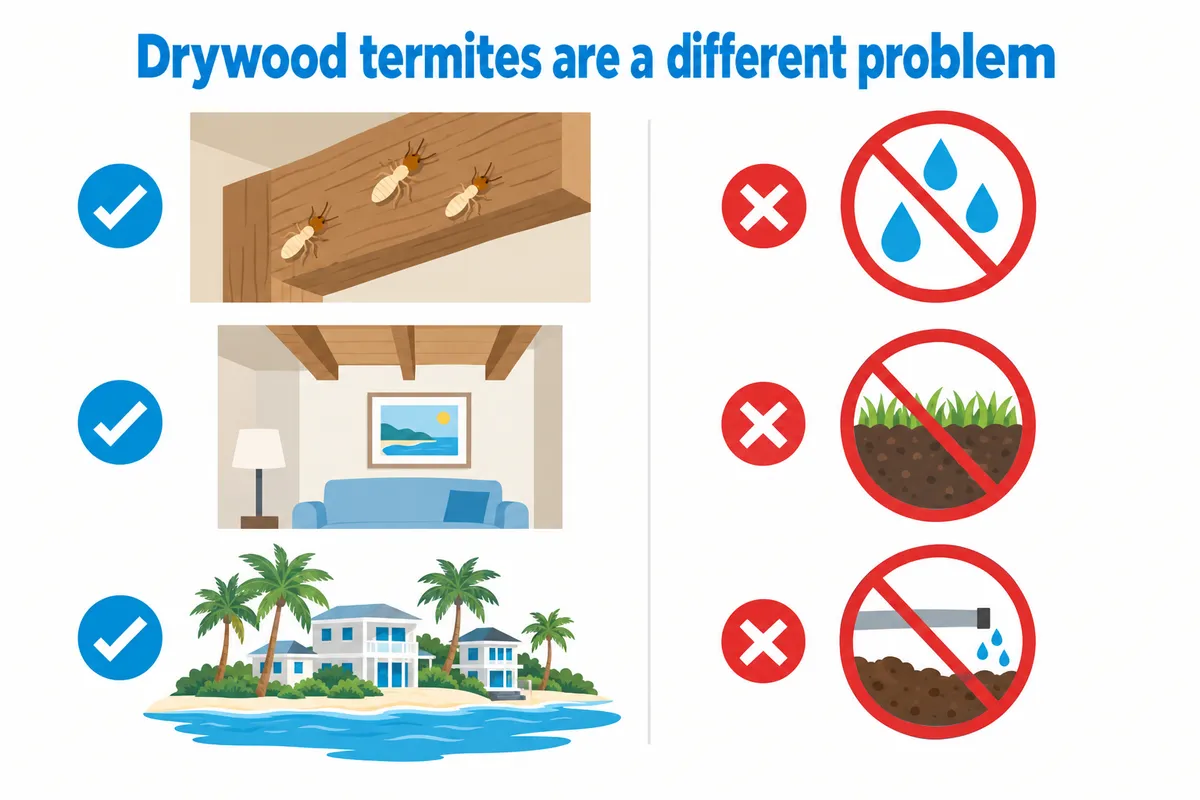
The Wood Handbook says drywood termites can live in dry wood without outside moisture or contact with the ground. Around Sarasota, drywood pressure tends to dominate on the coastal barrier islands like Siesta Key and Longboat Key, where homes have older wood and little soil contact. In older inland neighborhoods such as Laurel Park and Gulf Gate, subterranean termites tend to be the bigger concern, with wood frames, slabs and mulch against the foundation. If you’re not sure which one you’re dealing with, our guide to what termites look like covers the differences.
When to call a professional
Book an inspection when you see signs of termites themselves:
- Mud tubes on the slab, foundation, posts or siding
- Shed wings or swarming insects near windows and doors
- Wood near the ground that is soft, hollow or crumbling
- Contact you can’t fix yourself, such as siding or a door frame below grade
How Waves Pest Control approaches wood-to-soil contact
A Waves Pest Control termite inspection covers the foundation, framing, attic, crawl spaces, perimeter, moisture areas and garage. The technician identifies the termite species, documents what they find with photos and gives you a written quote. Wood-to-soil contact, mulch or soil banked against the stucco above the slab line, AC condensate or irrigation wetting the foundation, and form boards or cellulose debris left against the slab all get flagged as conducive conditions, because fixing them is part of termite protection alongside any treatment.
If drywood termites have spread beyond what a spot treatment can reach, Waves explains that honestly and refers you to a fumigation specialist, since Waves does not tent homes. For a look at treatment options in Manatee County, see termite treatment in Bradenton.
Ready to have someone check the slab edge, posts and beds around your home? Schedule a termite inspection or get a termite estimate for homes from Bradenton to North Port.