Jump to a section (9)
- 01Why the sod under the oak keeps thinning
- 02How much sun St. Augustine needs
- 03Which St. Augustine cultivars handle shade better
- 04How to mow, water and feed St. Augustine in shade
- 05Tree roots compete for water and nutrients
- 06When shade is too heavy for grass
- 07How Waves looks at a shaded lawn
- 08Frequently Asked Questions
- 09Next steps
Most Venice lawns are St. Augustine, and Floratam is the cultivar you are most likely to have. That matters the day a live oak in the yard gets big enough to shade half the grass. St. Augustine as a species handles shade better than most Florida lawn grasses, but Floratam is the weak link in the family, and every grass has a light floor. For the full picture of lawn work in town, see our page on lawn care in Venice.
If you would like a licensed tech to look at the shaded strip and tell you what grass you have before you buy more sod, you can request a lawn care quote.
Why the sod under the oak keeps thinning
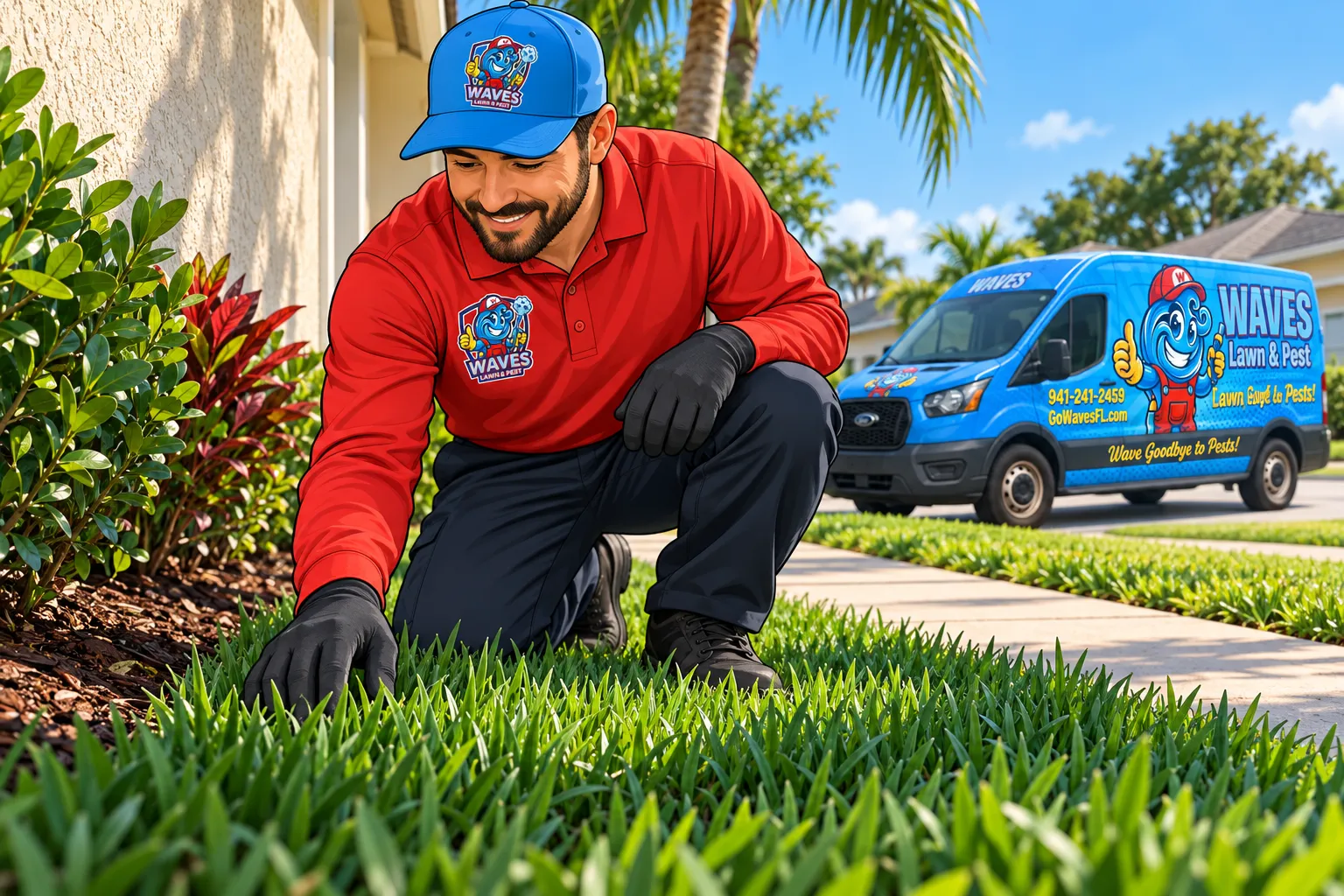
Grass that gets too little light burns through its own food supply, so it thins out no matter how often you replace it. UF/IFAS explains the process in Growing Turfgrass in the Shade (EP072). Shaded turf grows long, stretched leaf blades and stems as it reaches for light. That stretching drains the plant’s stored carbohydrates, which cuts its vigor and coverage and leaves bare spots where weeds move in.
The same publication points out that shade changes over time as trees mature. A strip that grew fine grass five years ago can sit under a much heavier canopy today. Laying the same sod back into the same light tends to repeat the same decline.
How much sun St. Augustine needs
The clearest number UF/IFAS gives is for Floratam: in St. Augustinegrass for Florida Lawns (ENH5), UF/IFAS says it “does not persist well in environments that receive less than 6 hours of sunlight daily.” The same guide calls Floratam’s shade tolerance poor relative to other St. Augustine cultivars.
For the species as a whole, ENH5 says “certain cultivars have better shade tolerance than other warm-season grass species.” EP072 adds that most St. Augustine cultivars have very good shade tolerance along with good performance in full sun. It also draws a hard line: in heavily shaded areas, UF/IFAS generally does not recommend growing turfgrass at all.
A simple check helps here. On a clear day, note when direct sun first hits the thin area and when it leaves. If Floratam gets well under 6 hours, the grass is fighting a battle it does not win.
Which St. Augustine cultivars handle shade better
UF/IFAS EP072 lists CitraBlue, Classic, Cobalt, Palmetto, ProVista, Seville, Sola and Viridian as the most shade-tolerant St. Augustine cultivars, and says Floratam is “significantly less shade tolerant than the other cultivars.”
ENH5 gives more detail on a few of them:
- Seville “performs well in both shade and full sun” and is cold sensitive. It is a dwarf cultivar mowed at 2 to 2.5 inches.
- Palmetto “does well in full sun or partial shade, but not in dense shade.”
- Bitterblue has good cold and shade tolerance, per ENH5.
- ProVista, compared with Floratam, has a darker green color and better shade tolerance.
- Classic is listed as shade tolerant in EP072, but ENH5 says its shade tolerance “has not yet been verified by university research.”
Two cautions keep this honest. No cultivar beats deep shade; Palmetto’s own description stops at partial shade. And most cultivars are hard to tell apart by eye. CitraBlue’s blue-green color is one exception, per ENH5. So check your sod invoice or ask the builder before you assume what is in the ground.
Pro tip: If you replace the grass in a shaded strip, ask the sod farm for the cultivar name in writing. The mowing height for that strip depends on it. The fertilizer rate depends on the shade instead, as the next section explains.
When new sod does go down, the first month of watering decides a lot. Our new sod care guide covers the UF/IFAS establishment schedule.
How to mow, water and feed St. Augustine in shade
Shaded grass needs a higher mower, less water and less fertilizer than the sunny part of the same lawn. Each of these comes from UF/IFAS EP072:
- Mow at the top of the range. EP072 says to mow at the highest recommended height for the cultivar, because more leaf area means more light captured and deeper roots. For Floratam and other standard cultivars, ENH5 gives 3.5 to 4 inches. See mowing height by grass type and these St. Augustine mowing mistakes.
- Water the shade less. EP072 says shaded turf needs less water than turf in full sun. If one sprinkler zone covers both sun and shade, UF/IFAS suggests removing the heads in the shaded part and watering it by hand when it shows water stress.
- Cut back the fertilizer. ENH5 says “the grass growing in the shade needs less fertilizer than that growing in full sun.” EP072 adds that too much nitrogen drains a shaded lawn’s energy reserves, and it suggests slow-release nitrogen to avoid growth surges.
- Keep traffic off it. Grass in shade is injured more easily and recovers slowly, per EP072, and foot traffic there can also damage tree roots.
- Watch for disease and weeds. Shade means more soil moisture, more humidity and less air movement, which keeps leaves wet longer. EP072 links that to higher disease pressure and notes that thin shaded turf is open to weeds.
On the Gulf Coast, a summer afternoon storm already soaks that shaded strip. A timer that runs the next morning on top of it keeps the area wet even longer. Feeding has its own calendar too: Sarasota County’s fertilizer ordinance prohibits nitrogen and phosphorus applications from June 1 through September 30, so plan any light feeding of the shade outside that window.
Tree roots compete for water and nutrients
Grass under a tree is short on more than light. UF/IFAS EP072 says grass under trees competes with tree roots “for soil space, water, oxygen, and nutrients,” and that tree roots can reach well past the edge of the canopy. In Florida’s sandy soils, which drain fast, that competition for water can show up as a ring of thin grass well beyond the drip line.
So a shaded strip can look dry and pale while the sunny side is fine. Extra water seldom fixes it, and EP072 warns that heavy watering in shade raises disease risk.
When shade is too heavy for grass
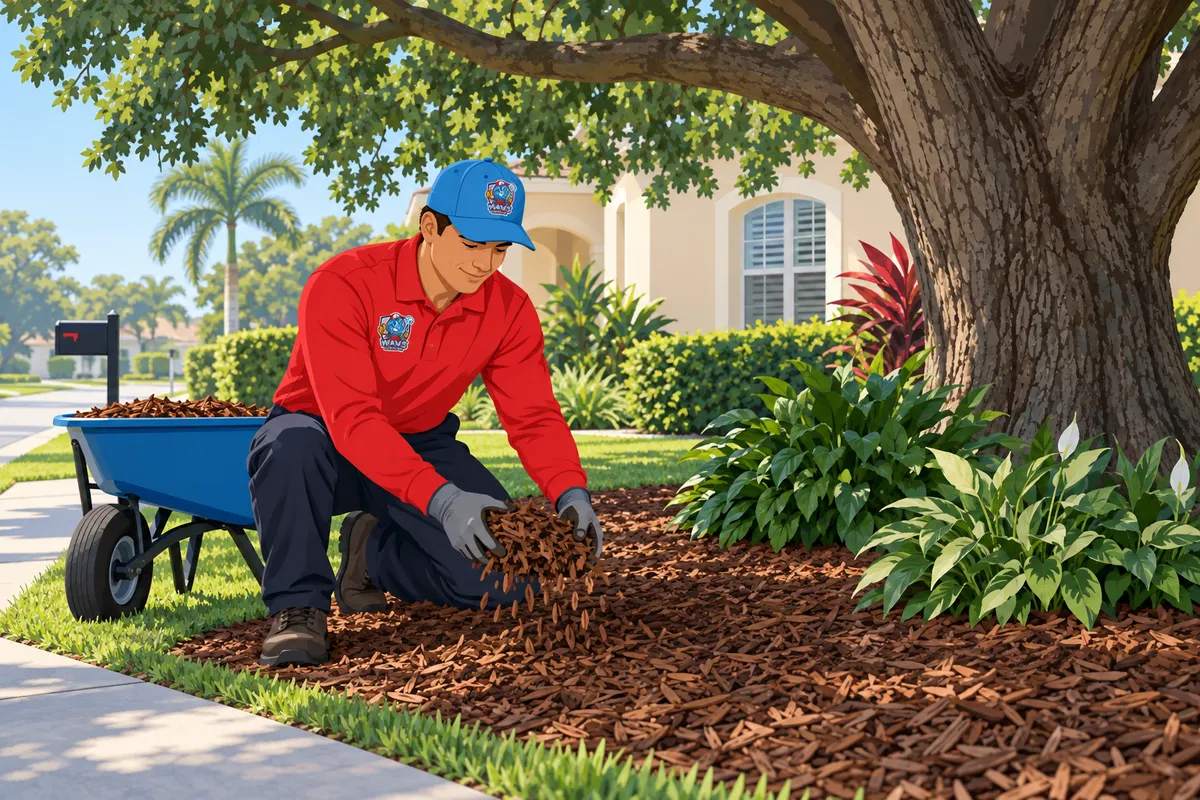
Under a large, dense canopy, UF/IFAS recommends another ground cover, shade-tolerant plants or a mulch bed in place of turf. EP072 uses the example of “a large oak tree” as shade too severe for turfgrass. You have three honest paths:
- More light through tree work. EP072 says raising the lower branches lets in more low-angle light, and thinning the canopy lets more sun through. That is a job for a certified arborist or tree care company. Pruning a large oak affects the tree’s health, so do not take a saw to it yourself.
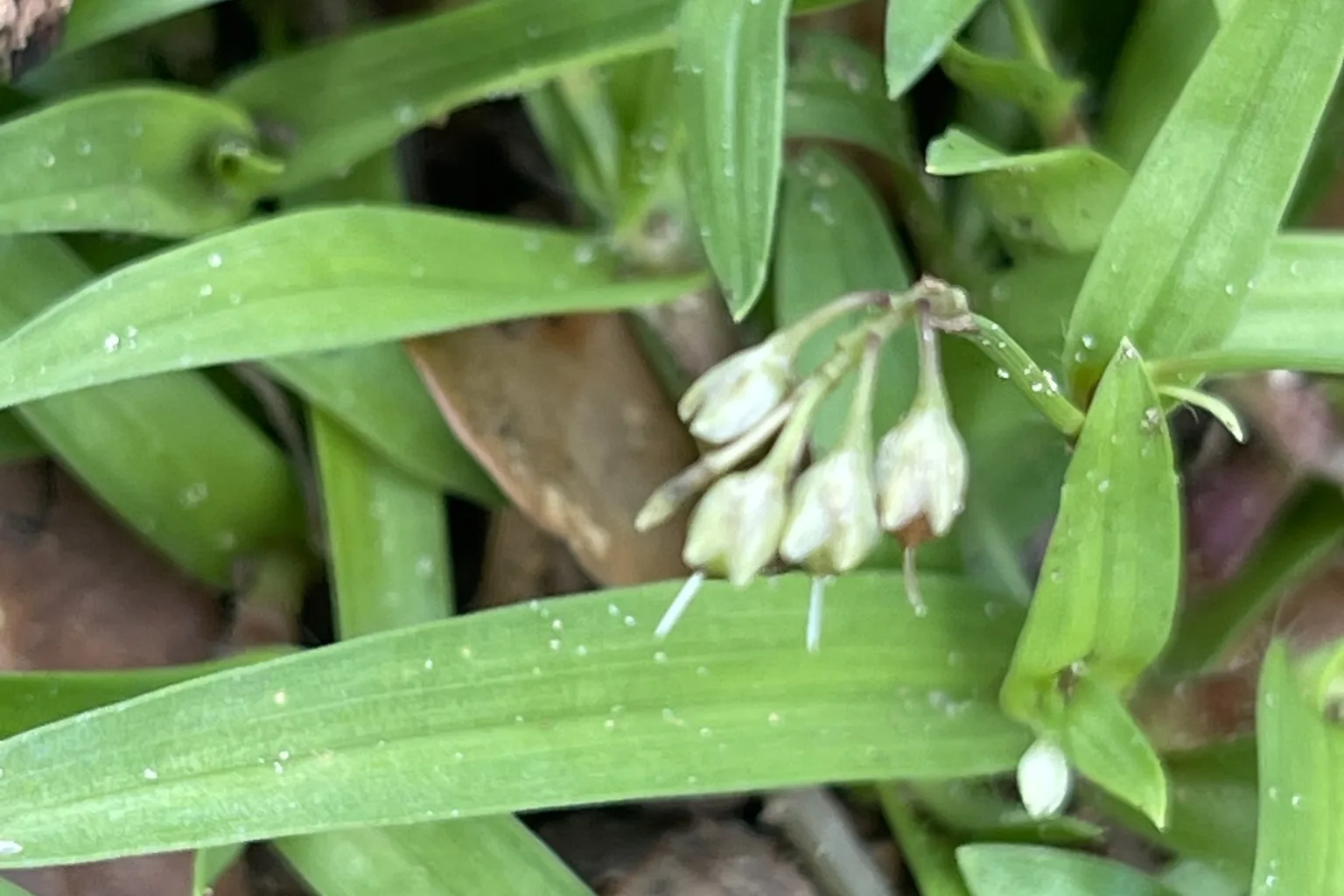
- A shade ground cover. UF/IFAS Gardening Solutions lists alternatives to turfgrass. Asiatic jasmine grows in partial shade to full sun and tolerates areas where turfgrass will not thrive, but it cannot take foot traffic. Blue-eyed grass and twinflower also grow in partial shade.
- A mulched bed. A mulch ring or bed under the canopy is the simplest option EP072 names for heavy shade, and it keeps mowers and foot traffic away from the tree’s roots.
What not to do in a shaded lawn
- Do not resod the same strip with Floratam and expect a different result.
- Do not scalp the shade to match the sunny lawn’s height.
- Do not run the shade on the same watering schedule as the full-sun zones.
- Do not push extra fertilizer to force color in the shade.
How Waves looks at a shaded lawn
A Waves Pest Control technician will identify the grass type on the first lawn visit and look at the turf side of the problem: fertility, weeds, insects, disease and the cause of the thinning. Tree trimming is outside the Waves lawn program, so canopy work goes to a landscaper or tree care company. Weak shaded turf can also hide insect or disease trouble, and UF/IFAS Gardening Solutions suggests contacting your county Extension office if you are unsure what is wrong with your St. Augustinegrass.
Frequently Asked Questions
Which St. Augustine sod should I buy for a shady yard?
UF/IFAS EP072 lists CitraBlue, Classic, Cobalt, Palmetto, ProVista, Seville, Sola and Viridian as the most shade-tolerant cultivars, with Floratam significantly less tolerant. None of them handles dense shade, so measure your hours of direct sun first.
How many hours of sun does St. Augustine grass need?
UF/IFAS says Floratam does not persist well with less than 6 hours of sunlight a day. Shade-tolerant cultivars handle less, but UF/IFAS does not recommend turfgrass in heavy shade.
Is artificial turf a good answer under a tree?
UF/IFAS research in California measured artificial turf at 79°C (174°F) on the hottest summer days, against about 39°C (102°F) for natural turf, as reported by UF/IFAS News. For heavy shade, the options UF/IFAS EP072 names are shade ground covers and mulch beds.
Next steps
For a Venice lawn under an oak, start by confirming the grass and the hours of sun. When you want a licensed tech to look at the thin areas and the rest of the turf, get a lawn care estimate.