Jump to a section (9)
The natural steps with the best support are simple: take away the sugary food that pulls wasps in, knock down a paper wasp nest while it is still a single queen’s starter comb, and check shrubs and palm debris before you work in them. Scented oils and fake nests have much weaker evidence behind them. None of this keeps every wasp away, but it lowers the odds of a nest by your door and a sting on your lanai. For what a regular visit covers, start with our pest control services page.
Already looking at a big nest? Get a pest control estimate for your home.
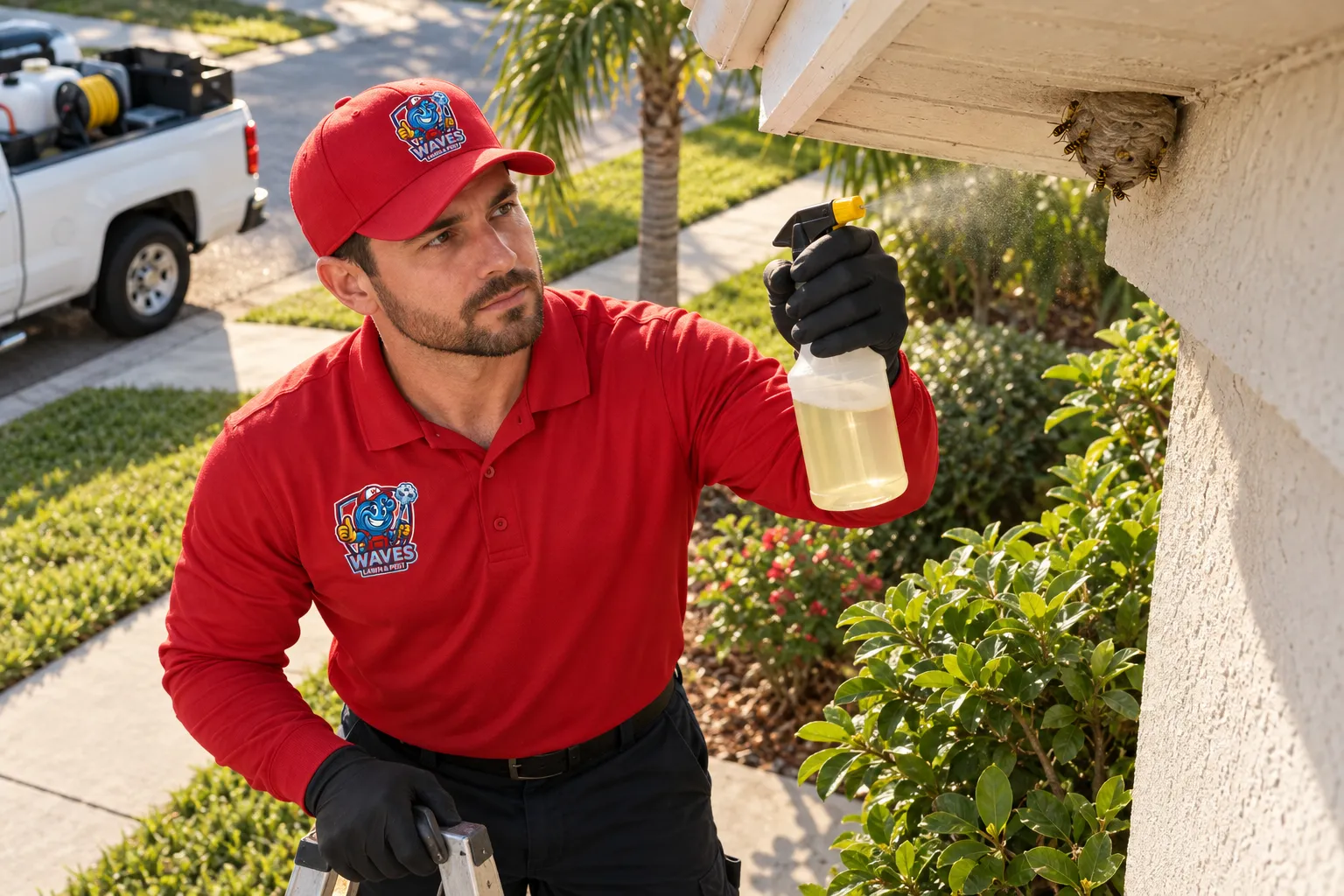
Identify the wasp before you do anything
Which wasp you have decides what is safe to try. Here is how to tell the common ones apart around a Southwest Florida house:
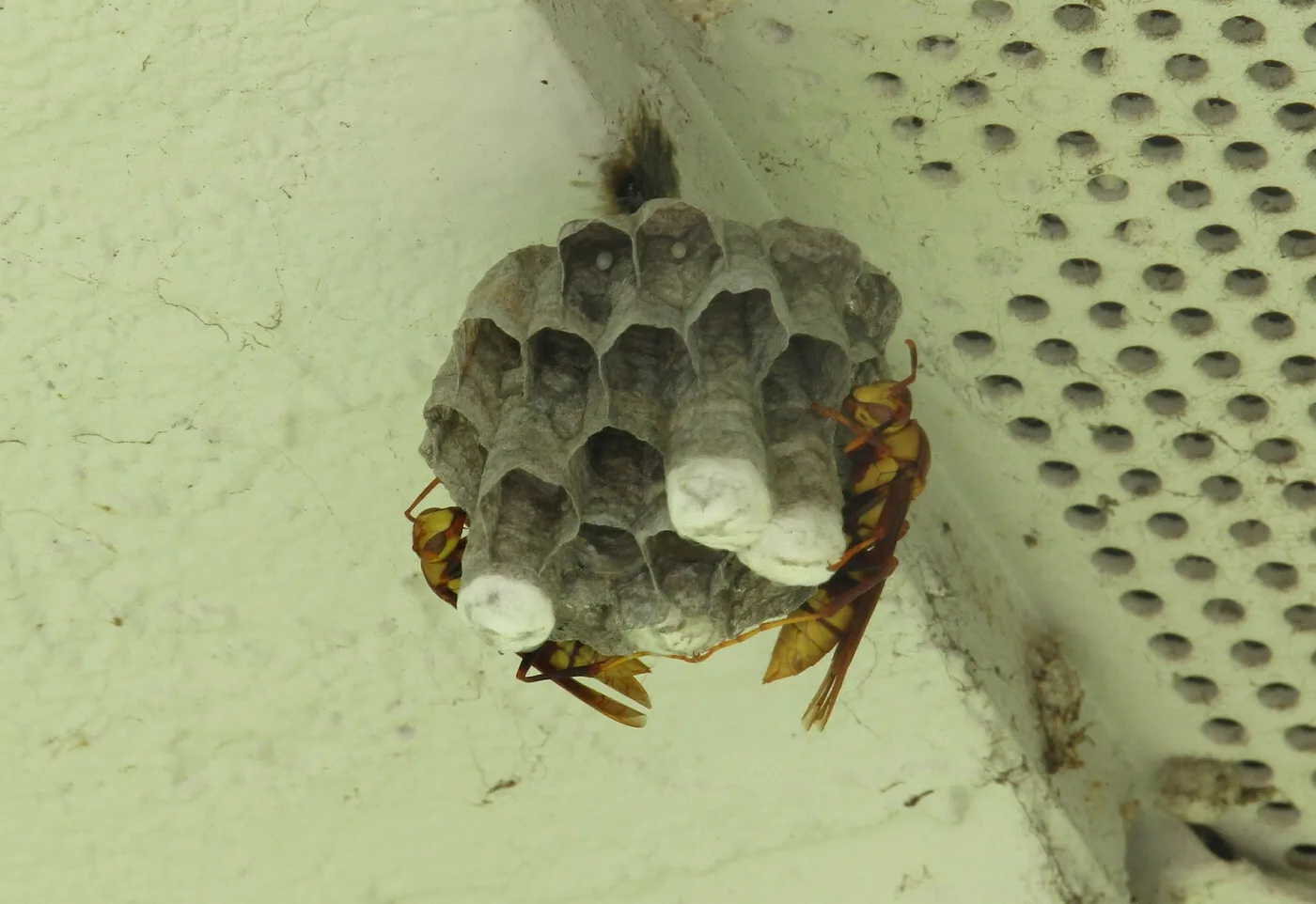
- Paper wasps build open, umbrella-shaped combs under eaves, soffits and lanai corners. The UF/IFAS profile of the red paper wasp (EENY640) calls it not particularly aggressive and says it typically stings only when threatened.
- Yellowjackets usually nest in the ground. The UF/IFAS gardening page on yellow jackets says you may spot a nest when you see a few yellowjackets flying low to the ground and going in and out of a hole, which can be a hole in your St. Augustine lawn. A UF/IFAS Extension article on stinging insects from September 2026 says they can also build in hay, palm fronds and other loose debris.
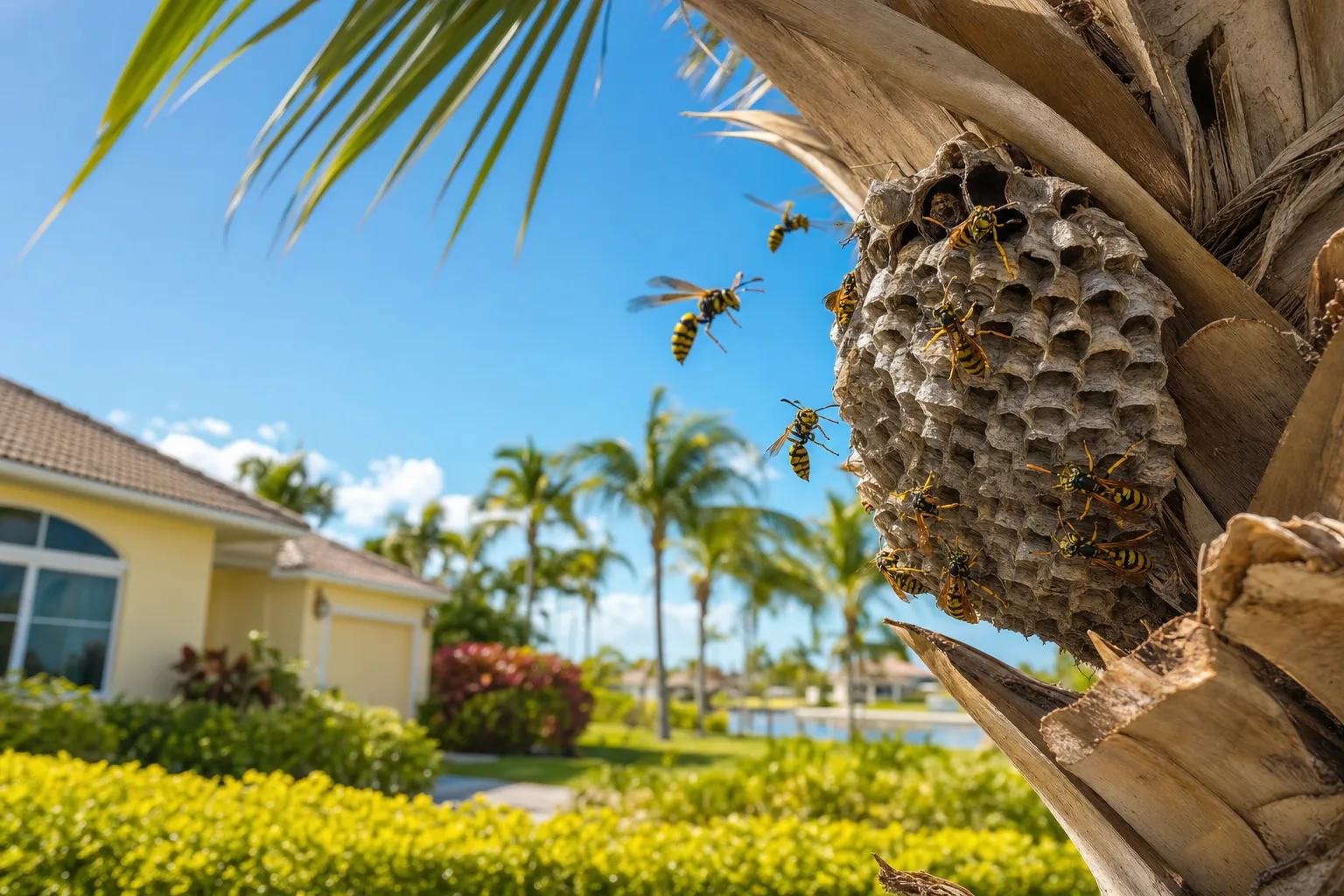
- Hornets in Florida are yellowjackets that build aerial nests. UF/IFAS describes their nests as football-shaped and paperlike.
- Mud daubers build clay or mud-cell nests. The UF/IFAS stinging-insect guide (ENY-215, reviewed February 2025) says they are usually not as aggressive and will not sting unless touched or caught in clothing.
Not sure what you are looking at? Our guide to the big hornet look-alikes in Southwest Florida covers what people usually see, and the Waves pest library has photos of other household pests.
What draws wasps to your yard
Food, mostly. UF/IFAS says in its yellowjacket and hornet fact sheet (EENY-081, revised December 2023) that these wasps are attracted to sugar sources such as berries and flower nectar. The trouble starts when the sugar is your soft drink, ripe fruit or watermelon. Workers also hunt insects to feed their larvae, and UF/IFAS says caterpillars appear to be a favorite.
That hunting is why UF/IFAS Extension calls wasps helpful in the garden. Their main food is caterpillars and beetle larvae, many of them garden pests, and they also pollinate. The same UF/IFAS Extension article advises accepting some wasps in the landscape and focusing on colonies in high-traffic areas.
Natural steps that lower wasp activity
Work through these in order. They come from UF/IFAS and CDC guidance, and none needs a spray:
- Cover sweet food and drinks outdoors. UF/IFAS says to keep sweet items covered, pick fruit as it ripens and dispose of rotten fruit.
- Keep trash lids tight. EENY-081 says lids on trash containers should be secure or able to keep wasps out, because discarded drink containers and fruit remains can attract wasps all season and lead to stings.
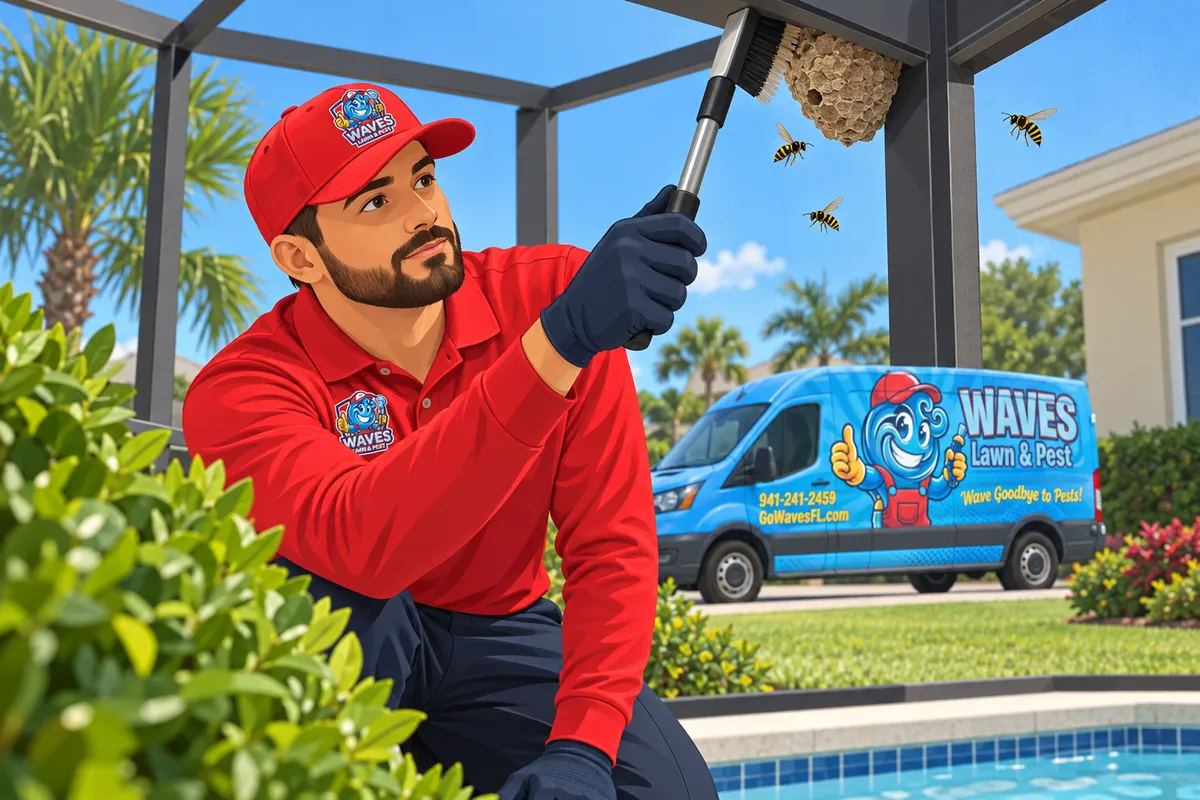
- Knock down a starter paper wasp nest. EENY640 says that if a nest is just starting with a single queen, spraying may be unnecessary. You can remove it or knock it down with a broom, and the queen will likely start a nest somewhere else. Do it in the evening, when UF/IFAS says the wasps are inactive, and wear clothing that covers your skin.
- Check before you trim. The UF/IFAS Extension article suggests looking around and poking vegetation with a stick before you start weeding or pruning.
- Skip the fragrance. The CDC’s NIOSH guidance on stinging insects says to wear light-colored, smooth clothing and avoid perfume, cologne and scented toiletries, including banana-scented products. This lowers your odds of a sting more than it lowers the number of wasps.
Pro tip: Spring is when new wasp nests get started, so walk the eaves, soffits and lanai corners then and look for a small starter comb. That is the size UF/IFAS says you can still knock down with a broom.
Use the broom only on small paper wasp nests. UF/IFAS says yellowjackets and hornets are trickier and should be approached very cautiously.
Do smells keep wasps away?
Some scents kept wasps away from traps in one study, but that study did not test whether an oil spray keeps wasps off a Florida porch. The study, a 2013 field test published in the journal Pest Management Science, tested 21 essential oils at attractant-baited traps. The wasps were mainly western yellowjackets and European paper wasps. Seventeen oils showed significant repellency, and a blend of clove, geranium and lemongrass oils blocked worker wasps from the traps entirely.
Keep three limits in mind. The test measured traps, not a lanai, a person or a nest under the eaves. The lead author’s listed affiliation is a private company, not a university. None of the UF/IFAS wasp publications used for this guide recommends scented oils. So treat a homemade oil spray as an experiment, and remember that natural is not the same as harmless: keep any spray off food-preparation surfaces and away from children and pets.
Do fake wasp nests work?
Paper decoy nests are sold as wasp deterrents, but none of the UF/IFAS publications cited in this guide tests them. Treat a decoy as unproven and keep checking your eaves for real nests.
Do wasps come back to the same nest?
It depends on the wasp. The UF/IFAS gardening page says yellowjacket colonies die off in winter except for the queens, which mate in the fall, spend the winter as adults and start a new colony in spring. EENY640 says that in subtropical and tropical areas, paper wasp colonies may produce many new queens and keep a nest going for multiple seasons.
Florida yellowjackets also pick odd spots. EENY-081 describes southern yellowjacket nests in Florida built in palm material and in a rolled rug in a garage, and one nest about 8.2 feet tall around a tree stump.
What not to do
- Do not dig at, mow over or flood a yellowjacket hole. UF/IFAS says even at night, any disturbance results in instant activity, and an injured yellowjacket can release an alarm pheromone that sets off the whole colony.
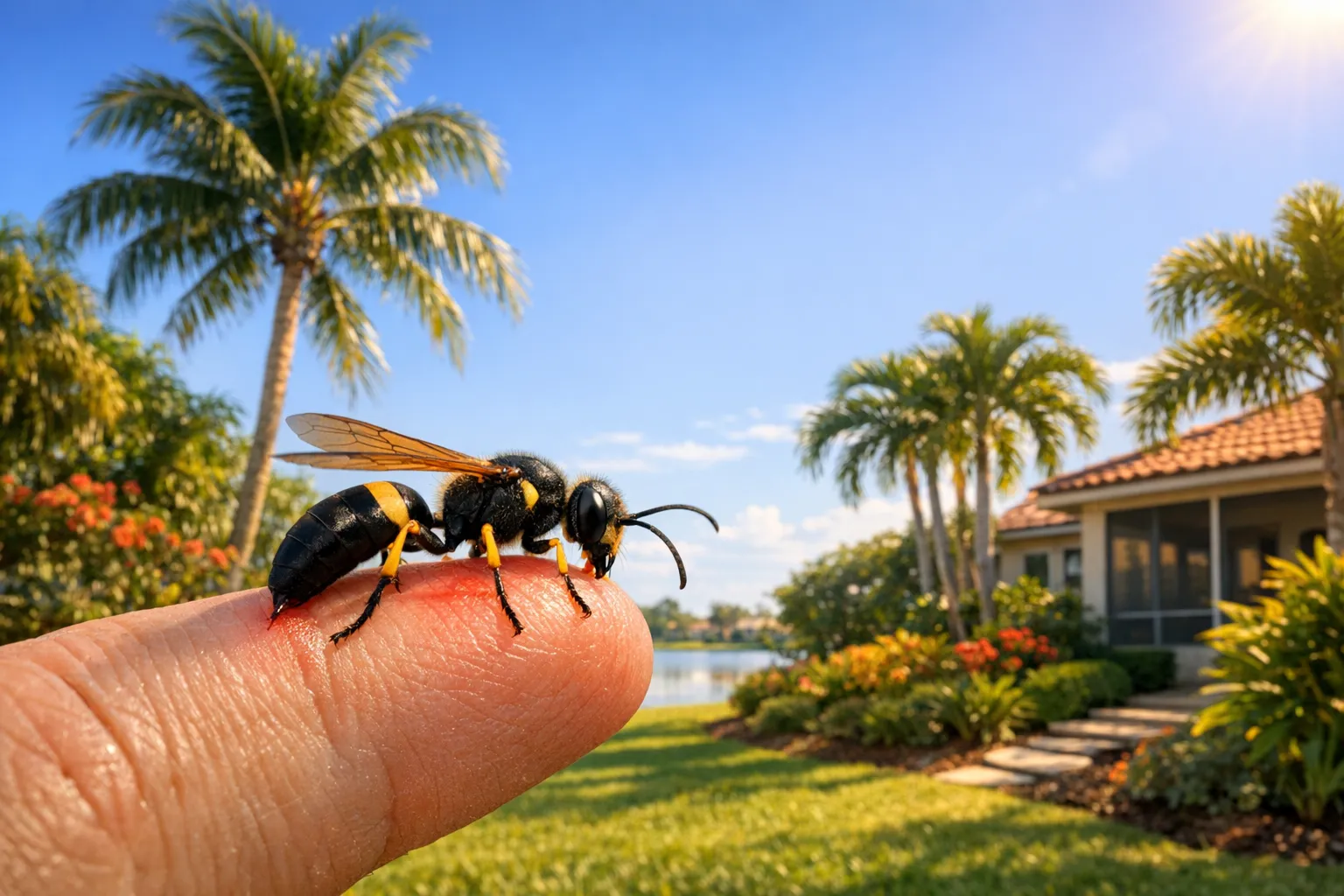
- Do not swat. The CDC says to stay still and calm around a single stinging insect, because swatting can make it sting.
- Do not jump into water to escape an attack. The CDC says to move indoors or into shade instead, since some stinging insects hover above the water.
- Do not spray near an open flame. If you do use a wasp spray, EENY640 says to follow the label instructions and avoid aerosols near open flames. Read and follow the product label, keep the product off food-preparation and food-contact surfaces, and place it out of sight and reach of children and pets.
When to call a professional
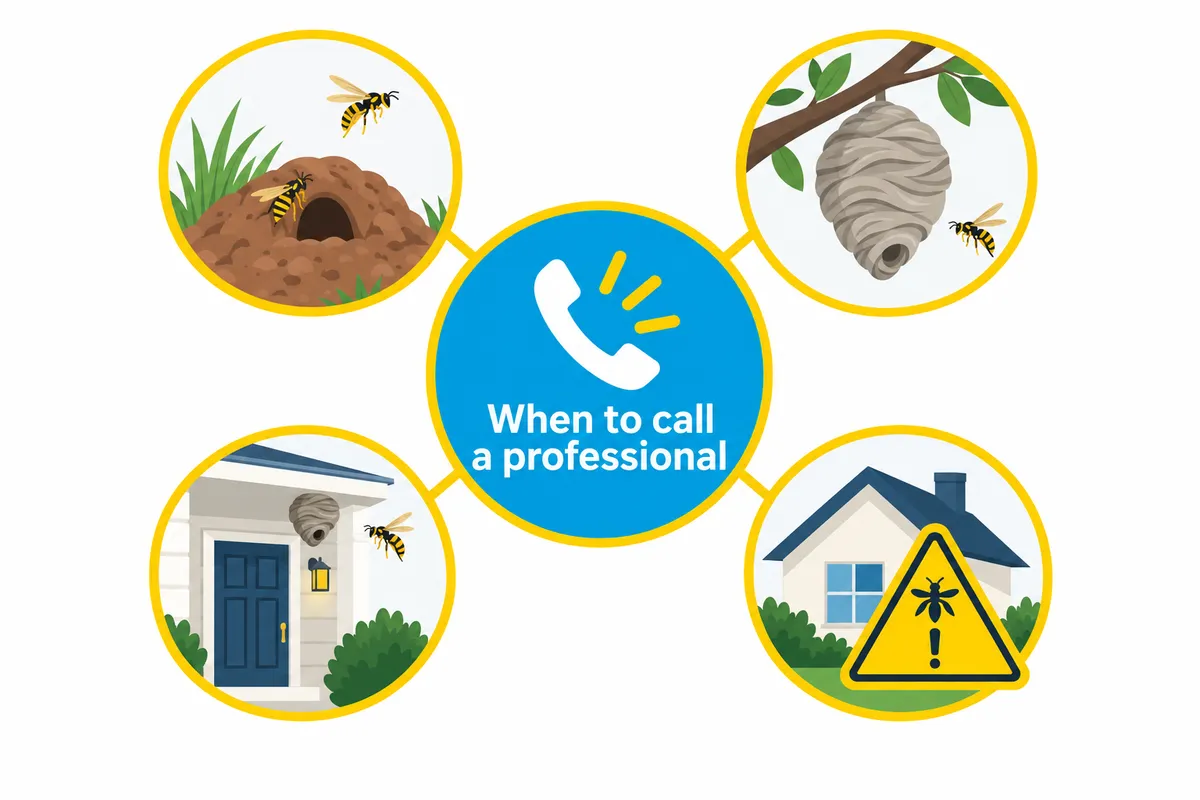
Call a pro for a yellowjacket nest in the ground or a wall, any hornet nest, a nest over a door or walkway, or a home where someone is allergic to stings. UF/IFAS says that when a nest is large or hard to reach, for example inside the walls of a house, the safest choice is to hire a pest control operator.
If a sting is followed by trouble breathing or wheezing, swelling of the face or mouth, throat tightness or trouble swallowing, chest pain, or fainting, get emergency care right away. MedlinePlus lists those among the signs of a severe allergic reaction.
How Waves Pest Control handles wasp nests
Waves Pest Control treats stinging wasp nests directly and removes them. Paper wasps around Sarasota and Bradenton homes tend to nest under eaves, soffits and lanai corners, while yellowjackets nest in ground voids and wall cavities and are the most aggressive of the group. Nests get started in spring and mature by late summer and fall. Your technician sets the approach once they see the nest and where it is, and a first visit includes a walk of the property plus an inspection of the soffits, eaves and slab line.
For recurring service on general household pests, look at our WaveGuard memberships, or start with pest control in Sarasota or pest control in Bradenton. Ready for a number? Get a pest control estimate for your home.