A strip of daylight under an exterior door is easy to spot and easy to blame. If you’re in Bradenton and you just watched an ant trail or a roach come in under the back door, a door sweep may close that gap. It closes one opening at one door. This guide covers how to check the gap, measure for a sweep, keep the doorway draining, and figure out when the pests are getting in somewhere else. For what a full visit covers, see our pest control services.
If you’d rather have someone walk the house with you before you buy anything, request a pest control quote or get a pest control estimate online.
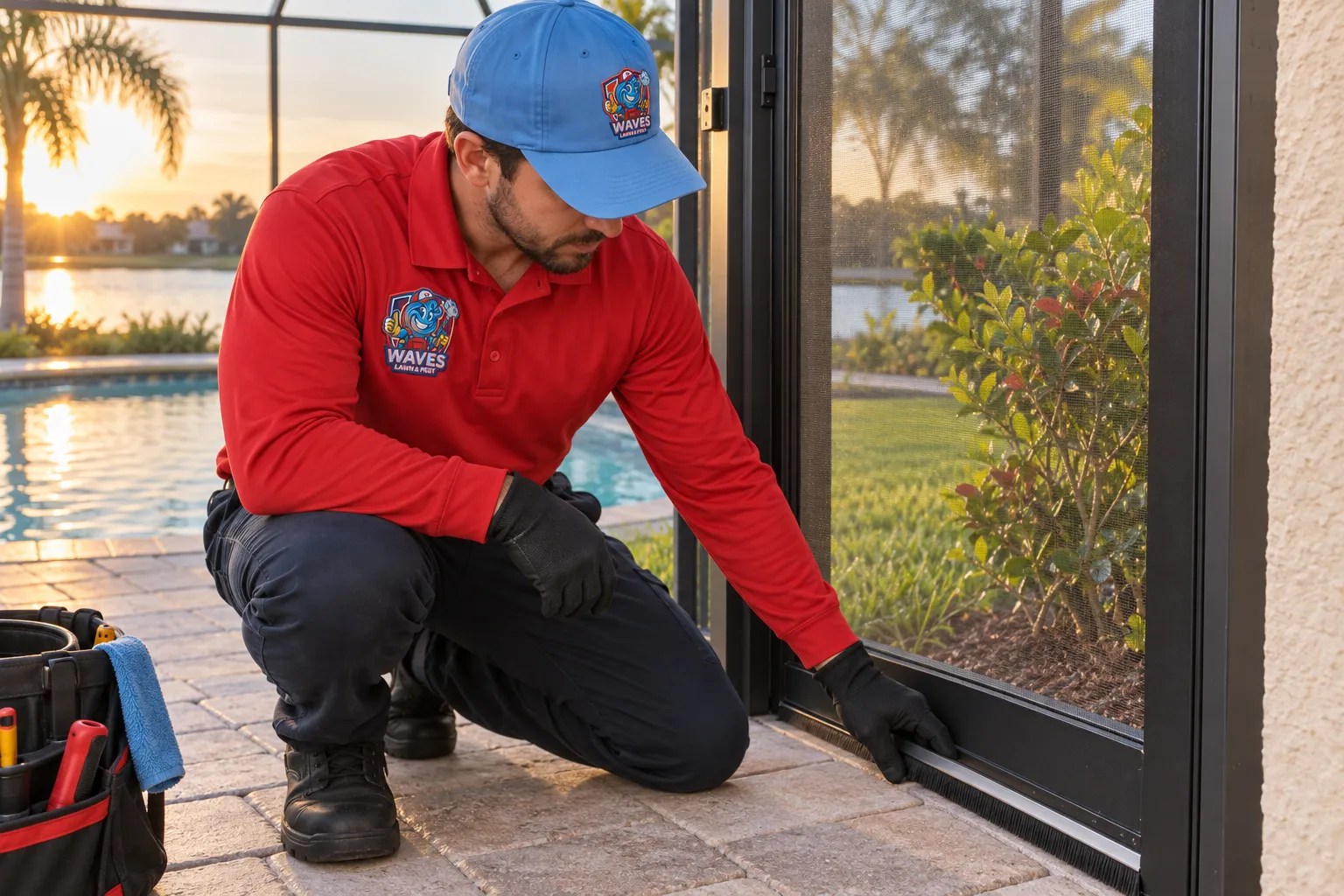
Check Under the Doors First
Stand inside with the door closed on a bright afternoon. UF/IFAS gives homeowners a simple test in its EDIS fact sheet, the Homeowner’s Guide to Selecting a Pest Control Service: if you can see light through a crack or gap from the outside while you’re standing inside, the opening is big enough to let in large cockroaches, other insects, spiders, and even rodents and snakes that are common in Florida. The same guide lists sealing gaps around doors and windows where pests may enter as a home maintenance task.
Daylight under the door is one of the signs of a weak seal. It doesn’t prove that’s how the ants or roaches got in. Write down what you see at each exterior door, the front, the back, the side door to the garage, and keep the notes for later.
Here’s how to tell what kind of gap you’re looking at:
On every inspection
What to look for at the bottom of an exterior door
- Daylight under the closed door Per the UF/IFAS EDIS guide, light you can see from inside means the gap is big enough for large cockroaches, other insects, spiders, rodents and snakes.
- A gap wider at one corner Homeowner check: compare the hinge side, the middle and the latch side. An uneven gap is a fit question to settle before you pick a sweep.
- A door that drags or sticks Homeowner check: note where the bottom edge rubs or catches before you add anything to it.
- A worn or loose threshold Homeowner check: a sweep seals against the threshold, so look for cracks, loose pieces or worn spots.
- An old sweep that is torn or missing Homeowner check: look along any existing sweep for tears, gaps or sections that no longer touch the threshold.
The daylight test comes from UF/IFAS EDIS. The other rows are a homeowner checklist, and none of them shows how a pest got inside.
Fit, Movement and the Threshold
Three things at the door decide whether a sweep is the right fix: how evenly the door sits in its frame, how it moves when it swings, and what shape the threshold is in.
- Fit. If the gap is about the same height from hinge to latch and the door closes and latches cleanly, a sweep sized to that door is a reasonable next step.
- Door movement. If the door sags, drags or won’t latch, have the door itself looked at before you fasten anything to its bottom edge.
- Threshold condition. If the threshold is cracked, loose or worn down, a new sweep has a poor surface to seal against. Repair the threshold first.
The sides and top of the door are a separate job. UF/IFAS EDIS fact sheet ENY-214, on cockroaches and their management, says to seal gaps between door frames and doors with weather stripping and to caulk or otherwise seal cracks and gaps around the frames of doors and windows. The same publication notes that adult cockroaches can fit into cracks only about 1/16 inch wide, so check the weather stripping along the frame while you’re down at the threshold.
Bradenton’s housing runs from 1940s and 1950s wood-frame homes in the Old Manatee historic district to new construction along the SR-70 corridor. Check each exterior door on its own terms. The age of the house won’t tell you how a given door fits.
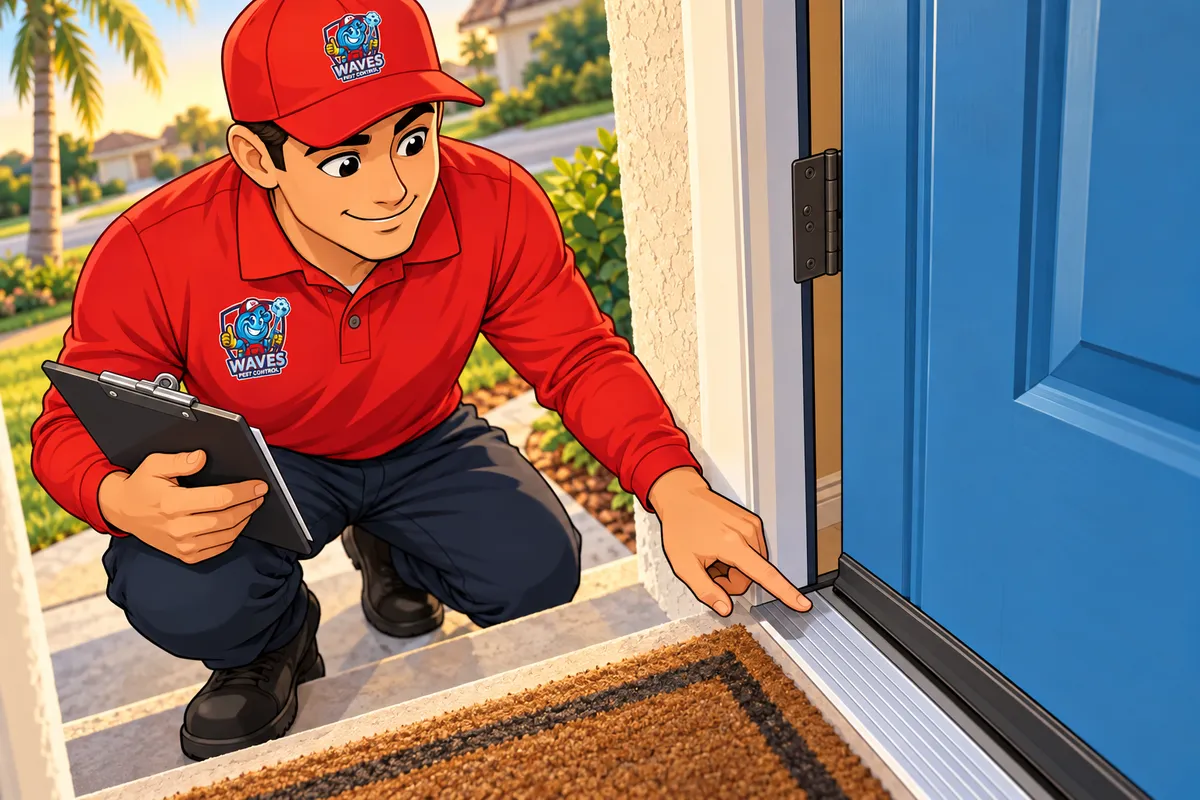
How to Measure the Doors and Choose a Sweep
Get the numbers before you shop:
- Measure the width of the door slab along its bottom edge.
- With the door closed, measure the gap height at the hinge side, the middle and the latch side.
- Note what the threshold is made of and whether it is flat, sloped or raised.
- Compare those numbers with the maker’s listed sizes and adjustment range.
The sweep linked here is an adjustable double-bubble door sweepAffiliate link, in the 36-inch length. The manufacturer’s product page lists it as an under-door seal for exterior doors, in 32-, 36- and 42-inch lengths, at 1 3/4 inches tall, and says it adjusts up to 7/8 inch. The maker also calls it compatible with most thresholds, so hold your measurements and threshold notes up against the listing before you order. View current price before you buy.
Per the same page, it comes with installation screws and a screw cover. Follow the installation instructions packed with the sweep. This post doesn’t walk through the install, and if your door or threshold doesn’t match what those instructions show, stop there.
Pro tip: Before you order, take a photo of the gap at each corner with a tape measure standing in the frame. The photos settle which length and adjustment you need, and if you end up booking an inspection, they show the technician what the door looked like before anything changed.
Keep Drainage and Airflow Working
A sweep sits right where rain runs off the door, so drainage matters as much as the seal. The manufacturer describes an exterior drip cap that draws water away from the entrance and a drainage channel that carries water caught in the sweep out and away from the house. Those features only help if nothing blocks them.
- Don’t caulk or tape over a sweep’s drip cap or drainage channel.
- Don’t plug slots or openings in the door bottom or threshold that you can’t account for. If you can’t tell whether an opening is there for drainage or airflow, leave it open and ask.
- Look at the sprinklers. The UF/IFAS selection guide says to make sure irrigation is not directed at the walls of the home, because moisture is a conducive condition that encourages pest infestations.
- Stop if the assembly is unclear, the door won’t close with the sweep on, or water starts collecting at the doorway after a storm. Bring in a door installer or a pest professional before you go further.
What a Sweep Does Not Cover
Keep a separate record of what shows up indoors: the room, the time, what it was, and a photo. Our pest observation log shows one way to set that up. Identify the pest before you decide anything. The pest library and our guide to cockroach types in Southwest Florida help with that step.
The log matters because a door is one of many routes in. UF/IFAS EDIS ENY-214 says the larger cockroaches, the American, Australian, brown and smokybrown species often called palmetto bugs, are generally found outdoors and become indoor problems when they migrate or are carried indoors. It says cockroaches other than the German cockroach usually develop in garages, sewers, attics, storerooms and similar spots, and then enter the home from outside breeding sites. The same publication says German cockroaches can first infest a home when infested grocery bags are brought inside. The UF/IFAS selection guide adds that pests, including rodents and ants, commonly use tree and shrub branches touching the walls or roof to find a way into the home.
Two Bradenton examples make the point. In the oak-canopy neighborhoods, roof rats and smokybrown roaches travel oak limbs to soffit gaps and into attics. In downtown Bradenton’s apartments and mixed-use buildings, German roaches move between units through shared plumbing walls. A door sweep does nothing for either one.
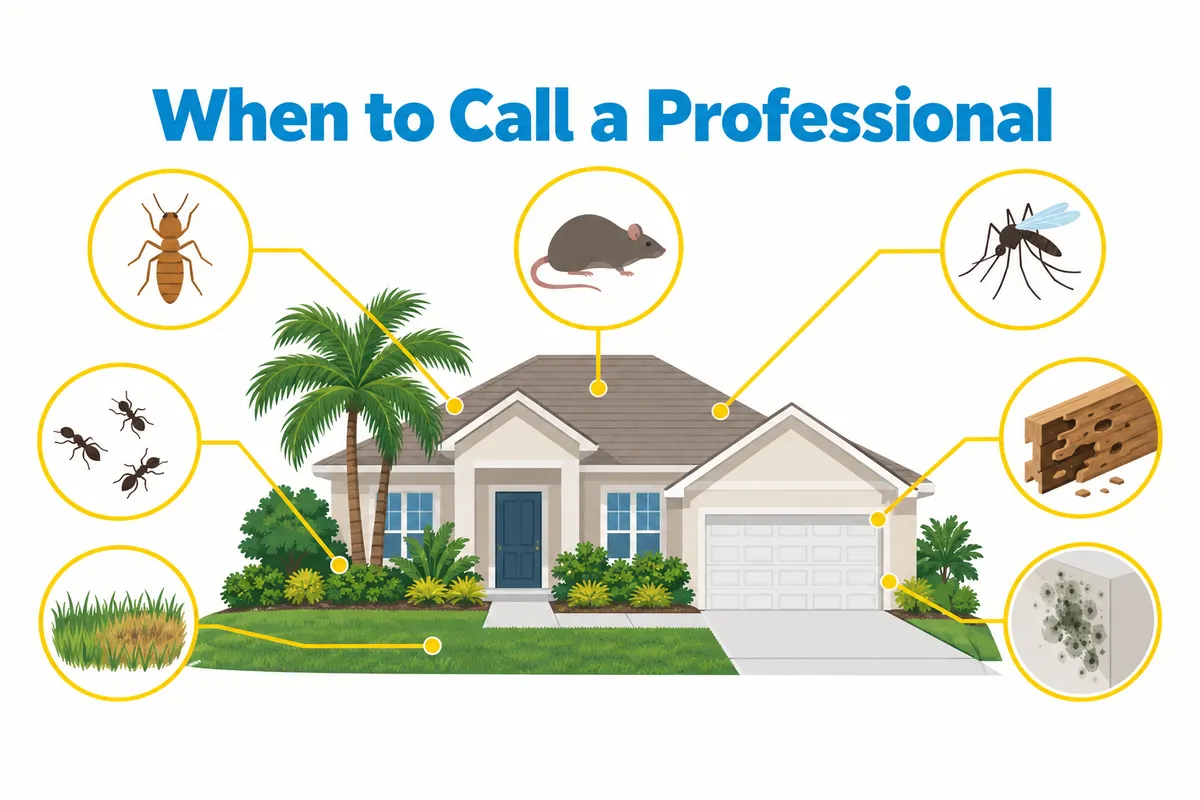
When to Call a Professional
Call for an inspection when:
- Ants or roaches keep showing up indoors after the gap under the door is closed.
- You find small roaches in the kitchen or bathroom. ENY-214 says that is where the German cockroach is usually found, and it adds that outdoor cockroaches do not survive well indoors.
- You see any sign of a rodent or a snake getting inside.
- Your log shows activity in rooms nowhere near an exterior door.
The UF/IFAS selection guide says a company should send someone to inspect the property and home, and that pest management professionals should work with you to figure out how the pests became a problem in and around your home.
How Waves Pest Control Checks Doors
A first Waves Pest Control visit starts with a property walk to identify active pressure, including an inspection of the soffits, eaves and slab line. When rodents are the concern, our inspection covers the roofline, soffits, gable, dryer and plumbing vents, A/C line penetrations, and the garage and door sweeps, plus the attic, with the findings photo-documented. The sealing work uses materials such as hardware cloth, sealant, vent covers and door sweeps.
If you’re in Bradenton and want the doors and the rest of the house looked at together, start with our Bradenton pest control page or request a pest control quote. For scheduled visits through the year, compare WaveGuard memberships.