Jump to a section (8)
Itchy red dots around the ankles are the classic flea complaint, and they often lead back to a dog or cat in the house. This guide uses what UF/IFAS Extension, the CDC and the National Library of Medicine publish to help you read the bites, care for them, and find where the fleas are coming from in a Southwest Florida home. If you would rather hand the house and yard to someone else, our pest control services page explains what a visit covers.
What do flea bites look like on a human?
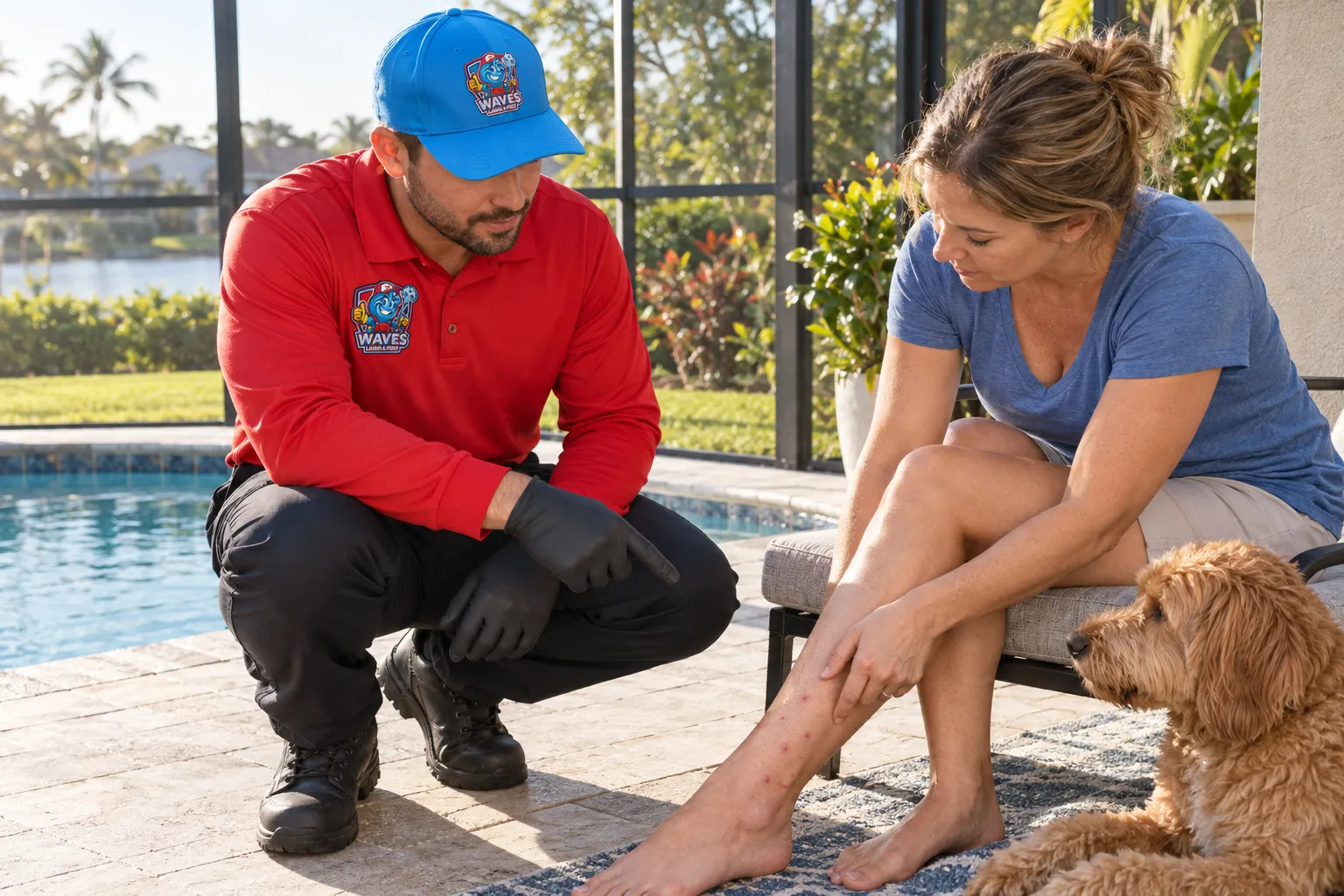
A flea bite usually looks like a small red spot with a red ring around it and very little swelling. That description comes from the UF/IFAS Extension publication Fleas (ENY-205), which says the red spot is where the flea pushed in its mouthparts.
The same UF/IFAS page adds a few details worth knowing:
- The bites can itch intensely, and scratching often leads to a secondary infection.
- Some people do not react to flea bites at all, so two people in the same house can have very different reactions.
- Other people are sensitive and can have severe allergic reactions.
The National Library of Medicine’s MedlinePlus page on insect bites and stings puts fleas with mosquitoes and mites as bites that are more likely to itch than hurt.
A bite pattern is a clue. It does not prove which insect bit you. Other bites leave red, itchy marks too, so compare yours in our side-by-side guide to bed bug vs. flea vs. mite bites before you treat anything. The way to confirm fleas is to find the fleas.
Want a number for help with the house and yard before you decide? Get a pest control estimate online.
Where on the body do fleas bite?
Fleas bite low. UF/IFAS says the usual places of attack are the ankles and the lower parts of the legs, and the CDC’s flea prevention page says flea bites often land on the lower legs and feet.
That pattern follows where fleas live. Per UF/IFAS, fleas live and breed most heavily where pets rest, and people who come near those resting places get bitten. A dog bed by the sofa or a cat’s favorite rug puts the fleas at ankle height.
Why fleas bite people when the pet is the real host
The CDC says most fleas in the United States prefer to feed on animals, and people get bitten when they share space with a flea-infested animal. UF/IFAS says the cat flea is the most frequently found flea in Florida. The UF/IFAS Featured Creatures profile of the cat flea, Ctenocephalides felis, calls it the most common domestic flea and says it lives on both cats and dogs in North America.
Here is how the cycle plays out in a house, per that profile and the UF/IFAS Fleas publication:
- Adult fleas live on the pet and need a blood meal to lay eggs.
- The eggs are dry and smooth, so they fall off the pet onto floors, bedding and furniture.
- Larvae hatch and feed on flea dirt, the dried blood that adult fleas pass and that drops off the pet.
- Larvae spin cocoons and pupate. UF/IFAS says fleas can stay in the pupal stage from five days to five weeks when no host is around.
- New adults come out of the cocoon when vibration or carbon dioxide tells them a host is near, and they start looking for blood.
Step 5 explains why a house that sat empty can bite hard. UF/IFAS says people coming back to a house that sat empty can be hit by a wave of fleas at once. It also says that when the pets leave the house, the hungry fleas overrun the home and bite people more often.
Season matters too. UF/IFAS says hot, wet summer months favor egg laying, and that the largest adult flea numbers come in August and September.
Pro tip: Keep vacuuming for the whole treatment period, and empty the canister or bag outside every time. The CDC says vacuuming and cleaning should continue to pick up the eggs and young fleas that keep hatching, and UF/IFAS notes that larvae curl around carpet fibers and cocoons stick to the carpet, so one pass will not get them all.
Will fleas stay in your bed?
They can if a pet sleeps there. UF/IFAS says the adult cat flea stays on its animal host, but flea eggs fall off the pet onto bedding and furniture, and the larvae develop where the pet rests. A bed the dog or cat shares with you counts as one of those resting places.
The CDC’s guidance on getting rid of fleas says to wash bedding, rugs and pet bedding, and to vacuum floors, carpets and along the edges of walls. If you are worried about fleas on your head instead of your sheets, our post on whether dog fleas can live in human hair covers that question.
How to care for flea bites
Start with soap and water. MedlinePlus lists these general first-aid steps for most insect bites:
- Wash the bite thoroughly with soap and water.
- Hold ice wrapped in a washcloth on the spot for 10 minutes, take it off for 10 minutes, and repeat.
- Watch the bites over the next several days for signs of infection, such as more redness, swelling or pain.
Try not to scratch. UF/IFAS links scratching flea bites to secondary infection. If you want an anti-itch product, ask a pharmacist or your doctor which one fits you.
When to see a doctor, and when to get emergency care
Get emergency care right away for trouble breathing, swelling of the face or mouth, throat tightness, chest pain, or fainting. MedlinePlus lists these among the signs of a severe allergic reaction, which needs emergency care.
See your doctor for these:
- A bite that gets more red, swollen or painful over the next few days.
- Fever and chills, headache, or a rash in the 3 to 14 days after contact with fleas. The CDC’s flea-borne typhus page lists those symptoms and that time window, and asks you to tell your healthcare provider about the flea contact.
UF/IFAS says cat fleas can pass plague and murine typhus to people, though such reports are rare.
How to stop flea bites at home
Fewer fleas on your pets and floors means fewer bites on your legs. The UF/IFAS cat flea profile says fleas have to be dealt with on the pet, in the home and in the yard, because new adults that develop in the house jump back on a treated animal. The newer UF/IFAS Fleas publication adds that on-animal treatment alone is often enough, since the treated pet picks up fleas as it moves through the house.
- Confirm it is fleas. Watch your pet for scratching, which UF/IFAS names as an early sign. Look for adult fleas or flea dirt in the pet’s coat and bedding. If you cannot find any, use our pest library or have a professional identify what is biting you before you treat anything.
- Treat every pet. The CDC says every pet in the home must be treated. Bathe pets with soap and water and comb them with a flea comb, and talk to your veterinarian about the flea control product that is right for each animal.
- Clean where the pets rest. Wash bedding, rugs and pet bedding. Vacuum carpets, rugs, chair and sofa cushions, and along the walls, then empty the vacuum outside, as the CDC describes.
- Protect your legs while you work on it. The CDC recommends long socks and pants and an EPA-registered insect repellent with DEET, picaridin, IR3535, oil of lemon eucalyptus, PMD or 2-undecanone. Use it as the product label directs.
- Check the shaded spots outside. UF/IFAS says flea larvae prefer places protected from rain, irrigation and sunlight, so any yard work belongs in the shady spots where pets lie. UF/IFAS calls spraying the entire yard wasteful. Keep pets out of hard-to-treat spots like the space under a deck.
What not to do
- Do not move the pets out to starve the fleas. UF/IFAS says the fleas then overrun the home and bite people more often.
- Do not count on garlic, brewer’s yeast or vitamin B in your pet’s food. UF/IFAS says scientific evidence suggests these are of little value.
- Skip pennyroyal oil products. UF/IFAS warns that its active compound has dose-related toxicity to mammals.
- Do not spray a product around the house without reading it first. Follow the label, keep any product off food-preparation surfaces, and keep it out of sight and reach of children and pets.
When to call a pro, and how Waves approaches it
Call a licensed professional when the bites keep coming after every pet is on a product your veterinarian chose and you have kept up the washing and vacuuming. The CDC says a licensed commercial pest control applicator can help you decide which products are best for inside your home and the yard.
Waves Pest Control starts a first visit with a walk of the property to find where the pests are active, and any treatment is applied according to the product’s EPA label. Treating the pet itself is a question for your veterinarian, as the CDC advises. You can read about pest control in Sarasota and pest control in Bradenton, or see how recurring plans work on the WaveGuard memberships page.
Ready to get help with the house and yard? Get your pest control estimate in about a minute.
Frequently Asked Questions
Will rubbing alcohol stop flea bites from itching?
Rubbing alcohol is not on the MedlinePlus first-aid list for insect bites. That list starts with soap and water and a wrapped ice pack. Ask a pharmacist or your doctor before you put anything else on a bite you have been scratching.
What home remedy kills fleas on humans?
UF/IFAS says the adult cat flea stays on its animal host, and people get bitten near the places pets rest. So the home steps that matter are aimed at the pet and the house: treat every pet through your veterinarian, wash the bedding, and keep vacuuming.
Can flea bites make you sick?
Rarely. UF/IFAS says cat fleas can pass plague and murine typhus to people, though such reports are rare. See your doctor if fever, headache or a rash shows up in the 3 to 14 days after flea contact, which is the window the CDC gives for flea-borne typhus.