Jump to a section (8)
- 01What a “webworm” means in a Southwest Florida lawn
- 02What UF/IFAS says about tropical sod webworm
- 03What the damage looks like
- 04Is it sod webworm, chinch bug, or armyworm?
- 05How to confirm webworms: the soap flush
- 06How to get rid of webworms once you confirm them
- 07Where Waves fits in
- 08Frequently Asked Questions
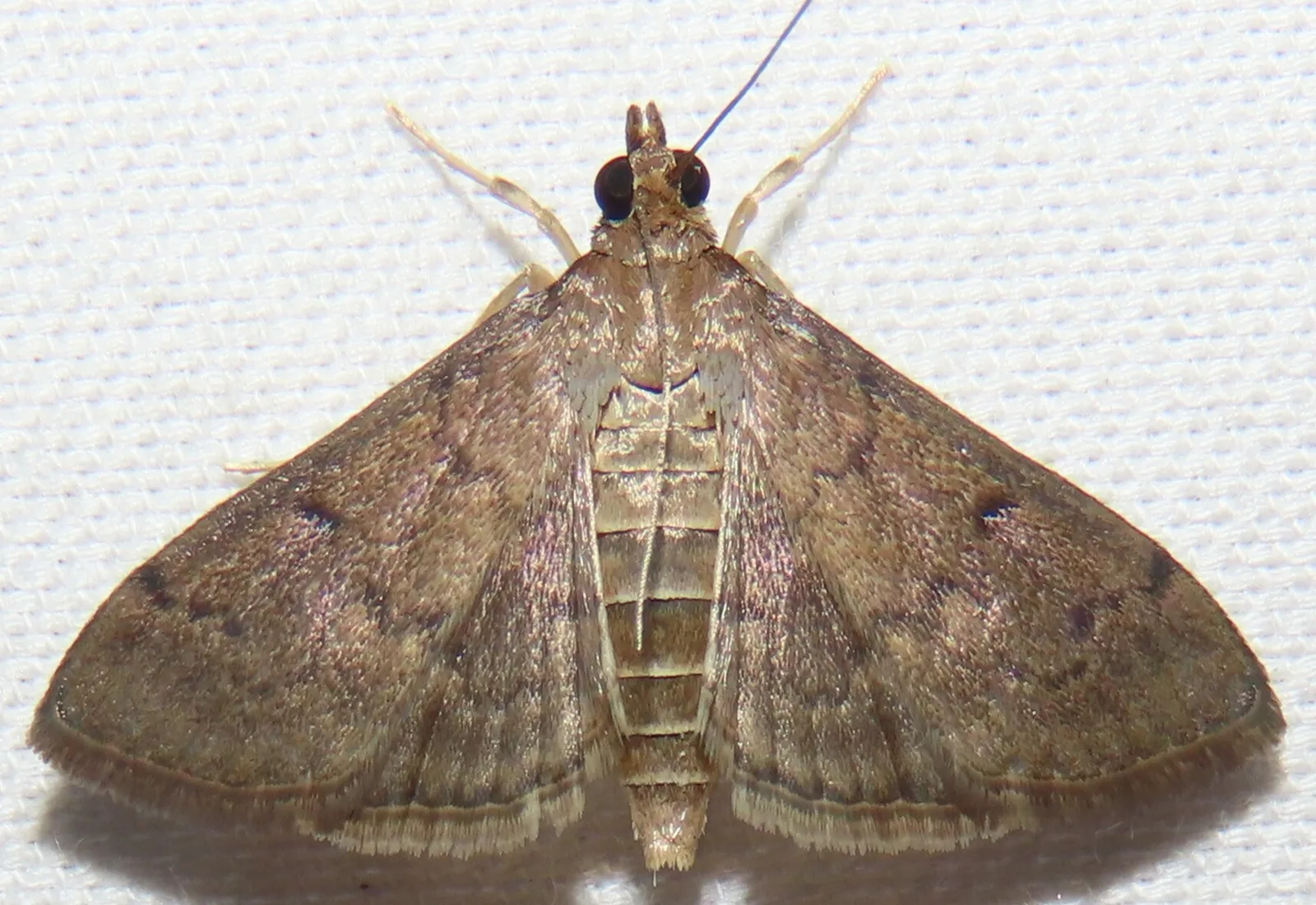
If a cloud of small tan moths flutters up when you mow, and the grass behind them looks chewed or scalped, you may have tropical sod webworms. Before you try to get rid of webworms, confirm that is what you have. This is the main sod webworm in Florida lawns. It feeds on St. Augustinegrass and other warm-season turf, and it is active in Southwest Florida for much of the year.
Here is what UF/IFAS says about the pest, how to confirm it before you treat anything, how it differs from chinch bugs and armyworms, and what to do next.
What a “webworm” means in a Southwest Florida lawn
Two different pests get called webworms. This guide is about the lawn one.
- Tropical sod webworm (Herpetogramma phaeopteralis) is a turf pest. The caterpillars feed on grass blades, and the damage is in the lawn.
- Fall webworm is a pest of trees and shrubs. UF/IFAS says its silk tent “normally encloses the foliage at the end of a branch” (UF/IFAS Featured Creatures). Webs in a tree canopy are not the same problem as a thinning lawn.
For more on the Sarasota side of this pest, see our tropical sod webworm guide for Sarasota lawns.
What UF/IFAS says about tropical sod webworm
The moths do not eat your lawn. The caterpillars do. According to the UF/IFAS Featured Creatures profile, “larvae are the damaging stages,” and they feed at night and hide in the thatch during the day (UF/IFAS).
- Moths: UF/IFAS describes them as dingy brown, with a wingspan of about three quarters of an inch and wings held in a triangle at rest. UF/IFAS Gardening Solutions says they scatter when you walk through the grass (UF/IFAS Gardening Solutions).
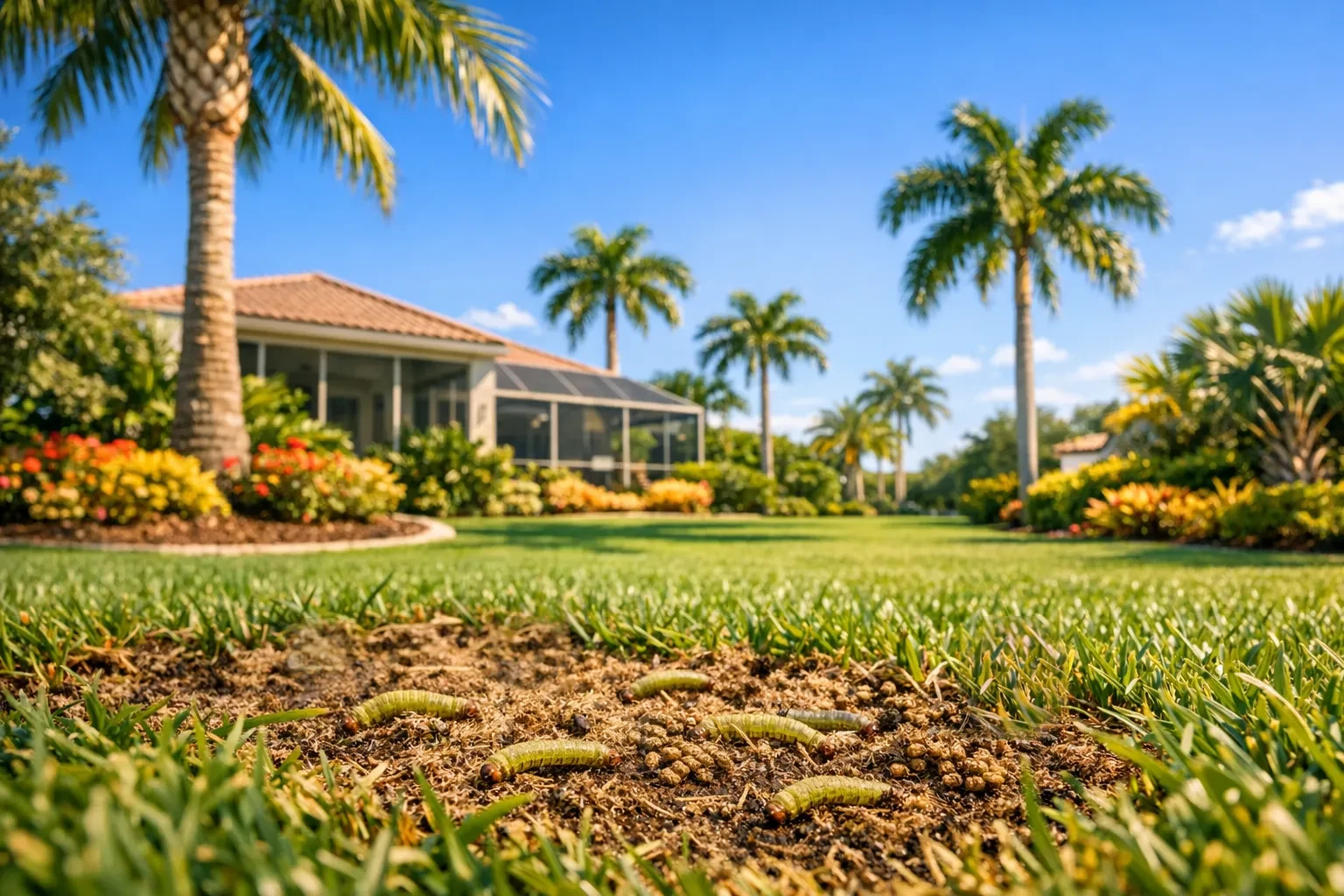
- Caterpillars: the Gardening Solutions page describes them as grayish-green, three quarters of an inch to an inch long. The Featured Creatures profile describes cream-colored caterpillars with brown spots on each segment. The descriptions differ, so do not rely on color alone.
- Grass types: UF/IFAS lists all warm-season turfgrasses as hosts, including St. Augustinegrass, bahiagrass, bermudagrass, zoysiagrass and centipedegrass. It also names newly established sod as a common target.
- Timing: UF/IFAS says that in southern Florida the adults are present year round, with higher numbers in September through November and a rise in March through May. The profile also says three or four generations can occur in a year in southern Florida. It is reasonable to check for them in any month.
What the damage looks like
UF/IFAS says young caterpillars do “window feeding,” chewing only the top of the leaf, so early damage is hard to notice. The first sign is often a difference in grass height where larvae are feeding.
Later, you see:
- Ragged blades that are shorter than the grass around them
- A thinning lawn with fewer blades
- Yellowish to brown patchy areas
UF/IFAS adds that heavy feeding often lets weeds move into the thinned turf.
Is it sod webworm, chinch bug, or armyworm?
All three can leave brown patches in a St. Augustinegrass lawn. Location and patch shape are clues, not proof. The only way to tell is to look for the insect.
| Pest | What UF/IFAS says to look for | How to check |
|---|---|---|
| Tropical sod webworm | Ragged, shortened blades, thinning and brown patches; moths flushing when you walk or mow | Soap flush for caterpillars |
| Southern chinch bug | Yellow to brown patches, sometimes with dead, bare centers; injury often starts in water-stressed grass or full sun | Vacuum about 1 square foot at the edge of the patch, in an area with both dead and living grass |
| Fall armyworm | Bare spots that are uniform across a large area; caterpillars with a dark head marked with a light inverted Y | Soap flush |
Sources: UF/IFAS chinch bug page and UF/IFAS fall armyworm page.
The treatments differ, and UF/IFAS says chinch bugs are becoming resistant to many insecticides. Confirm the pest first. Our guides cover chinch bugs and fall armyworms in more detail. Grass that dies because its roots are gone is a different problem; our guide on how to get rid of grubs covers the root feeders.
How to confirm webworms: the soap flush
UF/IFAS recommends finding larvae with a soap flush, especially if you have seen moths. Its tropical sod webworm profile does not give a recipe. The UF/IFAS fall armyworm page does: mix one tablespoon of liquid dish soap in one gallon of water, then pour it onto a four-foot by four-foot area of turfgrass near the damage. Caterpillars that are present crawl to the surface. UF/IFAS suggests testing several areas to be sure.
If you find nothing, that does not rule out other causes, because chinch bugs and other problems can look similar. UF/IFAS Gardening Solutions says you can also send pictures or a turf sample to your county Extension office. The Manatee County and Sarasota County Extension pages both list plant and pest help.
How to get rid of webworms once you confirm them
- Spot treat, not the whole yard. UF/IFAS advises spot treatment of the infested areas and selecting a pesticide labeled for this pest. Follow the label for rates, watering and timing. If you are unsure, ask your county Extension office or a licensed lawn pest professional.
- Keep the lawn healthy. UF/IFAS says healthy turfgrass with proper fertilization, irrigation and mowing can decrease susceptibility.
- Keep watering correctly. UF/IFAS Gardening Solutions says the grass should recover as long as you keep irrigating it properly and keep it healthy.
- Know the limits. The Featured Creatures profile says the grass may recover if infestations are not too severe, but patches and weed growth can follow. UF/IFAS reports that one beneficial nematode species (Steinernema carpocapsae) has been successfully tested against tropical sod webworms in Florida. Ask your county Extension office what is practical for a home lawn.
Moths can lay new eggs while adults are active, so keep checking the lawn, especially in September through November, when UF/IFAS reports higher adult numbers in southern Florida.
Where Waves fits in
At Waves Pest Control, an initial lawn visit includes a property walk with an active pest check, and photos go into the service report. If you want a second set of eyes on a patch you cannot name, see our lawn pest control in Bradenton and lawn pest control in Sarasota pages. For a price estimate, use the pest control calculator.
Header photo: an adult tropical sod webworm moth (Herpetogramma phaeopteralis) in Jacksonville, Florida, by kcthetc1 via iNaturalist, public domain under CC0, cropped.
Frequently Asked Questions
What are sod webworms?
Sod webworms are caterpillars of small moths that feed on grass blades. The one UF/IFAS describes in Florida lawns is the tropical sod webworm, which feeds on St. Augustinegrass and other warm-season turf.
Are the moths in my lawn the problem?
No. The moths do not feed on your grass. The caterpillars do the damage, so a flush of moths is a signal to check for caterpillars with a soap flush.
When are sod webworms active in Southwest Florida?
UF/IFAS says that in southern Florida the adults are present year round, with higher numbers in September through November and a rise in March through May. Check any time you see moths and chewed grass.
Will my lawn grow back after sod webworm damage?
Often, if the damage is not severe. UF/IFAS says the grass can recover if you keep it healthy and irrigated properly, but heavy feeding can leave brown patches and let weeds in.
How do I tell sod webworms from chinch bugs?
Look for the insect. Do a soap flush for caterpillars, and vacuum a small area at the edge of the damage for chinch bugs. Patch color and shape can look alike, so location alone is not proof.