Jump to a section (11)
- 01When is DIY pest control reasonable for a Sarasota home?
- 02DIY vs. Professional, Side by Side
- 03How to choose between DIY and a professional
- 04The worst months for bugs in Southwest Florida
- 05The Brutal Reality of Living in Bug Paradise (aka Bradenton)
- 06The DIY Delusion (We’ve All Been There)
- 07Is It Worth Getting an Exterminator? The Honest Answer
- 08The Professional Advantage: What You’re Actually Paying For
- 09When DIY Makes Sense in Florida
- 10The Bottom Line
- 11Frequently Asked Questions
When is DIY pest control reasonable for a Sarasota home? DIY is reasonable when you can name the pest, the problem stays small, and the product label covers that pest and that place. Call a licensed professional for termites, rodents in the attic, German cockroaches, yellow jacket nests, or anything that keeps coming back.
Waves Pest Control is a licensed pest and lawn company in Southwest Florida, licensed by FDACS under Florida Statute Chapter 482, serving Bradenton, Sarasota and nearby cities. This guide covers when doing it yourself makes sense, when it stops making sense, and how to tell the difference before you spend a weekend on it.

Picture this: it’s 11 PM, you finally sit down after getting the kids to bed, and you see it. A cockroach. Casually strolling across your kitchen counter like it pays rent.
Your first thought? “I can handle this myself. How hard can it be?” Your second thought, three weeks and a cabinet full of DIY pest products later, when you’re still finding roaches near the cereal boxes? “Maybe I should have called someone.”
If you’re asking “Is it worth getting an exterminator?” you’re probably somewhere between those two thoughts. Here’s the honest answer, including the cases where the answer is no.
When is DIY pest control reasonable for a Sarasota home?
DIY is reasonable for a Sarasota home when the pest is identified, the problem is small, and a homeowner product’s label covers it. Florida law allows it: the FDACS pest control FAQ says you can make pesticide applications to your own individual residential property. The EPA’s pesticide label guidance adds the catch: the label is the law, and using a product in a way inconsistent with its labeling violates federal law.
These jobs usually fit a homeowner:
- A lone sighting you can identify. One spider in the bathroom or one palmetto bug by the garage door after a storm is a wanderer. Identify it with the pest library, then seal the gap it likely used.
- A few fire ant mounds in the yard. UF/IFAS Gardening Solutions recommends a combination of broadcast bait applications and individual mound treatments with baits. It also notes fire ants can quickly re-infest an area once removed, so plan on repeat checks.
- Standing water and mosquitoes. The CDC tells homeowners to empty and scrub, turn over, cover, or throw out anything that holds water once a week: buckets, planters, toys, birdbaths, flowerpot saucers and trash containers.
- Food, water and shelter fixes. The EPA’s do’s and don’ts of pest control starts with sealed food containers, fixed leaks, less clutter and closed-off entry points. That work helps whether you hire anyone or not.
DIY stops being reasonable in a Sarasota home when the problem lives inside the structure or moves between homes:
- Condo towers Downtown and in the Rosemary District: German cockroaches migrate between units through shared plumbing, and getting them under control takes building-wide coordination. One unit spraying on its own leaves the next unit’s population in place.
- Mature oak streets like Gulf Gate and The Meadows: roof rats use the oak canopy to reach tile roofs, then get into attics through ridge tile gaps. Attic rodents bring droppings, and the CDC cleanup guidance says not to vacuum or sweep rodent urine, droppings, or nesting materials.
- Historic inland neighborhoods like Laurel Park, Gillespie Park and Hudson Bayou: 1920s to 1950s wood-frame homes carry subterranean termite pressure, and swarmers show up on window sills in April and May. Termites call for a licensed inspection.
- New builds in Palmer Ranch, UTC and the east-Sarasota tract communities: fresh sod brings fire ants, and utility penetrations are often left untreated at handoff. The yard mounds can be a bait job for you. The gaps around pipes and conduits are worth having someone look at.
- Yellow jacket nests: UF/IFAS describes their aggressively defensive nature and recommends hiring a professional pest control operator to handle the colony.
DIY vs. Professional, Side by Side
Not every pest situation warrants a technician visit, and not every situation is DIY-ready. Here’s what differs between the two approaches in a Southwest Florida home. For pricing on professional service, get a pest control estimate.
| Dimension | DIY (store-bought) | Professional service |
|---|---|---|
| Best fit | One identified pest in one spot, a few yard mounds, standing water | Termites, attic rodents, German cockroaches, stinging-insect nests, repeat activity |
| Diagnosis | Your ID from a photo, the pest library or the county extension office | Inspection and species ID by a licensed technician |
| Products | Retail products labeled for homeowner use | Products applied under an FDACS license, as each label directs |
| Where the work happens | Spots you can see and reach | Attics, soffits, eaves, the slab line and other inspection points |
| Follow-up | You set the two-week check yourself | Depends on the plan; ask what happens between visits |
| Cost | Product cost plus your time | Quote-based |
DIY pest control vs. professional service for Southwest Florida homes. A category comparison, not pricing advice.
How to choose between DIY and a professional
- If you can name the pest and it is in one spot or a few yard mounds, start with DIY and a product whose label covers that pest and location.
- When droppings, gnaw marks or scratching in the ceiling point to rodents in the attic, call a licensed professional.
- When you see mud tubes, termite swarmers or piles of shed wings on a sill, hire a licensed termite inspector.
- If German cockroaches show up in a condo or apartment, call a professional and tell building management so neighboring units get treated too.
- If a DIY fix has not held after two weeks of checks, choose a professional inspection.
The worst months for bugs in Southwest Florida
Pest pressure here follows the calendar, so the best month to DIY depends on the pest. The Sarasota and Bradenton calendar looks like this:
- January: roof rat pressure indoors peaks as cooler nights push them into attics.
- April and May: subterranean termite swarmers land on window sills in older inland homes.
- June through August: chinch bugs peak on St. Augustine lawns.
- June through October, the rainy season: ghost ants move indoors, mosquitoes spike, and fire ant mounds get active after rain.
The rainy season is when DIY gets harder. Afternoon storms bring standing water back every few days, so the CDC’s once-a-week dump-and-scrub routine turns into a real chore. Rain also matters for anything you apply outside: read the label for its dry time and rain guidance before you treat.
Your lawn is its own animal. UF/IFAS Gardening Solutions calls southern chinch bugs a major pest of St. Augustinegrass and says injury usually starts in grass that is water-stressed or in full sun. And in our sandy soil, UF/IFAS notes fire ant mounds stay smaller than the ones you would see in clay-soil states, so a flat-looking yard can still have active colonies.
The Brutal Reality of Living in Bug Paradise (aka Bradenton)
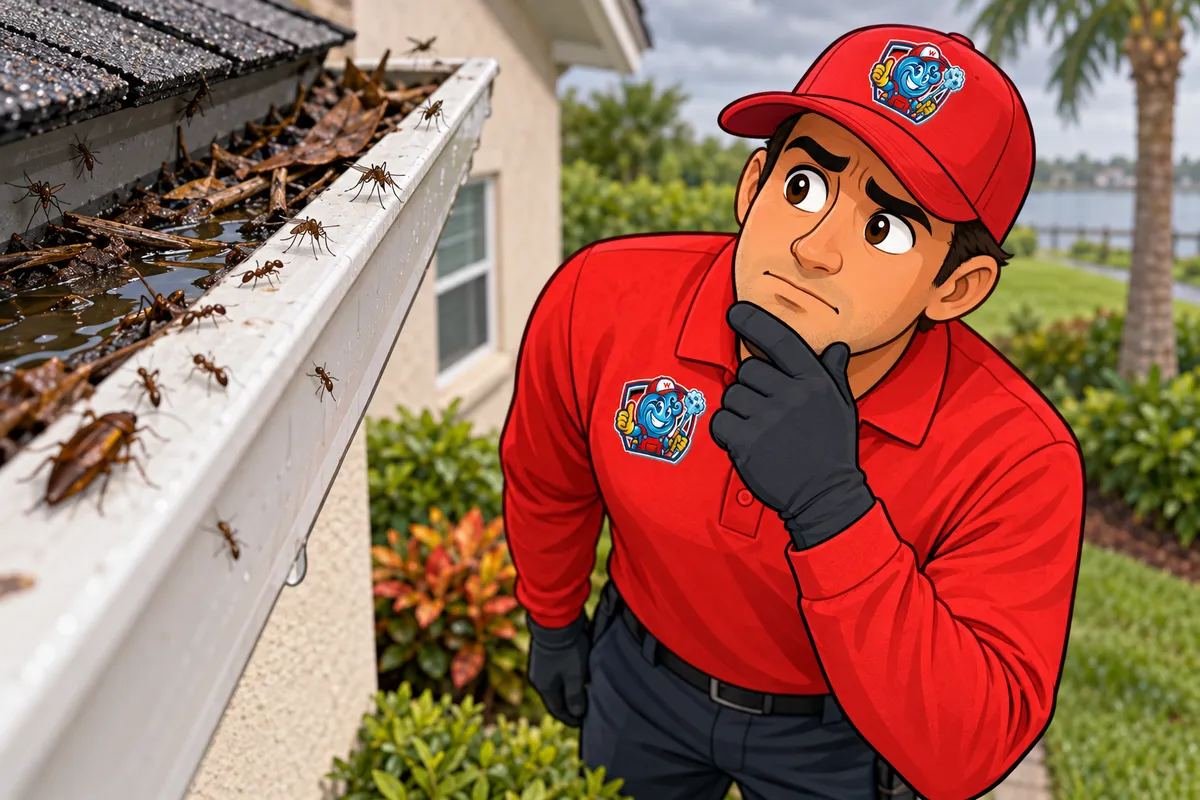
First, let’s talk about what we’re dealing with here in Bradenton. Our warm, humid climate is great for year-round outdoor living, and it keeps pests active through most of the year too.
Our friends up north get a winter break. Here, the calendar above just rotates which pest is the problem: roof rats in winter, termite swarmers in spring, ghost ants and mosquitoes all through the summer rains.
And those giant palmetto bugs that make you question your life choices? “Palmetto bug” is the local name for big outdoor roaches, usually the American cockroach or the smokybrown cockroach. They live in mulch, woodpiles, soffits and tree holes, and wander indoors at night.
Health risks are real too. The CDC explains that hantavirus can get into the air when fresh urine, droppings or nesting materials from an infected rodent are stirred up, and its mosquito guidance lists West Nile among the infections that bite prevention helps protect against.
So when you’re wondering if it’s worth getting an exterminator, remember: we live in a place where pests don’t take vacation days.
The DIY Delusion (We’ve All Been There)
Let me guess your DIY pest control journey so far:
You started with those cute little ant baits from the grocery store. When those didn’t work, you graduated to the industrial-strength spray from the hardware store. Then you found online recipes involving dish soap and essential oils. Maybe you even tried that boric acid trick your neighbor swears by.
Sound familiar?
Here’s what nobody tells you about DIY pest control: the products work on the bugs they touch, and a lot of the problem is somewhere you aren’t spraying. The EPA’s own advice leans on baits as “a first line of chemical defense against insects or rodents” and on treating targeted locations instead of spraying over a whole room.
The Hidden Costs of “Cheap” DIY Solutions
Let’s do some real math here. Those store-bought bottles seem affordable, but how many have you bought this year? And how many times have you re-treated the same areas?
DIY pest control done without an ID is like grocery shopping without a recipe. You keep buying more stuff hoping something will work.
Meanwhile, that roach you saw has relatives. If it’s a German cockroach, the UF/IFAS cockroach gallery says the species prefers kitchens and then bathrooms, and usually runs three to four generations a year, as many as six under ideal conditions. A surface spray on the counter does not reach the ones living behind the appliances. And termites feed out of sight: drywood termites live entirely inside the wood, and subterranean termites stay connected to the soil through mud tubes.
Safety Concerns (Because We Have Enough to Worry About)
Here’s something that should get your attention more than the bugs: most DIY pest control involves handling pesticides without training. The EPA’s do’s and don’ts are blunt about the mistakes:
- Don’t use outdoor chemicals indoors, because they stay toxic longer inside.
- Don’t assume that twice as much is better.
- Don’t transfer pesticides to other containers, and don’t reuse empty pesticide containers for anything else.
- Use ready-to-use products, with no mixing needed, whenever possible.
- Keep pets and children away from areas where pesticides have been applied.
Those online recipes that mix household chemicals skip every one of those rules. Professional pest control operators in Florida work under an FDACS license and apply products as the label directs. FDACS also lets you check online whether a company or person is licensed before you hire them.
Is It Worth Getting an Exterminator? The Honest Answer
Short answer: for a lot of Florida pest problems, yes. For a lone wanderer or a couple of fire ant mounds, maybe not.
Long answer: here’s what a professional visit gets you that a bottle from the hardware store doesn’t.
They Know What They’re Looking For
Professional exterminators in Bradenton don’t just show up and spray everything in sight. A good one inspects the home, identifies which pests you’re dealing with, finds where they’re coming from, and builds the treatment around that. The EPA tells homeowners to ask anyone they hire “to find and correct the source of the problem before applying pesticides,” and to request baits and crack and crevice treatments when feasible. Hold any company to that.
Think of it this way: you wouldn’t try to remove your own appendix because you watched a video online. A termite colony inside your walls is a similar kind of job.
What a Professional Visit Actually Looks Like
Here is how our approach works at Waves Pest Control, so you have something concrete to compare. The first visit typically runs 60 to 90 minutes: a walk of the property, finding active pressure, inspecting soffits, eaves and the slab line, knocking down webs at entry points, a full perimeter treatment about 3 feet out and 3 feet up, interior spot treatment where pests are active, and rodent stations if the inspection calls for them. Recurring visits are quarterly and typically run 30 to 45 minutes, focused on the exterior, with interior service on request or when there is active pressure. If pests show up between quarterly visits, WaveGuard memberships let you report it and request a re-treatment. The full list of what we treat is on the pest control services page.
Don’t panic if you see more bugs for a few days after a treatment, especially ants or roaches. That is usually the flush-out effect: the product disturbs hidden harborages and pushes insects into the open. Activity typically falls off within one to two weeks. If it doesn’t, call the company back.
What It Costs, Without the Guesswork
Professional pricing depends on your home’s size, the pests involved and how often the service runs, so any number you see online is a rough guess for someone else’s house. Compare quotes by scope: which pests, which areas, how often, and what happens between visits. If you’re weighing a monthly figure from one company against a quarterly figure from another, convert both to the same period and line up what each one covers. For a number on your own home, get a pest control estimate.
Peace of Mind (Worth a Lot)
Here’s what professional pest control really buys you: the ability to stop thinking about bugs all the time.
No more lying awake wondering what that scratching sound was. No more frantically searching “how to get rid of ants” at 2 AM. No more explaining to your kids why there are roaches in the pantry again.
Convenience Factor (Because You Have Better Things to Do)
Professional pest control saves you time and takes the guesswork out of product shopping. Instead of spending weekends researching treatments and applying them yourself, you get scheduled visits from people who do this every day.
The Professional Advantage: What You’re Actually Paying For
When you hire a professional exterminator, you’re paying for more than someone to spray. You’re paying for:
- Identification: the right species, which decides the right product and the right spot.
- Inspection access: attics, soffits, eaves and the slab line, the places most DIY plans skip.
- Products and training: pesticides applied under a state license, as each label directs.
- Follow-up: a plan for what happens when pests show up between visits. Ask for it in writing.
- A license you can check: FDACS lets you look up a company or applicator online.
Seasonal Adaptation (Because Florida Pests Don’t Follow Rules)
Florida pest patterns change through the year, and treatment has to change with them. Termite swarmers in spring, ghost ants in the summer rains and roof rats in winter need different work. Your DIY approach? Same spray year-round, and you’re left wondering why it stops working.
When DIY Makes Sense in Florida
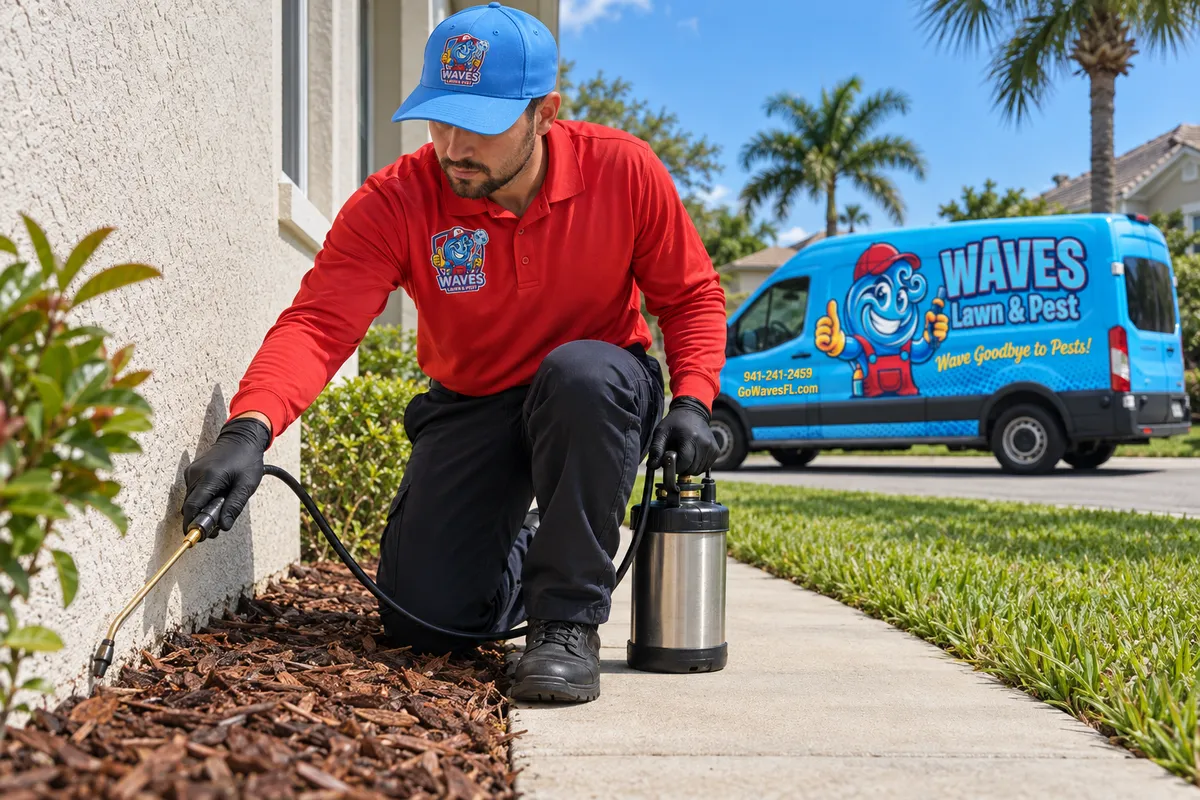
Look, there’s a place for DIY pest control. If you’re dealing with a single spider in your bathroom, a few ants that got lost, or a couple of fire ant mounds in the side yard, a label-covered product and a two-week check is a reasonable plan.
But if you’re asking “Is it worth getting an exterminator?” you may be past that stage. Recurring activity, more than one pest type, anything in the attic or the walls, or a problem that keeps coming back despite your best efforts all point to an inspection.
The Bottom Line
Is it worth getting an exterminator? In Bradenton and Sarasota, for termites, rodents, German cockroaches, stinging-insect nests and repeat problems, usually yes. For a lone wanderer, a few yard mounds or a standing-water problem, start with DIY and give it two weeks.
Stop playing whack-a-mole with roaches. Identify the pest, follow the label, and call a licensed professional when the problem is bigger than one spot.
Frequently Asked Questions
Is DIY pest control worth it in Sarasota?
For a small, identified problem that a homeowner product label covers, yes. For termites, attic rodents, German cockroaches in shared-wall buildings, or yellow jacket nests, a licensed professional is the better fit.
Can I legally treat my own house for pests in Florida?
Yes. The FDACS pest control FAQ says you can make pesticide applications to your own residential property, and the EPA treats the product label as the law, so follow it exactly.
Is it worth getting an exterminator for ants?
It depends on the ant. A few fire ant mounds in the yard are a reasonable bait job for a homeowner per UF/IFAS, while ghost ants that keep coming indoors during the rainy season are often worth an inspection to find where they are nesting.
How much does professional pest control cost?
It depends on your home’s size, the pests involved and how often the service runs, so compare quotes by scope and frequency instead of the headline number. For your own home, get a pest control estimate.
What should I know about pesticides, kids and pets?
The EPA says to keep pets and children away from areas where pesticides have been applied. Professionals use EPA-registered products and apply them as the label directs; ask your technician when treated areas can be used again, which is usually once the product is dry.
Ready to talk it through for your own home? See Bradenton pest control or Sarasota pest control, or get a pest control estimate.