Jump to a section (10)
- 01How DIY pest control fits integrated pest management
- 02Step 1: Find out what you have
- 03Step 2: Seal the ways in
- 04Step 3: Cut off food, water and hiding places
- 05Step 4: Tidy the yard and change the lights
- 06Step 5: Monitor before you spray
- 07If you use a product, the label is the law
- 08What UF/IFAS says about ants and cockroaches
- 09Where DIY stops
- 10Frequently Asked Questions
DIY pest control in Southwest Florida works best as prevention first and product second. EPA and UF/IFAS both describe the approach as integrated pest management: work out what the pest is, shut off what lets it in and what feeds it, watch whether it is a real problem, and only then reach for a control. Florida lets you apply pesticides to your own home, and when you do, the product label sets the rules. This guide goes step by step through what UF/IFAS and EPA say a homeowner can do, then says where do-it-yourself stops.
How DIY pest control fits integrated pest management
EPA describes integrated pest management (IPM) as a series of evaluations, decisions and controls rather than one method, and says it works at “the home, garden, and workplace” as well as on farms. Its steps are to set an action threshold, monitor and identify the pest, prevent, and then control (EPA). Two lines matter most for a homeowner. First, “Sighting a single pest does not always mean control is needed.” Second, when control is needed, effective, less risky controls come first, and EPA adds: “Broadcast spraying of non-specific pesticides is a last resort.”
UF/IFAS makes the same point about cockroaches: “Chemical use alone is the least effective control method,” and using chemicals alone “can result in insecticide resistance and, ultimately, very poor control” (UF/IFAS). So the order below is deliberate. Identify, exclude, clean up, monitor, and only then consider a product.
Step 1: Find out what you have
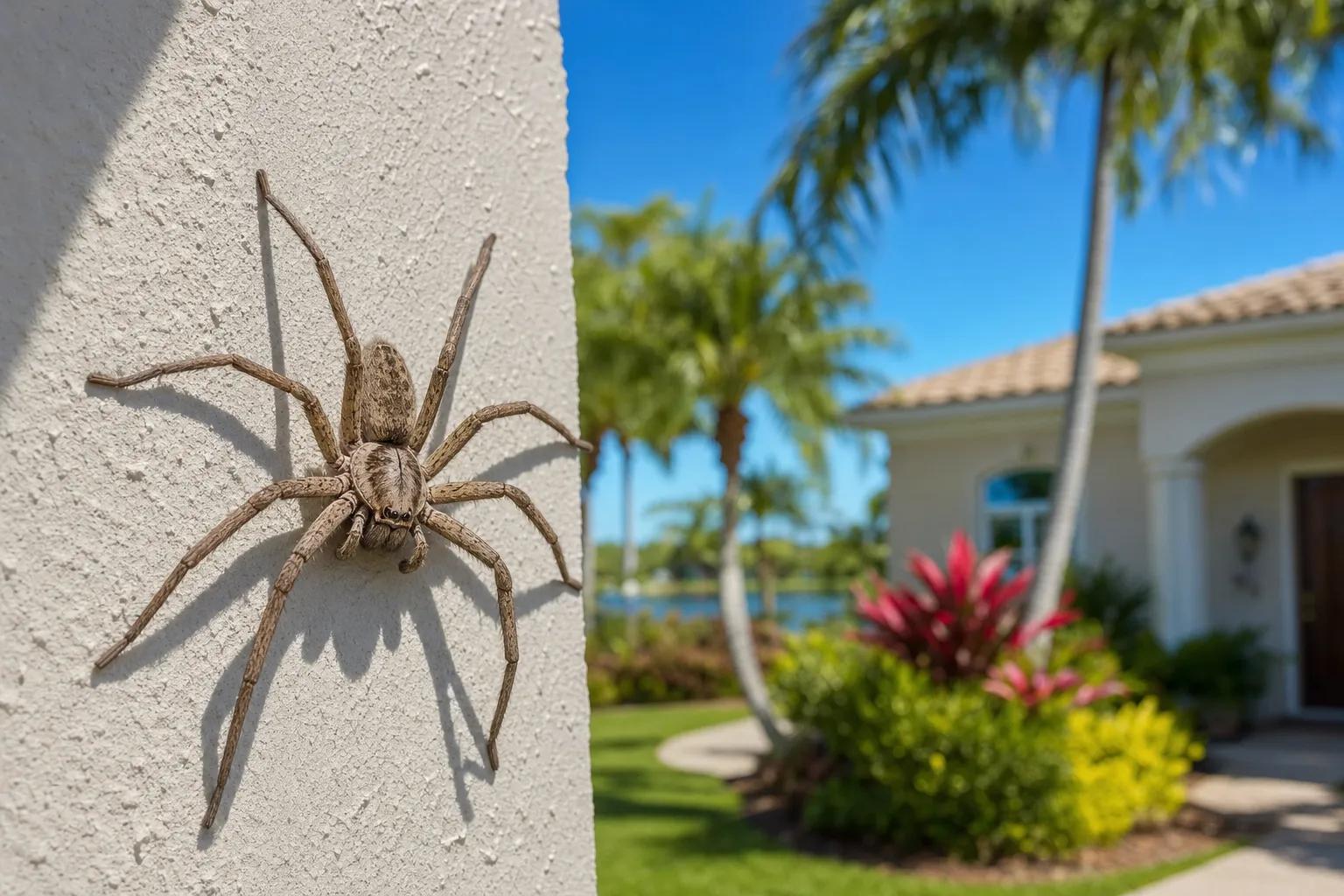
EPA says monitoring and identification “removes the possibility that pesticides will be used when they are not really needed or that the wrong kind of pesticide will be used.” Photos help. The Waves pest identifier covers common Southwest Florida pests, and the UF/IFAS Insect Identification Lab accepts insect specimens you send in when you cannot identify one.
Step 2: Seal the ways in
Exclusion is the first thing UF/IFAS lists for cockroaches, and it applies to most crawling pests. From UF/IFAS’s cockroach fact sheet:
- Keep window and soffit screens in good repair.
- Check attic vents, and make sure large openings around outside drainage lines and sewer vents are screened or sealed.
- Caulk or otherwise seal cracks and gaps around door and window frames and around plumbing and electrical entries.
- Seal gaps between door frames and doors with weather stripping.
- Use tightly packed steel wool only as a temporary filler “until openings can be sealed properly.”
Screens matter for mosquitoes too. CDC tells homeowners to “install or repair and use window and door screens” (CDC). For rodents, start with the Waves guide to getting rid of mice.
Step 3: Cut off food, water and hiding places
UF/IFAS breaks prevention for cockroaches into food, water and harborage, and the same habits help against other household pests.
- Food and garbage. Store and dispose of garbage properly. UF/IFAS says the highest concentration of cockroaches in a home is usually around the garbage can and the refrigerator. Seal garbage lids, dump sink strainers often, reseal food after opening, and seal pet food.
- Cardboard and clutter. UF/IFAS says cockroaches “breed prolifically in corrugated cardboard boxes,” so discard boxes you do not need. It also says infested grocery bags can bring German cockroaches inside, and advises inspecting groceries before storing them.
- Water. Repair plumbing leaks and empty pans under refrigerators that catch condensation. UF/IFAS calls water “the most important factor in cockroach survival”: German cockroaches survive only 12 days with food but no water, and about 42 days with water but no food. It adds that cockroaches often come indoors during droughts looking for moisture.
- Cleaning. Scrubbing cockroach feces with hot, soapy water cuts down the scent that attracts more cockroaches, and vacuuming removes cockroach skins and feces.
- Standing water outdoors. CDC’s advice is to “once a week, empty and scrub, turn over, cover, or throw out any items that hold water.” The Waves standing water checklist for a Southwest Florida patio goes through the usual spots.
Step 4: Tidy the yard and change the lights
UF/IFAS’s termite guide lists these yard habits, which keep soil, mulch, plants and moisture from crowding the house:
- Keep an inspection space of at least 6 inches between siding and the soil or mulch line.
- Place landscape plants at least 2 feet from exterior walls.
- Trim branches so they do not touch the roof.
- Remove wooden debris, and stack firewood away from the house.
- Direct A/C drainage lines and irrigation heads away from the house, and fix leaks.
Outdoor lighting is another lever. UF/IFAS Extension Sarasota County says incandescent, compact fluorescent, halogen and high-intensity discharge bulbs are highly attractive to insects, and that LED bulbs labeled “warm white” or “ultra warm white” (below 3600 K) are the least attractive. It also says yellow “bug lights” are effective at decreasing the insects that gather at exterior lights in the evening, and that turning a light off at night is the best option when you can (UF/IFAS Extension Sarasota County).
Step 5: Monitor before you spray
Because a single sighting does not always mean control is needed (EPA), keep a short log of what you see, where and when. The Waves pest observation log gives a format. For ants, UF/IFAS says “finding the nest is the key to control because ants are social insects” (UF/IFAS), so notice where trails start and where they end.
If you use a product, the label is the law
FDACS says, “Yes, you can make pesticide applications to your own individual residential property” (FDACS). The label then governs how. Every pesticide label carries the statement “It is a violation of Federal law to use this product in a manner inconsistent with its labeling,” and EPA puts it plainly: “the label is the law.” The label sets who may use the product, and where, how, how much and how often (EPA).
UF/IFAS says to read the label before you buy (to be sure it is the right product for the job), before mixing, before applying, and before storing or throwing away what is left. A label typically lists the pests and sites the product may be used on, required protective equipment, application methods that are required or prohibited, rate, frequency, restrictions and restricted entry intervals (UF/IFAS Gardening Solutions). Signal words such as DANGER, WARNING and CAUTION show how acutely toxic a product is. UF/IFAS adds that “all pesticides are poisons to some degree.” No product is “safe,” so follow the label for every step. Use only products labeled for the pest and the place.
A few more rules from EPA’s do’s and don’ts (EPA):
- Do not use outdoor products indoors. EPA says many outdoor chemicals “will remain toxic longer inside than they would outdoors.”
- Do not assume twice as much is better. Using too much of a pesticide “can endanger your family’s health.”
- Store pesticides in their original containers, and do not transfer them to other containers.
- Use fogging devices only when absolutely necessary.
- Keep baits and traps out of reach of children and pets. UF/IFAS adds that rodent baits should never go where children, pets or wildlife will come into contact with them.
If someone swallows or inhales a pesticide, or gets it in the eyes or on the skin, EPA says to call 911 if the person is unconscious, has trouble breathing or is having convulsions. Otherwise, check the label for first-aid directions and call Poison Control at (800) 222-1222 (EPA).
What UF/IFAS says about ants and cockroaches
Ants. UF/IFAS says methods that target individual trails, such as crack-and-crevice and indoor space-and-surface treatments, are “usually a ‘quick fix’” and ineffective over time because they do not significantly reduce the ant population or affect the queen. It calls baits “the most effective way to get toxicant into the nest,” available in homeowner and professional versions. Two cautions: “In all cases of bait use, do not spray any insecticides around the bait application,” because sprays are repellent, and bait works best when it does not compete with other food sources, so UF/IFAS says to combine baiting with sanitation (UF/IFAS).
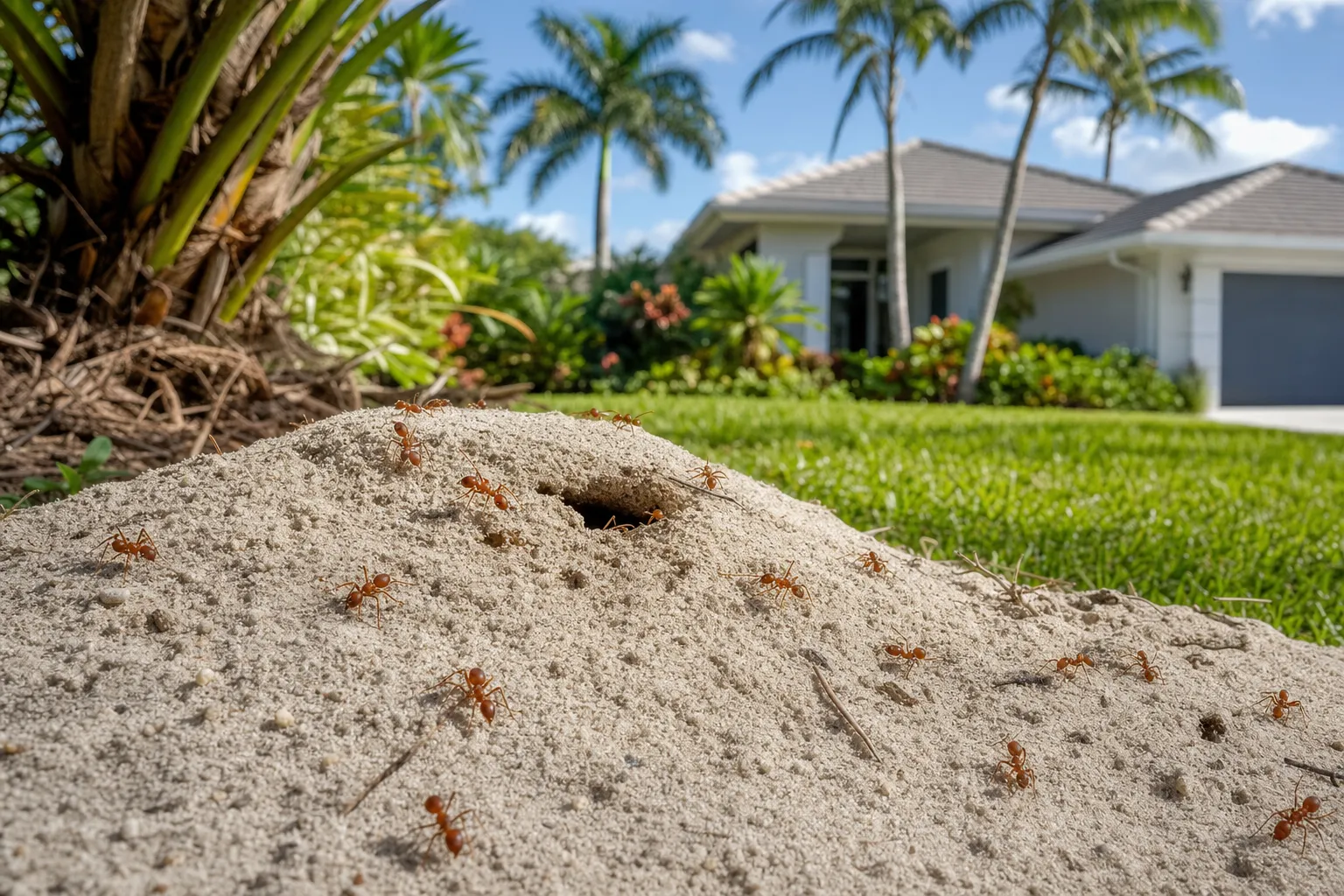
Fire ants. UF/IFAS Gardening Solutions says spraying foraging workers is ineffective because only about 20% of the colony is foraging at a given time. It says no control method permanently eliminates fire ants from an area, and that removed colonies can quickly re-infest. A combination of broadcast bait and individual mound treatments with baits “can help in controlling these pests” (UF/IFAS Gardening Solutions).
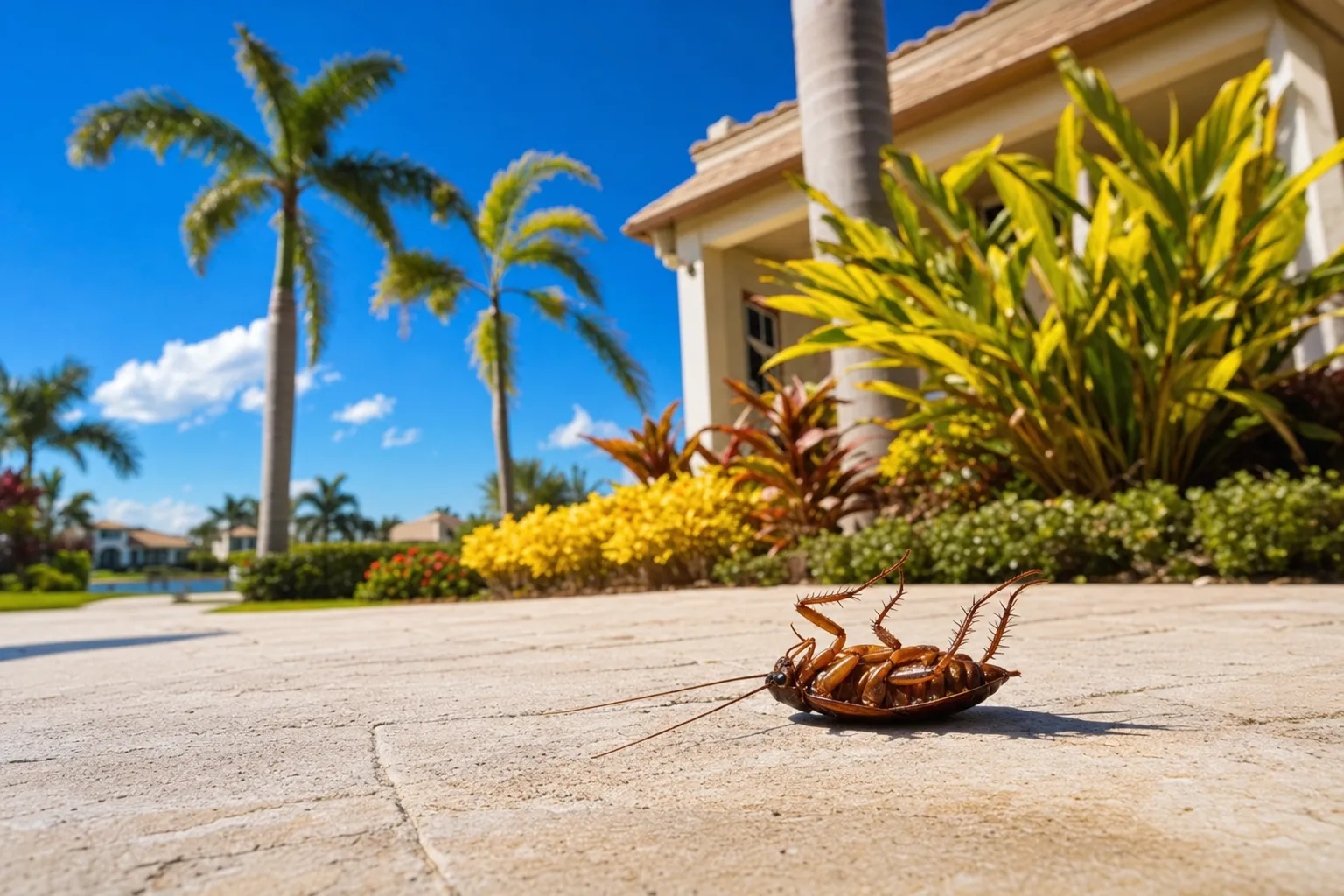
Cockroaches. UF/IFAS says baits are “most highly recommended because of their effectiveness and targeted application, while decreasing unnecessary pesticide exposure,” and that food sources compete with cockroach baits. Foggers get a cautious review: their effect “is limited to the cockroaches that directly contact the fog,” so control is variable. UF/IFAS also says homeowners “may undertake their own IPM plan for cockroach control with good success” (UF/IFAS). Use any bait exactly as the label directs.
Where DIY stops
- Termites. UF/IFAS says termites “generally require a pest management professional for control,” though there are many things you can do to prevent infestations (UF/IFAS). Keep the yard habits above, and read the Waves guide to termite bait stations before you decide anything. FDACS also notes that homeowners insurance does not cover damage caused by termites (FDACS).
- A cockroach problem that holds on. UF/IFAS says professionals “have the equipment and training to do a thorough job and have access to products not available to homeowners.”
- A pest you cannot identify, or a source you cannot find. If sealing, cleaning and monitoring have not changed anything, the next step is a better identification, not more product.
For a side-by-side look at doing it yourself and hiring out, see the Waves guide to whether an exterminator is worth it. If you are weighing a subscription kit, the Waves review of Pestie covers that.
Frequently Asked Questions
Is DIY pest control legal in Florida?
Yes for your own home. FDACS says you can make pesticide applications to your own individual residential property. The product label still governs how, and using a product in a way the label does not allow violates federal law.
What should I do first?
Identify the pest. EPA says accurate identification keeps you from using a pesticide you do not need or the wrong kind of one. Then seal entry points and remove food, water and hiding places before you buy a product.
Do bug foggers work?
UF/IFAS says a fogger’s effect on cockroaches is limited to those that directly contact the fog, so control is variable. EPA says to use fogging devices only when absolutely necessary.
Are baits or sprays better for ants?
UF/IFAS says baits are the most effective way to get toxicant into an ant nest, while spraying individual trails is usually a quick fix. It also says not to spray insecticides around bait.
Can I use an outdoor product indoors?
EPA says no: many outdoor chemicals “will remain toxic longer inside than they would outdoors.” Use a product only where and how its label directs.
What if someone is exposed to a pesticide?
Call 911 if the person is unconscious, has trouble breathing or is having convulsions. Otherwise, check the label’s first-aid directions and call Poison Control at (800) 222-1222.