Jump to a section (9)
- 01What to do right after a carpenter bee sting
- 02Signs that need emergency care right away
- 03When to see a doctor
- 04Was it a carpenter bee?
- 05Why carpenter bees end up near people in Southwest Florida
- 06What not to do after a sting
- 07Lowering the odds of another sting
- 08How Waves Pest Control can help
- 09Frequently Asked Questions
A carpenter bee sting usually means a painful red bump you can care for at home: wash it, cool it and keep an eye on it for a few days. Any sign of a severe allergic reaction changes that, and it needs emergency care right away. According to UF/IFAS, female carpenter bees may sting, though rarely, so it also pays to confirm what got you. For the wider view of stinging and wood-boring insects around a house, start with our pest control services page.
Bees still drilling into your eaves after the sting? Get a pest control estimate for your home.
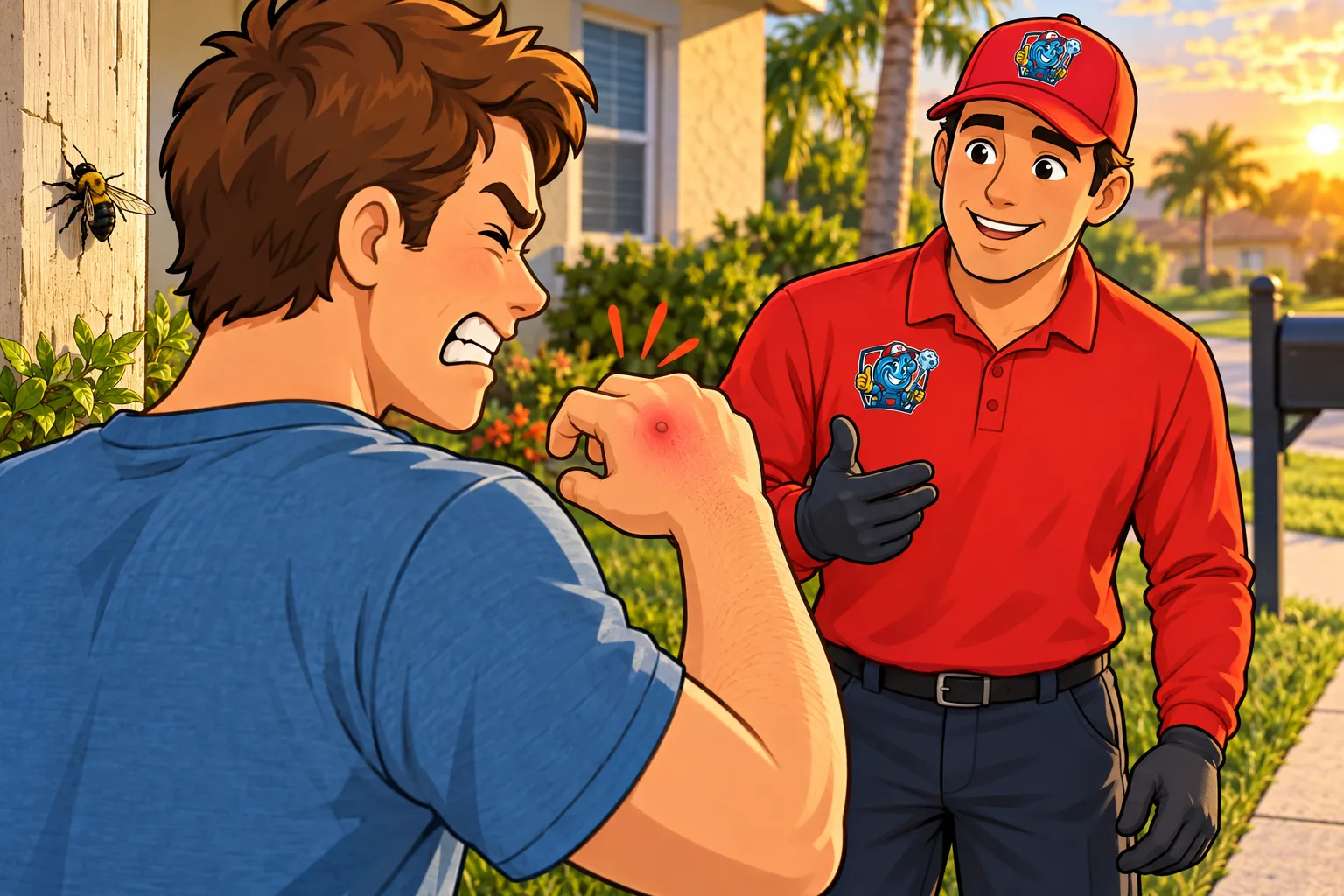
What to do right after a carpenter bee sting
Step away from the bee, then clean and cool the sting. These steps come from the first aid that MedlinePlus and the CDC’s NIOSH guidance on stinging insects give for bee and wasp stings:
- Move away from the nest area. The UF/IFAS fact sheet on large carpenter bees (EENY-100, revised June 2014) says male bees may hover or dart at people who come into the nesting area, so put some distance between you and the wood they are working.
- Look for a stinger. If one is stuck in the skin, scrape it out with a fingernail, a piece of gauze or the edge of a card. The CDC says never to squeeze it or use tweezers. Do not be surprised if you find nothing: UF/IFAS says the honey bee leaves its stinger behind, while wasps and other bees do not.
- Wash the sting with soap and water.
- Cool it down. MedlinePlus says to hold ice wrapped in a washcloth on the sting for 10 minutes, take it off for 10 minutes, and repeat.
- Keep your hands off it. The CDC says scratching can increase swelling, itching and the risk of infection.
- Keep someone nearby for a while. The CDC advises having someone stay with the person who was stung to watch for an allergic reaction.
Pro tip: If you can do it safely, snap a photo of the insect or keep it in a jar. UF/IFAS says the insect behind a sting should be captured and identified when possible, and MedlinePlus suggests bringing it along if you go in for treatment.
Signs that need emergency care right away
Get emergency care right away for any of these after a sting: trouble breathing or wheezing, swelling of the face or mouth, throat tightness or trouble swallowing, chest pain, or fainting. MedlinePlus lists them among the signs of anaphylaxis, a severe allergic reaction that can come on quickly and become deadly without fast treatment. For a severe reaction, MedlinePlus says to check the person’s airway and breathing first and call your local emergency number.
UF/IFAS puts the stakes plainly in its guide to stinging insects (ENY-215, reviewed February 2025): allergic reactions are often more important than the toxic effects of the venom itself.
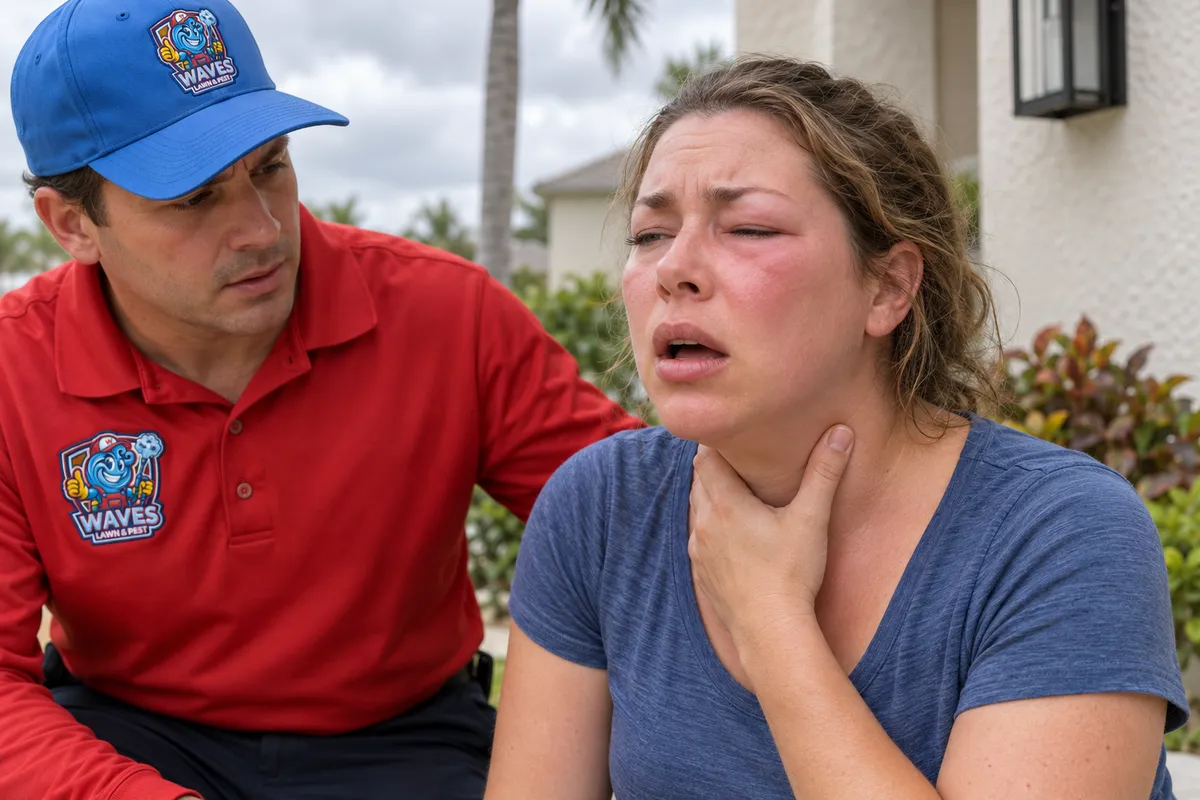
When to see a doctor
A sting can need a doctor without being an emergency. Make the appointment when:
- It keeps getting worse. MedlinePlus says to watch over the next several days for signs of infection, such as increasing redness, swelling or pain.
- You have allergies or asthma. UF/IFAS says a doctor should be contacted immediately if a general allergic reaction is suspected, or if the person stung has a history of hay fever, allergy or asthma.
- You reacted badly before. After a severe, bodywide reaction to a bee sting, MedlinePlus says your provider should refer you to an allergist for testing.
Was it a carpenter bee?
It probably was if the bee was big, shiny on top and hanging around wood. Use these clues from UF/IFAS to identify what stung you:
- Size. UF/IFAS’s guide to wood-infesting insects (ENY-266, revised July 2022) puts carpenter bees at 3/4 to 1 inch long. The EENY-100 fact sheet says large carpenter bees are 20 mm or larger.
- A shiny abdomen. Carpenter bees look a lot like bumble bees. UF/IFAS says the main way to tell them apart is the top of the abdomen, which is bare and somewhat shiny on a carpenter bee and very hairy on a bumble bee.
- A yellow face. EENY-100 notes that some males have yellowish areas on the face.
- Holes in wood. Look for a round entrance hole about 1/2 inch across in railings, supports or trim. EENY-100 says you may hear a buzzing or drilling sound while a bee bores, and if the hole is hidden on the back of the trim, look for sawdust on the ground below it.
- No stinger left behind. A stinger stuck in your skin points to a honey bee, since UF/IFAS says that is the bee that leaves one.
Treat these as clues. A clear photo, or the insect itself, is how you confirm it. If you got a look at something bigger and more wasp-shaped, our guide to the big hornet look-alikes in Southwest Florida covers what people usually see, and the Waves pest library has photos of other common household pests.
Why carpenter bees end up near people in Southwest Florida
They nest in the same wood you walk past every day. EENY-100 says two large carpenter bees live in Florida, Xylocopa micans and Xylocopa virginica, and that a subspecies of X. virginica is found only in Florida, from Sumter and Lake counties south to the Miami-Dade area.
The same fact sheet says these bees often bore into the back face of the trim under the eaves, because that surface is usually not painted. X. virginica picks well-lit spots where the wood is bare and tends to nest in the same areas for generations. So if your Sarasota or Bradenton home has bare wood trim under the eaves, check the back face of that trim for round holes.
UF/IFAS’s overall verdict is mild: “In general, carpenter bees are not much of a problem.”
What not to do after a sting
- Do not squeeze a stinger or pull it with tweezers. MedlinePlus says tweezers may squeeze the venom sac and release more venom.
- Do not put on a tourniquet. MedlinePlus lists it as something to avoid.
- Do not scratch. The CDC ties scratching to more swelling, itching and infection risk.
- Do not swat at bees near the nest. The CDC says to stay still and calm around a single stinging insect, because swatting can make it sting.
Lowering the odds of another sting
None of these steps is a sure barrier, so keep checking your wood:
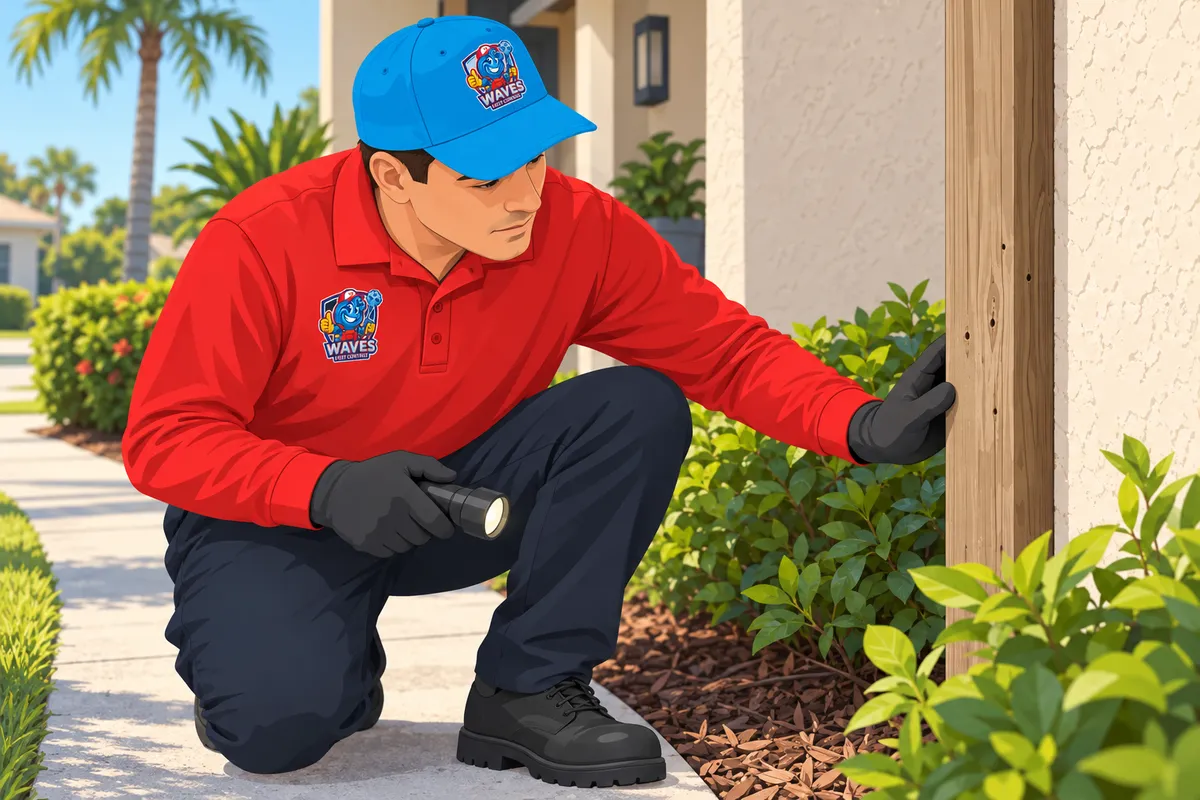
- Paint or varnish bare wood. EENY-100 says carpenter bees rarely attack painted or varnished wood. ENY-266 adds that painting, staining or filling holes with putty does not usually prevent the bees from digging a new tunnel.
- Replace badly tunneled wood. ENY-266 says carpenter bees can be controlled by removing and replacing infested wood.
- Skip the fragrance outdoors. The CDC suggests skipping perfume, cologne and fragranced toiletries around stinging insects, and MedlinePlus adds avoiding floral-patterned or dark clothing.
- Use only a labeled product on nest holes. EENY-100 names insecticides labeled for bees and wasps for carpenter bee nests. If you go that route, read and follow the product label, keep the product off food-preparation and food-contact surfaces, and place it out of sight and reach of children and pets.
How Waves Pest Control can help
Call a pro when bees keep coming back to the same wood, when the nest is up high or over a doorway, or when you are not sure what stung you. A first Waves Pest Control visit includes a walk of the property to find active pest pressure, plus an inspection of the soffits, eaves and slab line. That matters here because EENY-100 says carpenter bees often bore into the back face of trim under the eaves.
If the sting came from honey bees nesting on your property, Waves Pest Control does honey bee work as a licensed pest control company: eradication of nuisance colonies and swarms, plus comb removal and clean-out after the bees are dead. Waves does not do live removal or relocation; in Florida, that is a registered beekeeper’s job. What Waves can do at a given property is decided on inspection, and colonies inside walls or roofs, or in high or hard-to-reach spots, may be referred to a specialist.
For recurring service on general household pests, look at our WaveGuard memberships, or start with pest control in Sarasota or pest control in Bradenton. Ready for numbers? Get a pest control estimate for your home.
Frequently Asked Questions
Do carpenter bee stings hurt?
Yes. MedlinePlus says stings from bees, wasps and hornets are most often painful, with redness and swelling at the site. Wash the sting, cool it with wrapped ice, and leave it alone.
Are carpenter bees aggressive?
Not usually. UF/IFAS says females may sting, though rarely, and males may hover or dart at people near the nest. The same fact sheet says carpenter bees in general are not much of a problem.
Can a bee sting get worse after a couple of days?
Pain and swelling that keep building over the next few days are a reason to see a doctor, since MedlinePlus lists increasing redness, swelling or pain as signs of infection. Get emergency care right away for trouble breathing or wheezing, swelling of the face or mouth, throat tightness or trouble swallowing, chest pain, or fainting.