Jump to a section (8)
- 011. Overseeding St. Augustine with ryegrass because it worked up north
- 022. Dumping a full fertilizer load on October 1
- 033. Keeping the summer irrigation schedule as days get shorter
- 044. Waiting for large patch to show up before you change anything
- 055. Skipping fall pre-emergent and meeting burweed stickers later
- 06How we chose these five
- 07When to call a professional
- 08Frequently Asked Questions
The five fall lawn care mistakes that set Southwest Florida lawns back the most: overseeding St. Augustine with ryegrass out of northern habit, dumping a heavy fertilizer load the week the summer restriction ends, running the summer irrigation schedule into the cooler months, waiting for large patch to show before you change how you water and feed, and skipping the fall pre-emergent that burweed needs.
Last updated: October 2026
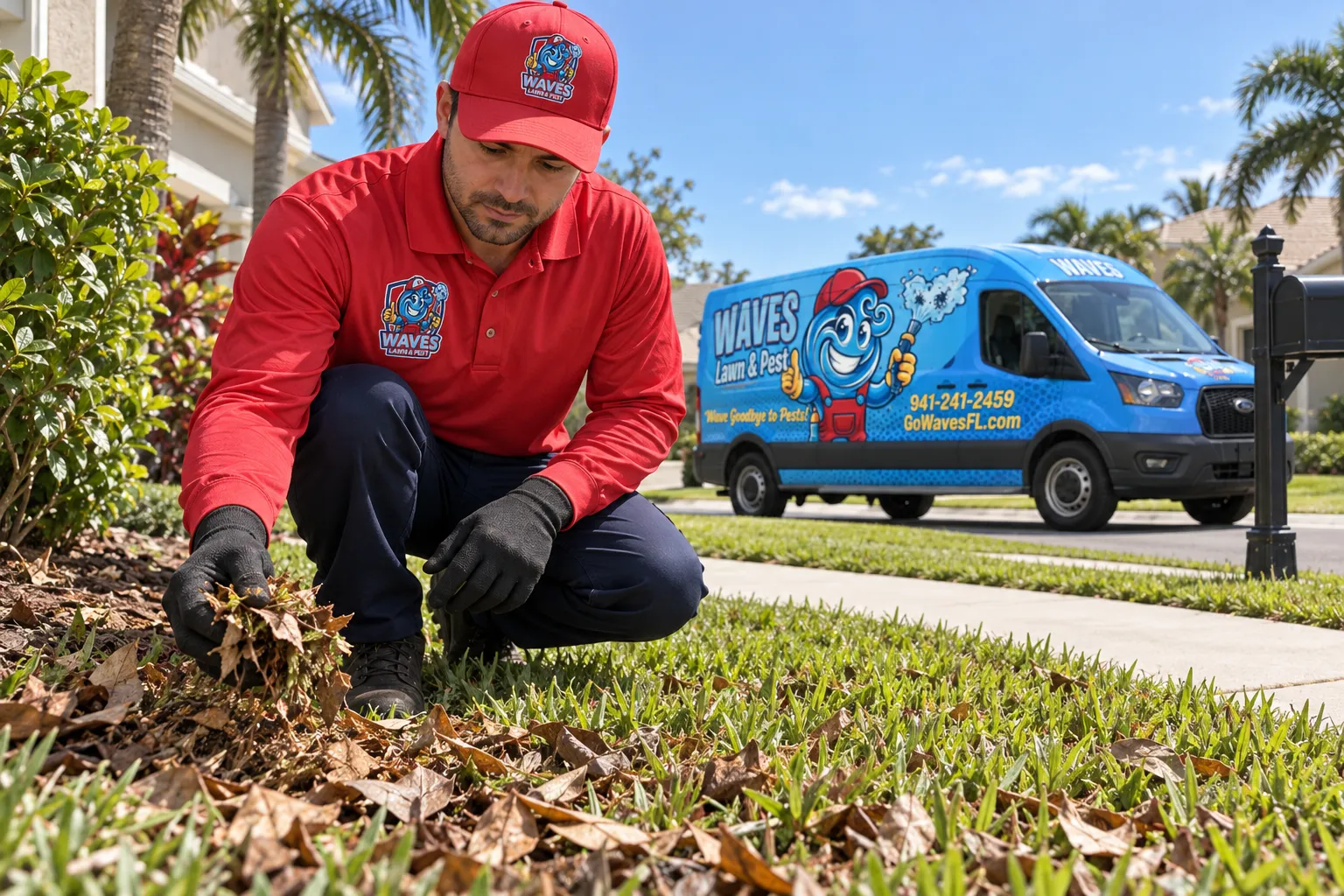
I’m Adam Benetti, founder of Waves Pest Control and a Florida Certified Lawn & Ornamental Technician. Each mistake below ties back to UF/IFAS fall guidance, linked where it comes up. Sandy soil, afternoon storms and St. Augustine grass set the rules here, and a lot of fall advice written for northern lawns does not fit them. For how a lawn program works in a Sarasota yard, see our lawn care in Sarasota page.
If you would rather have someone look at the lawn before you change anything, request a lawn care quote.
1. Overseeding St. Augustine with ryegrass because it worked up north
Overseeding is for winter color, and on St. Augustine it adds a season of work that dies off in spring.
UF/IFAS Gardening Solutions calls North and Central Florida lawns good candidates for overseeding and says South Florida lawns won’t need it, because they typically stay green all year. The same page says the overseeded grass dies off as spring temperatures rise, and that a winter lawn needs watering, mowing and fertilizing while it lasts.
That last part is the catch for St. Augustine. The UF/IFAS Gardening Solutions St. Augustinegrass page tells Central and North Florida homeowners to reduce watering and skip fertilizer during the cool months, and it notes that St. Augustine goes dormant in winter in many parts of the state. A ryegrass overseed asks you to keep watering and feeding right over the top of that grass. If you want winter color anyway, know the upkeep that comes with it.
2. Dumping a full fertilizer load on October 1
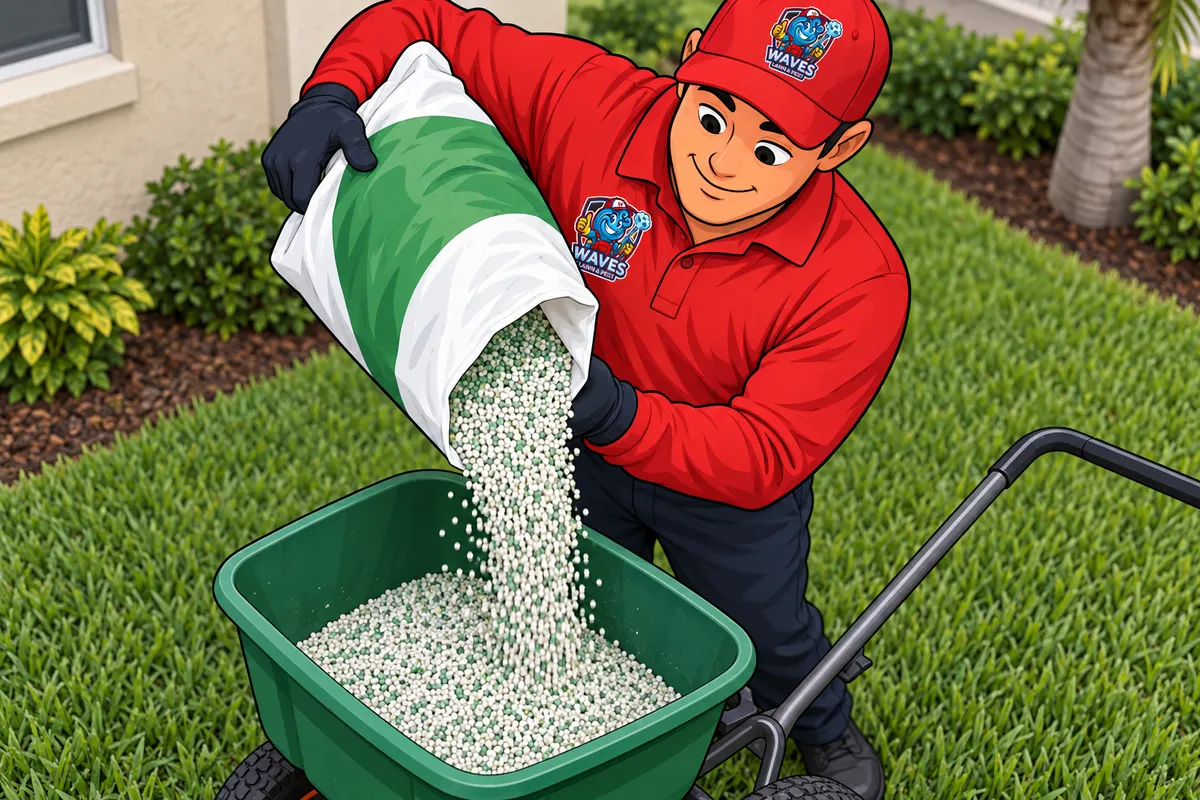
When the restricted season ends, a light, slow-release feeding is what the grass can use. A big catch-up dose works against you.
In Sarasota and Manatee counties, the summer rule bars fertilizer containing nitrogen or phosphorus from June 1 through September 30, with some exceptions, such as new plantings during establishment. North Port sets its own dates, so check the UF/IFAS Extension Sarasota County fertilizer summary if you live there. That summary also says nitrogen applications anywhere in Sarasota County must contain at least 50 percent slow-release nitrogen. For Manatee, our Manatee County fertilizer rule guide covers the details.
UF/IFAS Extension Hillsborough County’s fall lawn care article (October 2, 2023) says to apply no more than 1 pound of nitrogen per 1,000 square feet at any one time and to finish fall applications in central Florida by mid-November. Gardening Solutions adds two cautions: fertilizing too late can leave the grass growing when cold weather arrives, which makes it more cold-sensitive, and St. Augustine lawns should avoid excess nitrogen in the fall because of large patch. It also suggests a high-potassium fertilizer for this time of year.
Waves Pest Control’s lawn program resumes nitrogen on October 1 at 50 percent or more slow-release, with a chinch bug re-check in the same window. For label reading and timing in more depth, see our October lawn fertilizing guide for Sarasota.
3. Keeping the summer irrigation schedule as days get shorter
Your lawn needs less water as days shorten and nights cool, so the controller settings should change with the season.
The UF/IFAS Gardening Solutions guide to setting your irrigation controller says to adjust the controller at least seasonally, and that irrigation can be cut back in the colder winter months, particularly in North and Central Florida where lawns go dormant. It also warns against watering to the point of runoff, which wastes water and may cause disease. The UF/IFAS Hillsborough article suggests setting the controller to run only once every 10 to 14 days in the cooler months if there has been no rain, and to make sure the rain shutoff device works.
Gardening Solutions’ irrigation pitfalls page says that in fall and winter you can back off and often skip a week of watering, and to skip watering when rain is in the forecast. Your local watering-day rules still apply.
Pro tip: Check for wilt before you water. UF/IFAS lists three signs: a dull bluish-gray color, footprints that stay in the grass, and leaf blades folded in on at least a third of the turf. No signs, no watering.
4. Waiting for large patch to show up before you change anything
Large patch is a cool-weather fungus, and fall is when the watering and feeding habits that favor it start to matter.
The UF/IFAS Gardening Solutions large patch page says the disease is most often seen once temperatures drop below 80 degrees, usually between November and May, and that it often becomes a problem in fall when cooler temperatures and damp weather set in. It attacks all warm-season turfgrasses but is especially a problem in St. Augustine and zoysia. Excess irrigation, rainfall and high humidity all contribute.
How to tell what you are looking at: Gardening Solutions describes round, discolored patches that expand over time, with borders that are darker, sometimes orange, where the fungus is active. Those are clues, not a diagnosis. Our guide to large patch signs and lookalikes, written for Lakewood Ranch, shows how to document a patch before anyone treats it.
Its management advice is cultural: water only when necessary and always in the morning, and apply only slow-release nitrogen, sparingly. The winter lawn page adds that a fungicide is an option if you have had repeated problems. For context on how common this is, Waves technicians recorded 73 lawn assessments on 33 customer lawns between May 30 and October 5, 2026, and 17 of those 33 lawns had a noted history of large patch. That is a small set of customer lawns, not a survey.
5. Skipping fall pre-emergent and meeting burweed stickers later
Pre-emergent herbicide works before weed seeds sprout, so the burweed window is in the fall, months before the stickers show up.
The UF/IFAS Weed Management Guide for Florida Lawns (revised September 2020) lists lawn burweed among the annual broadleaf weeds pre-emergence herbicides are used to control. For winter annual weeds, it says to apply when nighttime temperatures drop to 55 to 60°F for several consecutive days, which it puts at late October to early November for central and south Florida. It also notes that winter annuals complete their life cycle from fall to spring. UF/IFAS Extension Nassau County explains where the pain comes from: each burweed seed carries a small spine that can pierce skin.
Timing is the whole game. UF/IFAS Extension Okaloosa County says that once seedlings are visible, it is too late for a pre-emergent, and that overuse of some pre-emergence herbicides may leave lawn roots stunted and weak. If you apply one yourself, identify the weeds your lawn has had before, read and follow the product label, keep the product away from food and food-prep areas, and store it out of sight and reach of children and pets. Our fall burweed guide walks through the scouting side.
How we chose these five
These five come from UF/IFAS seasonal guidance: the Gardening Solutions pages linked above, the UF/IFAS Weed Management Guide for Florida Lawns, UF/IFAS Extension county articles, and the Sarasota County fertilizer rules as UF/IFAS Extension Sarasota County summarizes them. Each mistake is a place where a common fall habit runs against one of those sources. This list is a reading of published guidance, not a field trial.
When to call a professional
Call a pro when patches keep spreading after you have fixed watering and feeding, or when you cannot tell fungus from insects or drought. Do not spray a product before the cause is confirmed. Waves Pest Control’s lawn program covers turf fertility, weed, insect and disease control, and diagnosis. It does not include mowing, mulching or irrigation repair. Start with lawn care in Bradenton or lawn care in Sarasota, or request a lawn care quote for your yard.
Frequently Asked Questions
Can I fertilize my lawn in October in Sarasota or Manatee County?
Yes. The restricted season in both counties ends September 30, and Sarasota County requires at least 50 percent slow-release nitrogen. UF/IFAS advises against excess nitrogen in fall, so keep it light.
How often should I water St. Augustine in the fall?
Water when the grass shows wilt signs, in the morning, on your permitted days. UF/IFAS Extension Hillsborough County suggests setting the controller to once every 10 to 14 days in the cooler months when there has been no rain.
When should I put down a pre-emergent for burweed?
UF/IFAS puts it at late October to early November for central and south Florida, once nights drop to 55 to 60°F for several days in a row. After seedlings are up, a pre-emergent is too late.