Most of our lawn customers don’t mow their own grass. A crew comes every week or two, and that crew touches your lawn far more often than we do. We can feed it, spot the weeds and catch the chinch bugs, but one low pass with the mower can undo a month of that work.
The trouble is that nobody ever tells the crew what your lawn needs. They mow forty yards a day, and most of those yards are not St. Augustine. So this page is short on purpose. Read it once, then forward it to whoever mows.
The note to forward
Copy this and text it to your crew, or print it and tape it to the gate. It’s written for Floratam, the most common St. Augustine here. If your lawn is a dwarf type like Seville or CitraBlue, change line 1 to 2 to 3 inches before you send it.
For whoever mows this lawn — thank you. A few things this grass needs:
- Deck at 3.5 to 4 inches, measured from the ground. This is Floratam St. Augustine, and it does not like a short cut.
- Every 4 to 5 days from June through September if you can, every 7 to 10 days the rest of the year. Never take more than a third of the blade off in one pass.
- No scalping. Raise the deck over humps, bumps and the high side of the driveway. Brown stripes there are scalp marks, not disease.
- Easy with the string trimmer along beds, walks and the driveway. Keep the head level. Cutting the runners down to the dirt leaves bare edges where weeds move in first.
- Sharp blade. Torn, white tips look tired and catch disease.
- Blow clippings back onto the lawn, not into the street or the storm drain.
- If the last yard had brown patches or yellow-streaked grass, clean the mower before you come in: knock the clippings off the deck and wheels, then spray or wipe them with a disinfectant such as diluted bleach or rubbing alcohol. Fungus and grass viruses ride on mowers from yard to yard.
- Treatment days: the homeowner gets a text after each lawn treatment. If it says to hold off on mowing, please skip that day.
That’s the whole job. The rest of this page explains why each line matters, in case anyone asks.
Why the height matters so much on St. Augustine
St. Augustine spreads by thick runners that sit on top of the soil, not by seed. The blade is what feeds those runners. Cut it to 2.5 inches and the plant has less leaf to make food, so roots get shallow and the grass dries out fast between waterings. A thin, short canopy also lets sunlight hit the soil, and that’s what weed seeds are waiting for. Torpedograss, crabgrass and kyllinga all move into short St. Augustine much faster than into a thick 4-inch lawn.
If your lawn is a dwarf type like Seville or CitraBlue, the numbers are lower. Our guide to mowing height by grass type has the full chart.
Why every 4 to 5 days in the rainy season
From June through September, St. Augustine can put on an inch or more a week. A crew on a 7-day route comes back to a lawn that’s 5.5 or 6 inches tall and cuts it back to 3.5. That’s close to half the blade in one pass, and the lawn looks yellow and stemmy for days afterward. Shorter gaps between cuts keep each pass small.
We know a 5-day schedule isn’t possible for every crew. If yours stays on a weekly route, ask them to raise the deck a notch from June through September. A taller cut helps, but it doesn’t fix everything: in a week when the grass shoots up, an extra visit is still the better answer.
Scalping and trimmer damage look like disease
Some of the “dead patches” we get called about turn out to be scalp marks. They show up as brown strips on the high spots: the crown of the yard, the edge where the lawn meets the driveway, the hump over a buried pipe. Edging that’s too aggressive does the same thing along sidewalks and beds. The runners get cut down to bare sand, and those strips are where weeds take hold first.
If you see straight-line or edge-shaped brown areas, check the mowing before anyone sprays for fungus. Our list of St. Augustine mowing mistakes covers more of what we see.
Why clean equipment matters
Large patch, gray leaf spot and take-all root rot can all spread on mower decks and wheels. In parts of Florida there’s also a virus that slowly kills Floratam, and it spreads on clippings carried from one yard to the next. Blowing off the clippings is not enough for the virus, because it lives in the plant sap left on the blades and wheels. After a lawn with brown patches or yellow streaks, the crew should knock off the clippings and then spray or wipe the deck, blade area and wheels with a disinfectant such as diluted bleach or rubbing alcohol. If your lawn has a disease problem, ask the crew to mow your yard last that day.
Clippings and the storm drain
Leaving clippings on the lawn is good: they break down and feed the grass. Blowing them into the street is not. Clippings in the gutter wash into storm drains and add nitrogen to the same waterways the county’s summer fertilizer rules protect. Most local ordinances ask that clippings stay off roads and out of drains, so a crew that blows them back onto the grass is doing the right thing.
Treatment days
After a lawn visit, we text you what to do next, including whether to hold off on watering or mowing. A weed spot treatment works best when nobody mows it off the next morning. If your crew comes on a fixed day, tell us which day it is, and we’ll plan around it where we can.
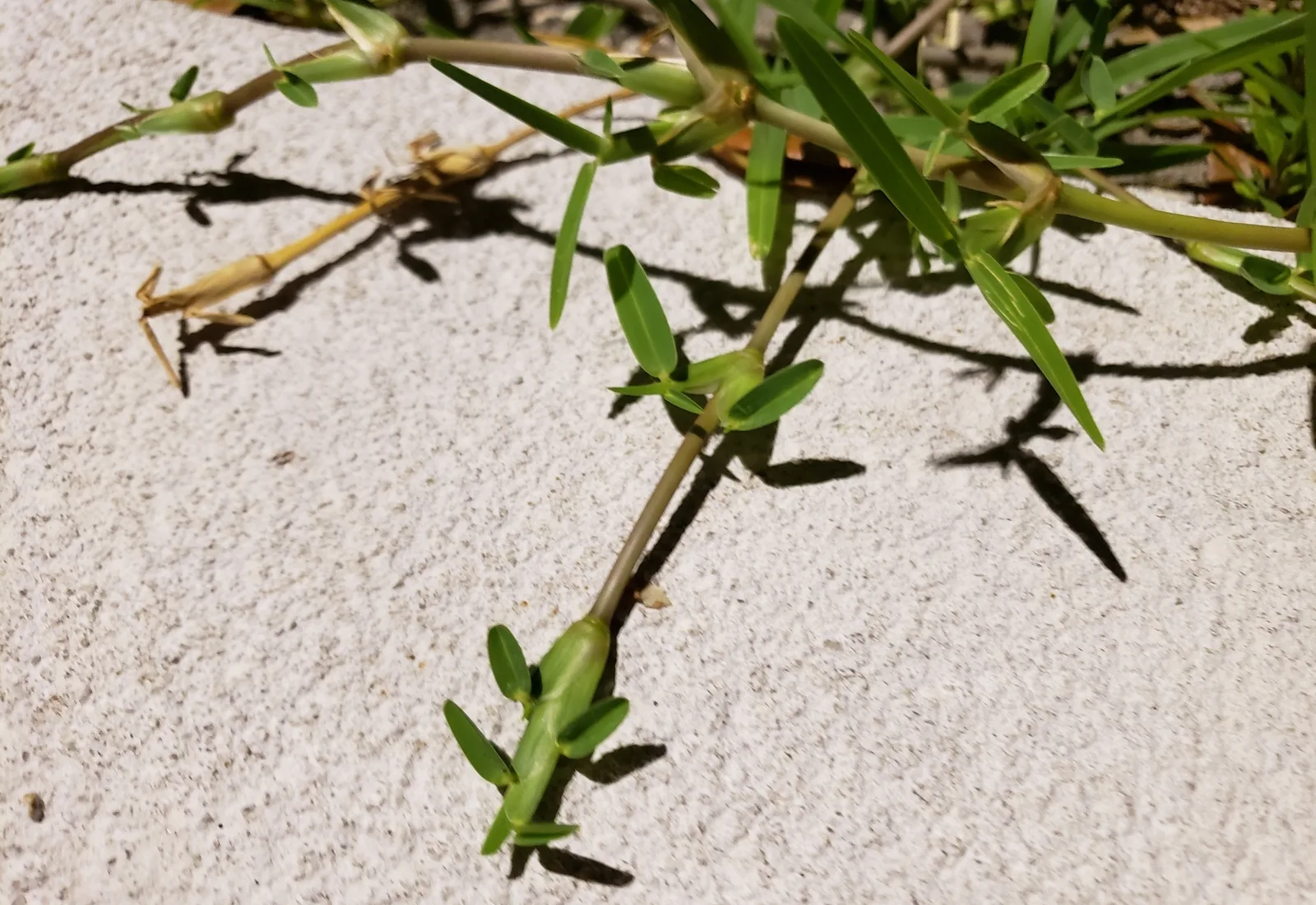
Header photo: St. Augustine grass runner at a sidewalk edge in Orlando, Florida, by Tyler Bishop via iNaturalist, licensed CC BY 4.0, cropped.
Frequently Asked Questions
Should my crew bag the clippings?
No, not on a healthy lawn. Clippings left on the lawn return nutrients to the soil. The exception is a yard with an active disease patch: bagging the clippings from that area for a few weeks keeps them from being spread around.
My crew says they can’t come every 5 days. What should I ask for?
Ask them to raise the deck a notch from June through September. That helps, but in a fast-growing week it may not be enough: if the grass is more than half again as tall as the cut height when they arrive, ask for an extra visit or a second, slightly lower pass a few days later.
Is it okay to mow right after a lawn treatment?
It depends on what was applied. Some products need to dry or soak in first. The text we send after each visit tells you if mowing should wait, and for how long.
Can a bad mowing job really cause brown patches?
Yes. Scalping, a dull blade and heavy trimmer work all leave brown or thin areas that look a lot like insect or fungus damage. That’s why we check the cut height and the edges before we treat a brown spot.
Next steps
If your lawn is thin even with good mowing, you can request a lawn care quote and we’ll come take a look.