Jump to a section (8)
- 01Why Lakewood Ranch homeowners end up choosing between these two
- 02Zoysia vs. St. Augustine side by side
- 03The pest reality: chinch bugs vs. billbugs
- 04Thatch and mowing: what zoysia asks of you
- 05Recovery speed: why damage lingers longer on zoysia
- 06How to choose zoysia or St. Augustine for your yard
- 07When to call a pro and how Waves Pest Control approaches it
- 08Frequently Asked Questions
Zoysia or St. Augustine is one of the first lawn questions that comes up in Lakewood Ranch, usually when sod is about to go down. Both grow well here. They ask for different things from you, and the University of Florida’s Gardening Solutions site and its UF/IFAS Extension publications lay those differences out plainly. This guide walks through them grass to grass. If you want the wider field first, including bahia and bermuda, start with our Sarasota grass-type guide. For the service side, see lawn care in Lakewood Ranch.
Want someone to look at your yard before you commit to sod? Request a lawn care quote and tell us which grass you are weighing.
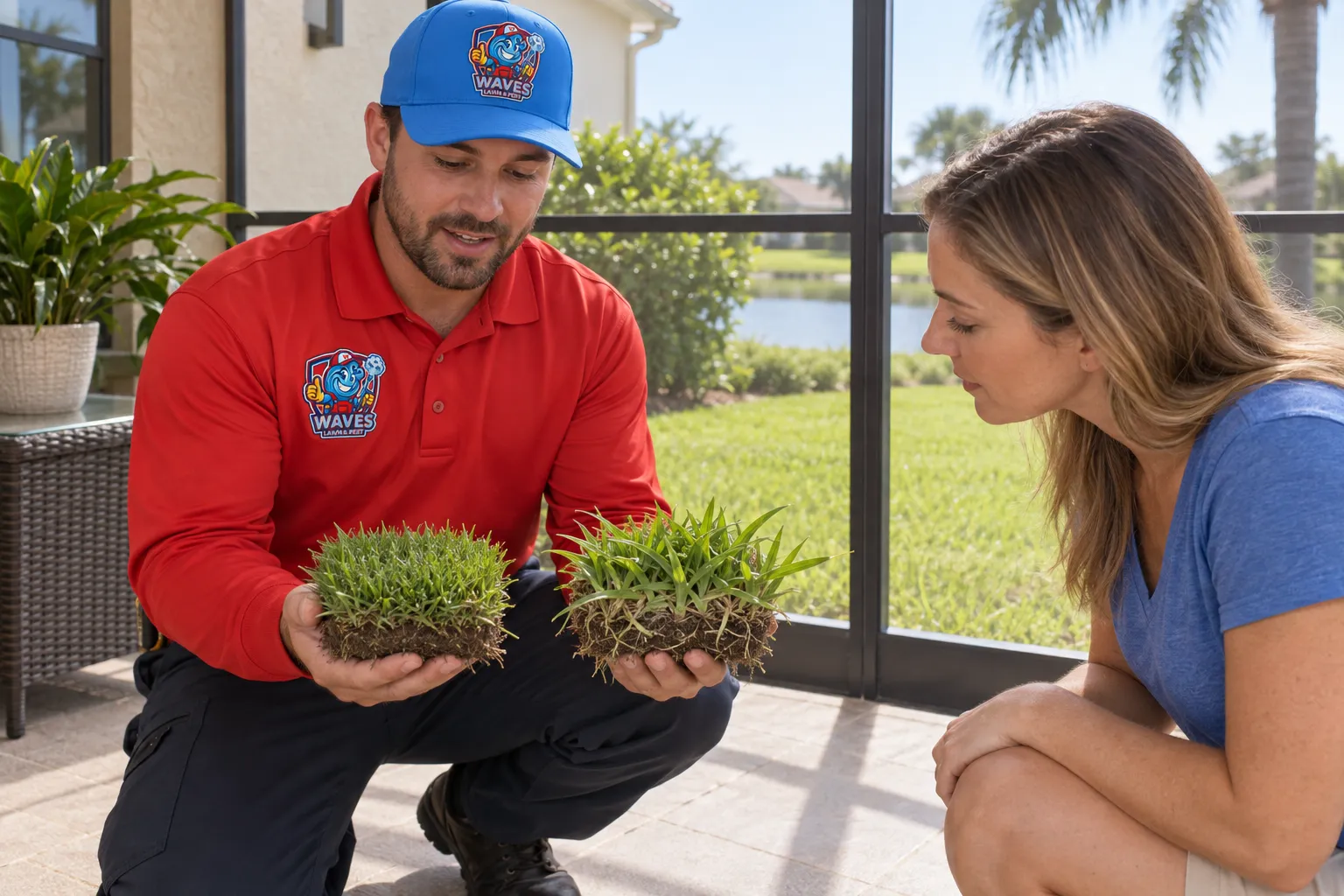
Why Lakewood Ranch homeowners end up choosing between these two
Lakewood Ranch lawns already split along these lines. Standard villages mostly run St. Augustine, while higher-end gated communities like Esplanade, Lakewood National and the Country Club often run zoysia turf. Homes here sit under HOAs and Community Development Districts with deed restrictions and landscape standards, so the grass on a lot is not always a free choice.
New-construction lawns in master-planned communities go down as fresh sod over sandy, low-organic soil. That is the moment the zoysia question tends to land, whether it is a new build or a resod after a rough summer.
Gardening Solutions describes zoysia as dark green, shorter and finer textured than St. Augustinegrass, with a thicker, more manicured look. It calls St. Augustinegrass the most widely planted lawn grass in Florida and says it is easy and quick to establish from sod or plugs.
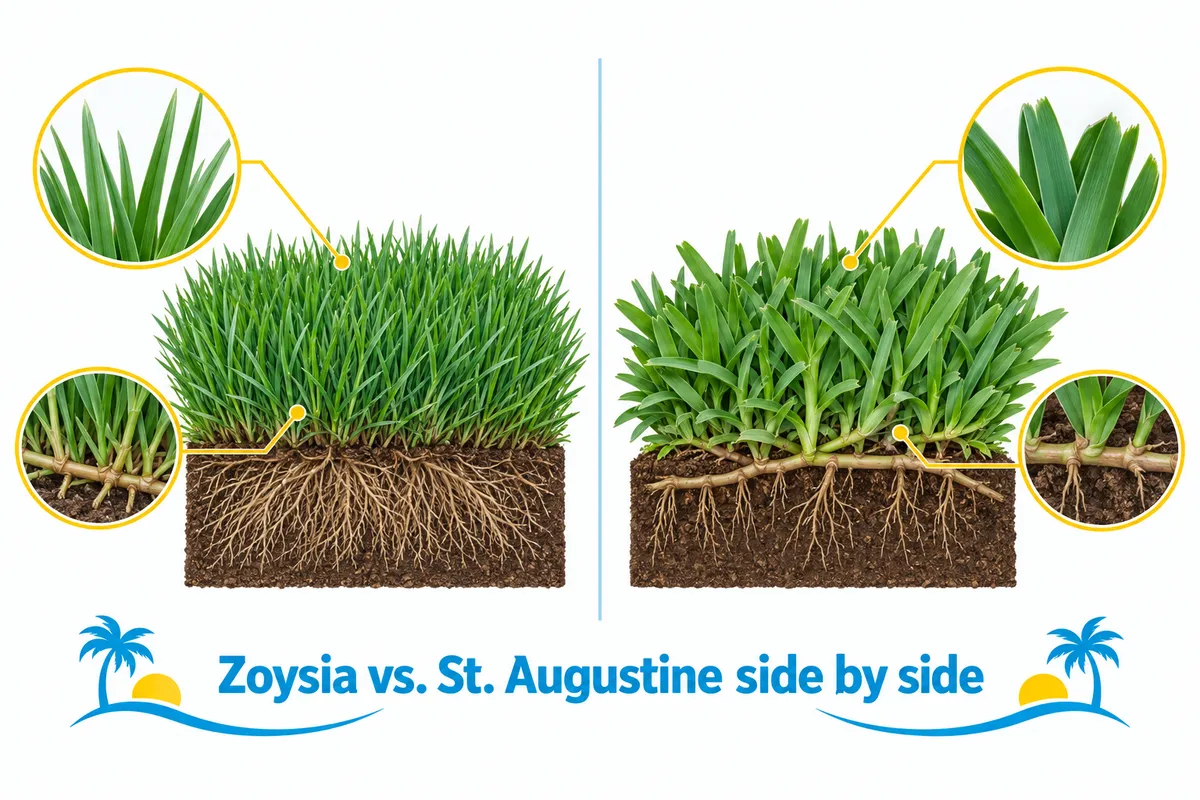
Zoysia vs. St. Augustine side by side
This table summarizes two UF/IFAS publications, Zoysiagrass for Florida Lawns (ENH11) and St. Augustinegrass for Florida Lawns (ENH5). Read each row as the species pattern; cultivars vary.
| What to weigh | Zoysia | St. Augustine |
|---|---|---|
| Texture and feel | Finer, shorter and denser; a manicured look | Coarse, wide leaves and stems; less dense |
| Shade | Can have good shade tolerance; Zoysia matrella types rate good to excellent | Some cultivars handle shade better than other warm-season grasses |
| Dry spells | Wilts quickly; browns and goes dormant within 1 to 2 weeks without water, then greens up when water returns | Wilts, but some leaves stay green longer |
| Recovery speed | Slow growth; slow to fill damaged spots | Establishes quickly and easily |
| Foot traffic | Good traffic tolerance | Poor wear tolerance |
| Main insects | Hunting billbugs, sod webworms, mole crickets, white grubs | Southern chinch bug, sod webworms, white grubs |
| Main diseases | Large patch, dollar spot, rust | Take-all root rot, large patch, gray leaf spot |
| Mowing | 1.75 to 2.5 inches for medium to coarse types; tough leaves are hard to mow | 3.5 to 4 inches for standard cultivars; weekly in the growing season |
| Thatch | Thick thatch in the years after planting; vertical mowing every year or two | Builds thatch under heavy fertilizer and irrigation |
Editorial summary of UF/IFAS ENH11 (revised April 2025) and ENH5 (revised July 2024). Cultivar choice changes shade, salt and pest ratings inside each species.
The pest reality: chinch bugs vs. billbugs
St. Augustine’s big problem is the southern chinch bug. ENH5 names it the major insect pest of the grass, and Gardening Solutions’ chinch bug page calls it the most damaging insect pest of turfgrass in the state. Zoysia does not get a free pass, though. The same page says chinch bugs attack zoysiagrass too.
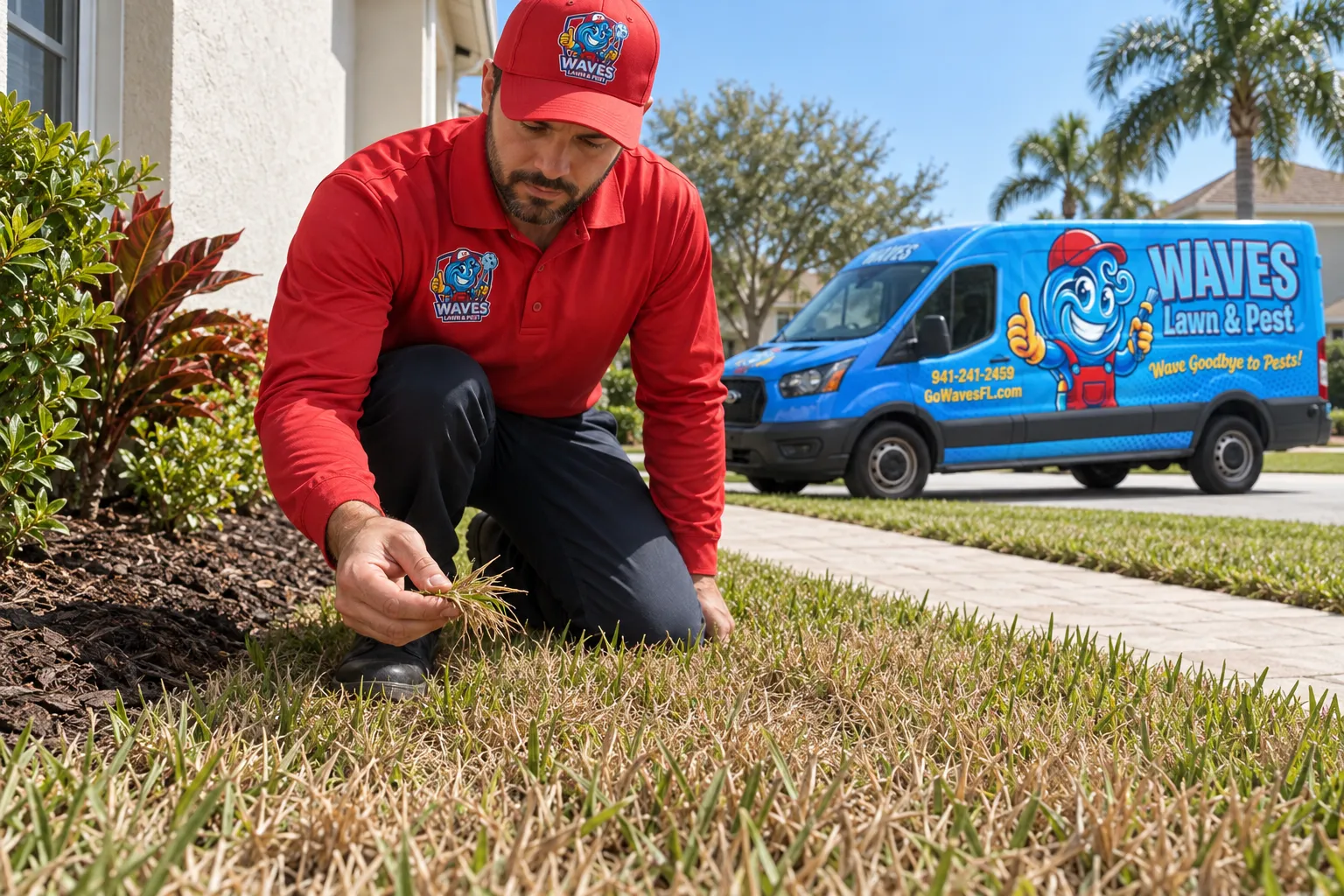
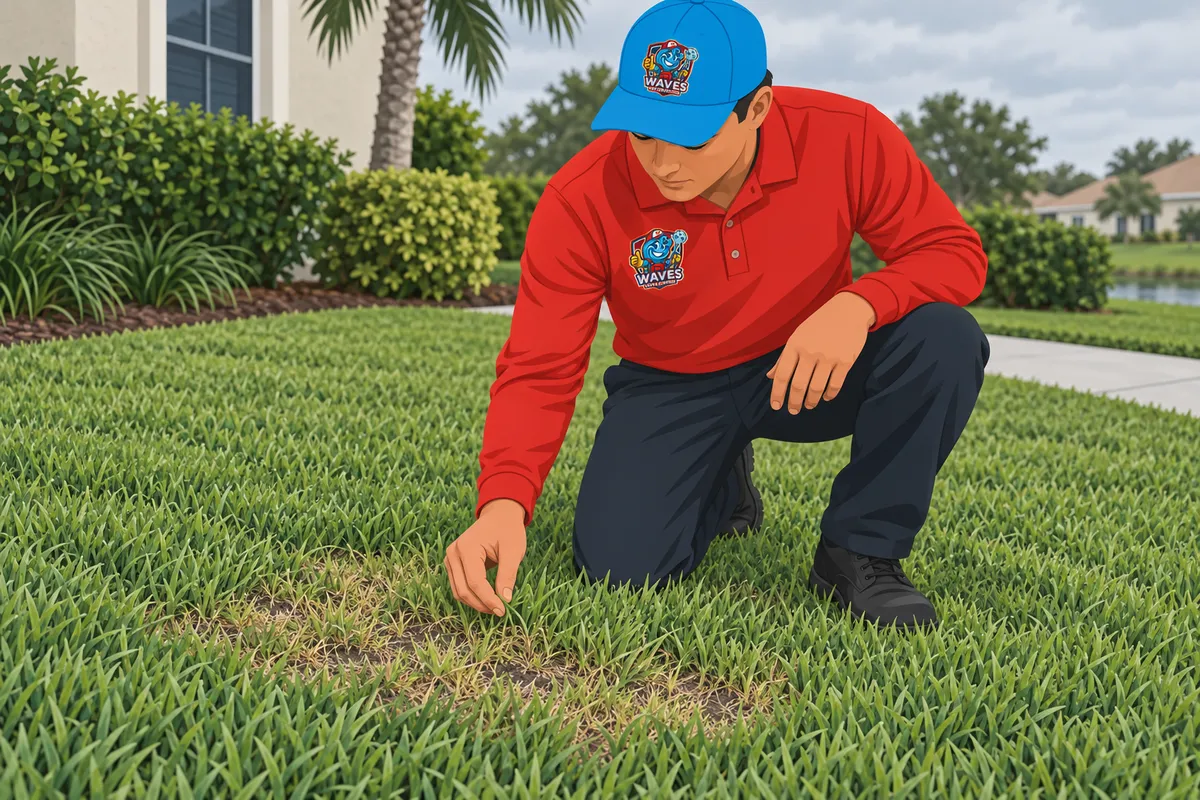
Here is how to tell chinch bug damage. It shows up as yellowish to brownish patches, and UF/IFAS says injured areas are usually noticed first as the weather warms, along sidewalks, next to buildings and in other water-stressed spots in full sun. Two checks from UF/IFAS:
- Look at the border between brown and green grass for tiny black-and-white adults or orange nymphs.
- Cut both ends off a coffee can, push one end into the soil at the edge of the damage, and fill it with water. Chinch bugs float to the surface within 5 minutes.
The signs of billbugs on zoysia look different. ENH11 lists hunting billbugs first and calls them a serious insect. Billbugs feed on roots, and the turf dies in irregular patches. The damage most often shows in fall and spring, which is why UF/IFAS warns it can be mistaken for dormancy. Most of it happens on infertile or dry soil. UF/IFAS puts the point where control may be needed at 10 to 12 billbugs per square foot.
Pro tip: Before you blame the weather, tug the grass at the edge of a brown patch. On zoysia, UF/IFAS says billbug-damaged stems and rhizomes break easily and the turf will not hold together if cut.
Do not assume every brown patch is an insect. Gardening Solutions says not all brown grass means chinch bugs, and winter dormancy and disease can look similar. Confirm what you have before anything gets sprayed.
Thatch and mowing: what zoysia asks of you
ENH11 says zoysiagrasses typically develop a thick thatch layer in the years after establishment, especially when overfertilized with nitrogen. That layer has to be removed mechanically, most often with a vertical mower or power rake every year or two. Gardening Solutions adds that heavy thatch is good habitat for insect pests and disease and makes mowing harder. UF/IFAS says keeping nitrogen at recommended levels is one of the most important ways to slow it down.
Mowing is the other adjustment. UF/IFAS says medium to coarse zoysias should be cut at 1.75 to 2.5 inches with a rotary mower, and because the leaves carry more lignin and silica than other turfgrasses, they can be hard to mow. Keep the blade sharp. Standard St. Augustine cultivars sit much taller, at 3.5 to 4 inches, and dwarf cultivars at 2.5 inches. Our mowing height by grass type guide has the full chart, and the St. Augustine mowing mistakes post covers what goes wrong at the low end.
St. Augustine builds thatch too, mostly under high fertilizer and irrigation. ENH5 suggests verticutting when the layer passes 1 inch, from early spring to midsummer while the grass is actively growing.
Fertilizer timing applies to both. In Manatee and Sarasota counties, the June 1 to September 30 restricted season bars fertilizer containing nitrogen or phosphorus, so plan feedings around it. Our Manatee County fertilizer blackout page explains the rule.
Recovery speed: why damage lingers longer on zoysia
Zoysia’s slow growth is the trade-off for its dense look. ENH11 says zoysia establishes slowly compared to St. Augustinegrass, and plugs need at least one full season to cover. The UF/IFAS Extension office in Nassau County puts it plainly: if disease or insects destroy a patch, zoysia may take a season or two to fill it back in.
Large patch disease shows the problem well. Higher-end gated Lakewood Ranch communities like Esplanade and Lakewood National often run zoysia turf, which is prone to large patch through the cooler months. UF/IFAS says the disease becomes active when soil at a 4-inch depth sits between 65°F and 75°F each fall. Zoysia is probably not more susceptible than St. Augustine, but it is the first turf to go off-color in fall and the last to green up in spring, so damage can stay visible well into the next summer. Our large patch guide for Lakewood Ranch covers the signs.
St. Augustine, per UF/IFAS, establishes quickly and easily, so it usually closes a bare spot faster.
How to choose zoysia or St. Augustine for your yard
- If kids, dogs or regular foot traffic cross the lawn, choose zoysia. UF/IFAS rates its traffic tolerance good and St. Augustine’s wear tolerance poor.
- When you will not schedule dethatching every year or two, choose St. Augustine kept at its standard height.
- If you want some green to hold through a dry stretch, choose St. Augustine. UF/IFAS says it keeps some green leaves longer, while zoysia browns within a week or two.
- When a damaged patch that takes a season to fill would bother you, choose St. Augustine, which recovers faster.
- If shade decides it, pick by a specific zoysia or St. Augustine cultivar’s shade rating, because both species vary.
When to call a pro and how Waves Pest Control approaches it
Call a professional when a brown patch keeps spreading after you have corrected watering, when you cannot tell billbugs from dormancy, or when you are planning a full resod and want the existing lawn checked first.
Waves Pest Control starts a lawn program with a property walk that checks root depth, soil compaction, thatch, weed pressure and active pests, and notes your irrigation schedule and watering day. The technician identifies the grass type on that first visit, and the visit is photographed for your service report. During the June 1 to September 30 restricted season, the program uses iron and micronutrients only, with no nitrogen or phosphorus.
Ready to plan around the grass you have? Get a lawn care estimate or read more about lawn care in Lakewood Ranch.
Frequently Asked Questions
Can you mix zoysia and St. Augustine in one lawn?
They can grow in the same yard, but UF/IFAS manages them differently: standard St. Augustine at 3.5 to 4 inches and medium to coarse zoysia at 1.75 to 2.5 inches, with different nitrogen ranges. If you have both, treat them as separate zones with their own mowing height.
Can I convert my St. Augustine lawn to zoysia?
Yes, but UF/IFAS says sod should only be laid over bare, moist soil, so the old turf has to come out first, and new sod needs watering at least twice a day with 1/4 inch until it roots, usually 2 to 3 weeks. In Lakewood Ranch, check your HOA or CDD landscape standards before you change grass.
Is reclaimed water a problem for zoysia or St. Augustine?
UF/IFAS says many Florida turfgrasses tolerate saline soils well enough that irrigating with reclaimed water should not hurt their growth. Reclaimed water also carries nutrients that vary by utility, so ask your utility for its test results and count them in your fertilizer plan, which matters on zoysia since excess nitrogen feeds thatch.