Screens and standing water do two different jobs in a mosquito plan. Screens stop adult mosquitoes from getting into the house or the lanai. Emptying water takes away the places where the next batch hatches. The U.S. Centers for Disease Control and Prevention (CDC) lists them under separate headings in its guide to mosquito control at home, one for inside the home and one for outside. A house in Sarasota or Bradenton with perfect screens and a yard full of wet plant saucers still has mosquitoes. They are just on the other side of the mesh.
Both steps are yours to do and neither one needs a product. They sit alongside the rest of our pest control services. If you have done both and still get bitten at the grill, get a mosquito control quote and we will look at what is left.
What screens do, and what they do not
Screens are an entry step. The CDC puts three actions under “keep mosquitoes out”:
- Install or repair and use window and door screens.
- Close doors, including garage doors. Do not leave doors propped open.
- Use air conditioning when possible.
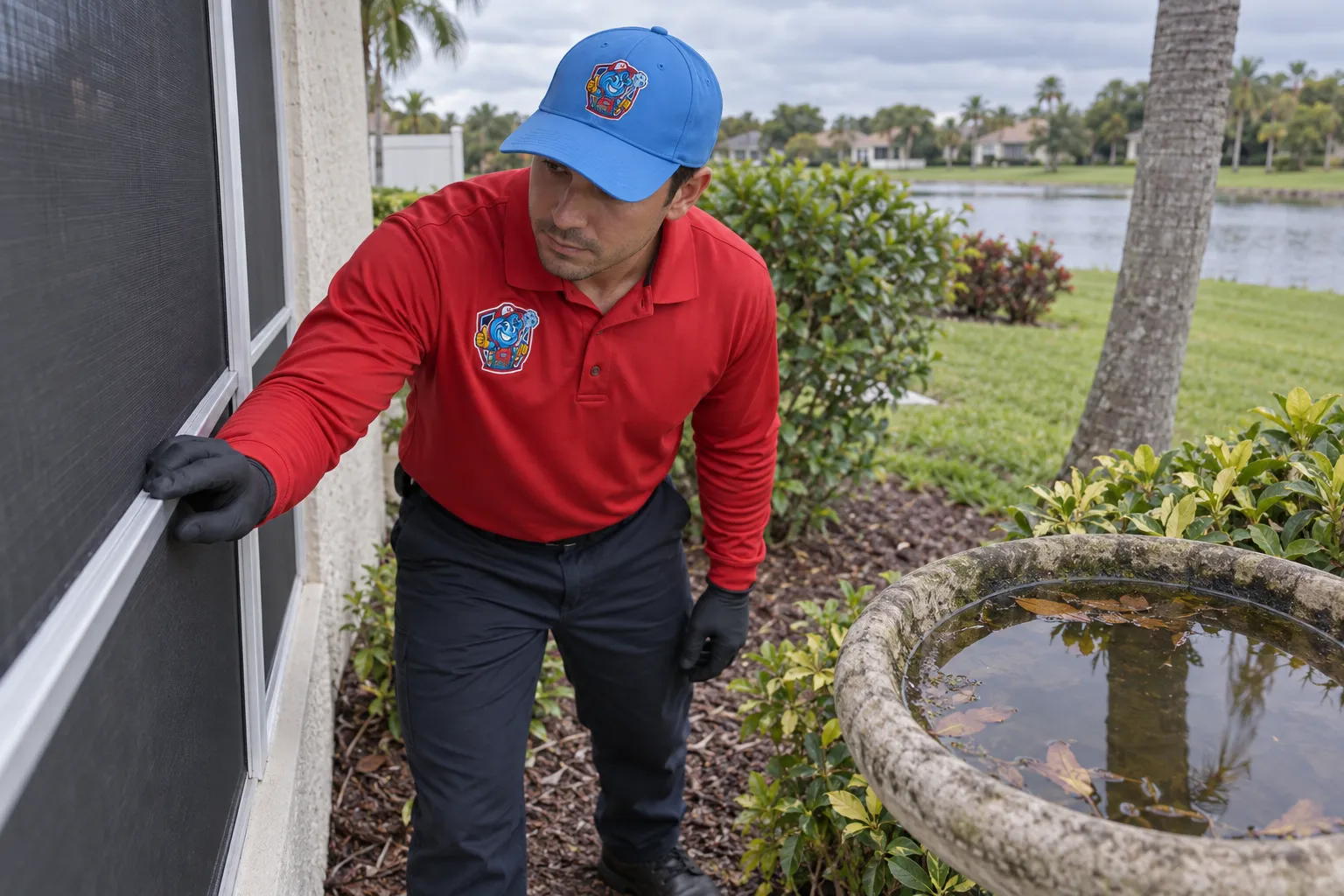
A screen works only where it is whole and shut. Here is a check you can do in one walk around the house:
- Look at every window screen from outside for holes, torn corners and frames that have popped out of the track.
- Check the door to the lanai or pool cage. See whether it closes fully by itself and whether the sweep at the bottom touches the threshold.
- Walk the bottom panels of a pool cage. Those sit at the height where pets, trimmers and furniture hit them.
- Watch the garage door. A garage left open through the evening is an open door by the CDC’s wording.
Do not treat a repaired screen as proof that no mosquito can get in. People open doors, and a mosquito that rides in on a draft does not care how good the mesh is. The CDC plans for that: its indoor list also says to empty vases and flowerpot saucers once a week, because mosquitoes that get inside can use water that is inside.
What standing water does, and the CDC weekly routine
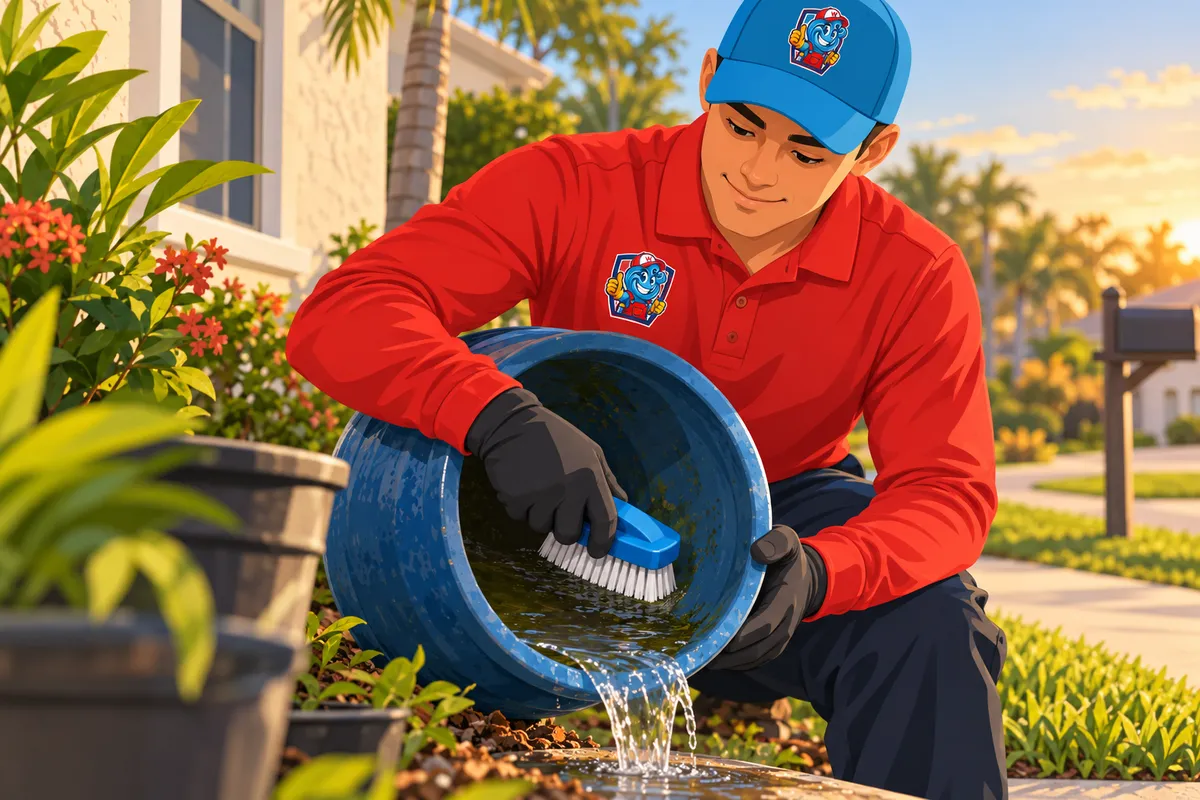
Standing water is a breeding step. It decides how many mosquitoes grow up on your lot. The CDC routine is one sentence: “Once a week, empty and scrub, turn over, cover, or throw out any items that hold water like tires, buckets, planters, toys, pools, birdbaths, flowerpot saucers, or trash containers.”
The CDC adds three points for water you want to keep:
- Tightly cover water storage containers such as buckets, cisterns and rain barrels so mosquitoes cannot get inside to lay eggs.
- For containers without lids, use wire mesh with holes smaller than an adult mosquito.
- Use larvicides to treat large bodies of water that will not be used for drinking and cannot be covered or dumped out. Read and follow the product label, and store the product out of sight and reach of children and pets.
Southwest Florida makes the weekly part hard. Afternoon storms refill a saucer the day after you tip it out. Sandy soil drains fast, so the water that lasts is the water in containers. Our post on seven water-holding spots to check around a patio goes item by item.
Pro tip: pick one day and tie the walk to something you already do, like rolling the trash bin to the curb. The CDC says “empty and scrub,” so wipe the inside of each container and do not stop at tipping it out.
Side by side: what each action addresses
Each step covers one pathway and leaves the others open. The table states what the CDC page supports. It gives no effectiveness percentage, because the CDC page gives none.
| Action | What it addresses | What it cannot establish |
|---|---|---|
| Repair and use window and door screens | Adult mosquitoes getting into the house or lanai | That no mosquito gets in, or that fewer mosquitoes live in the yard |
| Keep doors and the garage door closed | The same entry pathway, at the openings screens do not cover | Anything about breeding outdoors |
| Empty and scrub water-holding items once a week | Places on your property where mosquitoes lay eggs | That mosquitoes will not fly in from next door, a ditch or a pond |
| Cover stored water or use fine wire mesh | Egg-laying in water you keep on purpose | The condition of containers you have not found yet |
| Indoor insect spray, used as the label directs | Mosquitoes already resting inside | A mosquito-free home. The CDC says using only an indoor insecticide will not keep your home free of mosquitoes |
Editorial summary of the CDC page Mosquito Control at Home, last updated April 16, 2024. Not a Waves test result.
How to choose where to start
Start with the step that matches where you get bitten.
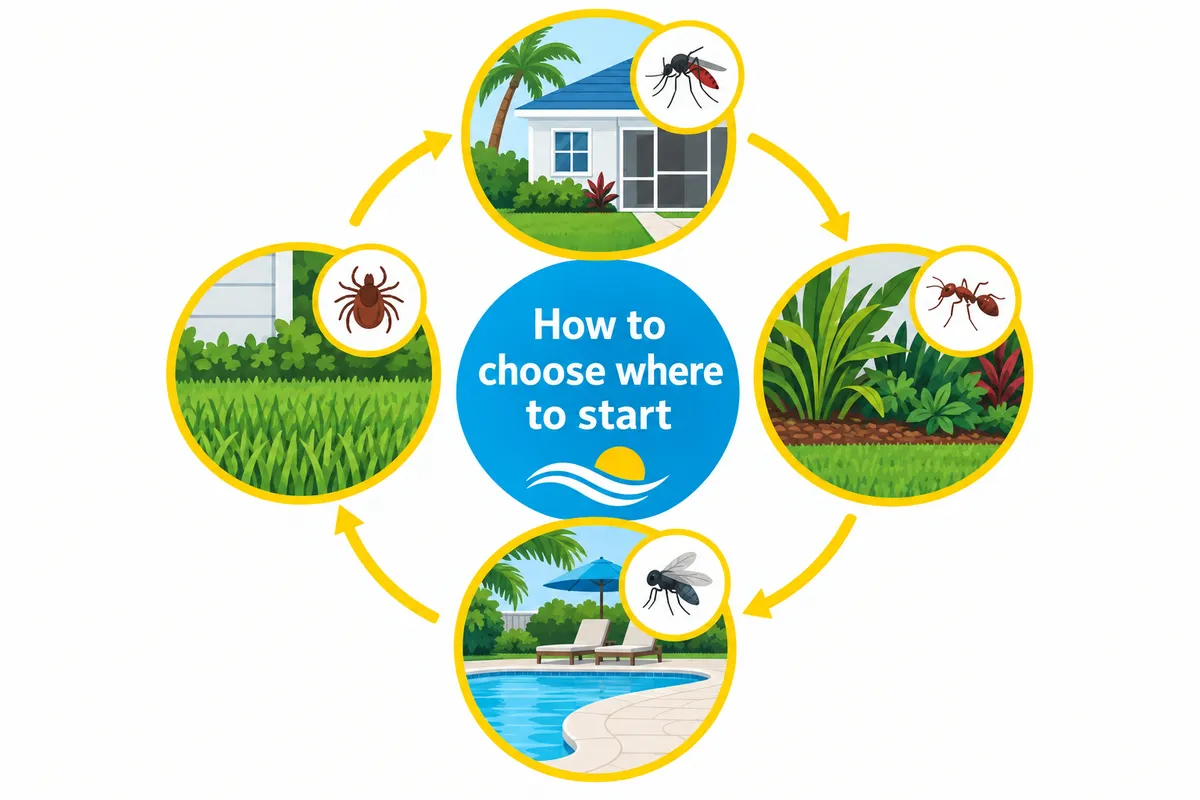
- If you get bitten indoors or wake up with a mosquito in the bedroom, start with screens and doors.
- If you get bitten on the driveway, at the mailbox or in the open yard, start with the weekly water walk. Screens do nothing out there.
- If you get bitten inside a screened lanai, use both: check the cage panels and the door, then look for water inside the cage, such as plant saucers and pool toys.
- When you find mosquitoes indoors after the screens are fixed, use the CDC’s indoor step. Empty vases and saucers first. An indoor insecticide comes after that, applied only as its label directs and kept off food-preparation surfaces.
When ongoing mosquito activity needs a broader look
If mosquitoes stay heavy after two or three weeks of both steps, the source is probably somewhere your routine does not reach. Look for these before you call anyone:
- Water you cannot tip out: a clogged gutter, a low spot that holds rain, a drain line, a boat cover.
- Water that is not yours: a vacant lot, a neighbor’s unused pool, a retention pond or a roadside ditch.
- Resting spots. The CDC says adult mosquitoes rest in “dark, humid areas like under patio furniture or under the carport or garage.”
Here is what not to do. Do not assume every itchy welt is a mosquito bite. You cannot identify the insect from the welt, and other insects bite here too, and our guide to no-see-ums versus mosquitoes covers the common mix-up. Do not read this post as a guide to illness either. If you feel sick after bites, call your doctor.
Water on public land or in a shared pond belongs to the county mosquito control district or your community association. For your own property, a professional can assess the places a weekly walk misses. Waves Pest Control serves Sarasota, Bradenton, Venice and nearby communities. For pricing, get a mosquito control estimate from the calculator, or request a mosquito control quote and tell us which steps you have already done.
Frequently Asked Questions
Do window screens get rid of mosquitoes?
No. Screens keep adult mosquitoes out of the house when the screens are intact and the doors stay closed. They do not lower the number of mosquitoes outside.
How often should I empty standing water?
Once a week. The CDC says to empty and scrub, turn over, cover or throw out any items that hold water once a week.
Why do I have mosquitoes inside a screened lanai?
They got in through a gap or a door, or they are breeding in water inside the cage. Check the panels and door first, then empty plant saucers, toys and anything else that holds water.