Jump to a section (10)
- 01What a brown recluse bite looks like on day 1
- 02What happens over the next few days
- 03The weeks after: the scab and the scar
- 04Are brown recluse spiders in Southwest Florida?
- 05Spider bite or infection?
- 06Why a photo is not proof of a bite
- 07When to see a doctor and when to call 911
- 08What not to do with a suspected bite
- 09Checks you can do at home
- 10How Waves Pest Control handles spider calls
You have a red, sore spot that was not there yesterday, and somebody said “brown recluse.” Here is what medical and university sources say the first days of a recluse bite look like, why a wound in Sarasota or Bradenton is rarely one, and when to get care. It is general information, not medical advice. For the spiders themselves and other household pests, start with our pest control services page.
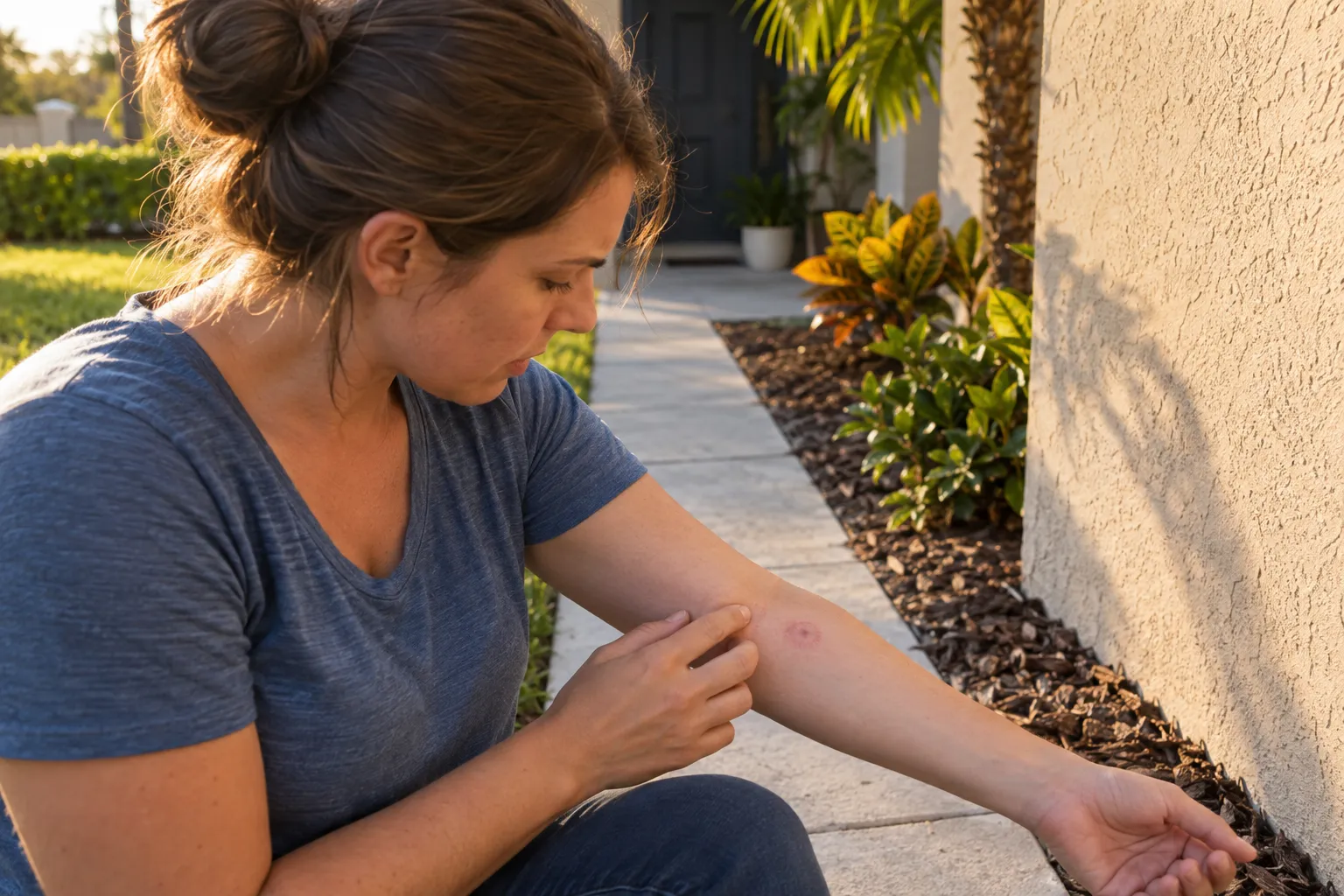
What a brown recluse bite looks like on day 1
On day 1 a recluse bite often looks like very little, then gets more painful over several hours. MedlinePlus, the health site of the U.S. government’s medical library, says you may feel a sharp sting at the bite or nothing at all, and that pain usually develops within the first several hours and may become severe.
UF/IFAS gives a closer timeline in its brown recluse profile (EENY-299, revised September 2024):
- At the bite. Discomfort may start right away, or several hours may pass before anything shows. In one study UF/IFAS cites, only 57% of patients knew they had been bitten when it happened.
- Hours 2 to 6. Symptoms usually start two to six hours after the bite. Blisters often form, with severe pain and marked swelling.
- The bull’s-eye. A common pattern is a reddish blister ringed by a bluish area, with a narrow white band between the red and the blue.
- Hours 12 to 24. By this point it is usually apparent whether the wound will become necrotic (the skin dies), because it turns purple.
The CDC’s workplace safety institute (NIOSH) describes a stinging feeling with local pain and a small white blister that usually develops at the bite. MedlinePlus adds a warning for day 1: the bite may not look serious, but it can take some time to become severe.
Worried about spiders in the house while you sort this out? You can get a pest control quote online.
What happens over the next few days
Days 2 through 4 decide how most bites turn out. UF/IFAS says that if necrotic symptoms have not appeared by 48 to 96 hours, they will not develop. When the skin does turn purple, it then turns black as the cells die.
Body-wide effects follow a different clock. Per UF/IFAS, systemic effects usually take two to three days to show, and bites that become systemic usually do not also become necrotic. Fewer than 1% of cases show the severe blood and clotting problems the profile describes. MedlinePlus lists chills, fever, nausea, itching, sweating and a general ill feeling among the symptoms, and names rare, serious ones: blood in the urine, yellowing of the skin and the whites of the eyes, kidney failure, seizures and coma. It also says children may have more serious reactions.
UF/IFAS says the wound is usually free of bacterial infection for the first two to three days, but scratching an itchy bite can bring infection in.
The weeks after: the scab and the scar
In serious cases a hard black scab, called an eschar, forms where the skin died. MedlinePlus says it falls away after weeks and leaves an ulcer through the skin and fatty tissue that may take many months to heal and can leave a deep scar. UF/IFAS says healing can take weeks to months.
Not every bite gets this far. UF/IFAS sorts recluse bites into four kinds: unremarkable, localized, dermonecrotic (a slow-healing ulcer) and systemic (sometimes life-threatening). The amount of venom matters, since spiders sometimes give “dry” bites, and so does how strongly the person reacts.
Are brown recluse spiders in Southwest Florida?
UF/IFAS says there is currently no scientific evidence that any recluse spider is established in Florida. Its 2022 guide to common Florida spiders says brown, Chilean and Mediterranean recluses have occasionally been intercepted in the state, confirmed sightings are rare, and infestations are typically restricted to a single building. The same guide says the only spiders native to or established in Florida with medically significant venom are the widows. The brown recluse guide on the Waves blog covers the Florida look-alikes in more depth, and our post on black widow vs brown widow shows how to tell those two apart.
That changes how to read a mystery wound here. UF/IFAS says mystery bites, wounds and bacterial infections are commonly misdiagnosed as recluse bites by the public, by doctors and by veterinarians, and that without seeing the spider bite, it is hard to say an injury came from a spider at all. MedlinePlus puts the spider’s main range in the south and central United States, especially Missouri, Kansas, Arkansas, Louisiana, eastern Texas and Oklahoma.
Spider bite or infection?
The CDC says most staph skin infections, MRSA included, show up as a bump or sore that might be red, swollen, painful, warm to the touch, full of pus or other drainage, or paired with a fever. It also says people sometimes confuse some MRSA infections with a spider bite, and that unless you actually saw the spider, the irritation is likely not a spider bite.
UF/IFAS lists many other causes of wounds that look like a recluse bite, including tick bites, shingles, bacterial skin infections, diabetic ulcers, chemical burns, and stings or bites from other insects. Lyme disease can make the same bull’s-eye pattern, and UF/IFAS says that although Lyme is rare in Florida, it would be a more probable diagnosis than a recluse bite.
Why a photo is not proof of a bite
A picture of the wound, or a match to a stage chart like the one above, cannot tell you what caused it. The CDC says you cannot tell by looking at the skin whether a sore is a MRSA infection, and that a healthcare provider has to send a sample to a lab to confirm it. Use this timeline to tell your doctor what you saw and when.
When to see a doctor and when to call 911
See a doctor when a sore keeps growing, darkens, or comes with a fever. The CDC says to contact your healthcare provider about a possible skin infection, especially if the symptoms include a fever or do not improve within 48 hours. If you saw a brown recluse bite you, MedlinePlus says to get emergency medical care right away.
Call 911 or your local emergency number for any of these signs:
- trouble breathing
- swelling in the face, mouth or throat
- fainting or not responding
- a seizure
- blood in the urine
MedlinePlus lists seizures, blood in the urine and lack of responsiveness among the rare symptoms of a recluse bite, and its bites and stings page says to call 911 for trouble breathing or swelling in the face, mouth or throat.
First aid before you get care
These steps come from CDC NIOSH and the MedlinePlus brown recluse page. They are for the time before medical care, not a replacement for it.
- Stay calm and wash the area with soap and water.
- Wrap ice in a clean cloth and hold it on the bite for 10 minutes, then off for 10 minutes, and repeat.
- Keep the area still and raise it if you can.
- Loosen clothing and take off rings or other tight jewelry.
- Do not try to remove the venom.
Pro tip: If you caught the spider, put it in a sealed container. MedlinePlus says to take the spider with you to the emergency room if possible, and the CDC says to identify it only if you can do so safely.
What not to do with a suspected bite
- Do not pick at or pop the bump or sore. The CDC says to cover it with clean, dry bandages until you see a healthcare provider.
- Do not wait for the wound to match a picture online before you get care.
- Do not assume a spider you find later is the one that bit you. Identify it first.
Checks you can do at home
UF/IFAS says brown recluses usually bite only when trapped against skin, such as when a person rolls onto one in bed or puts on clothes it crawled into. The CDC notes a recluse cannot bite without that kind of pressure. A few habits lower the odds of any spider bite:
- Shake out shoes, clothes and towels that sat in a garage, closet or attic.
- Wear gloves and long sleeves when you move stored boxes, woodpiles or the yard debris an afternoon storm leaves behind.
- Store seldom-used clothing and gear in tightly closed plastic bags.
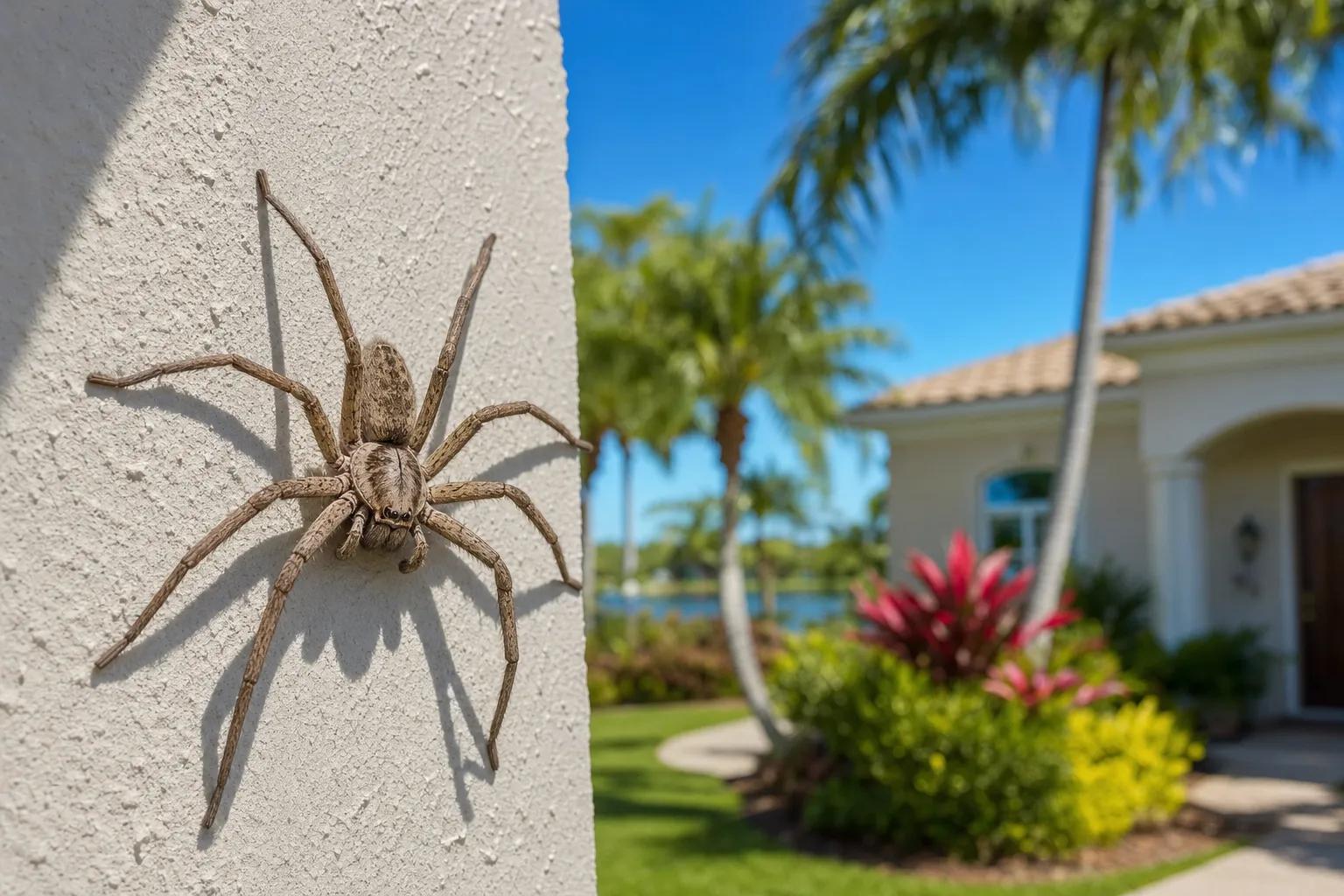
- Check the spider before you name it. UF/IFAS says recluses have only six eyes, where most spiders have eight, plus long, slender legs, and that the violin mark is not reliable for identification. Wolf spiders, fishing spiders and male southern house spiders get mistaken for them.
Common Florida lanai and pool-cage spiders include web builders such as the golden silk orb-weaver, better known as the banana spider, and UF/IFAS says few Florida spiders have venom of concern to people.
How Waves Pest Control handles spider calls
Waves Pest Control handles the spiders. Questions about a bite belong with your doctor. A first Waves visit includes a property walk to identify active pest pressure, an inspection of the soffits, eaves and slab line, and de-webbing at entry points. Recurring visits focus on the exterior perimeter and include de-webbing. If you keep finding spiders indoors or caught one you cannot identify, a professional inspection can name it. You can look up other household pests in the Waves pest library and compare WaveGuard memberships for year-round service.
Homeowners in Sarasota, Bradenton and nearby cities can request a pest control quote for Sarasota to schedule an inspection.