Jump to a section (10)
- 01Are Nursery Web Spiders Poisonous?
- 02Are Nursery Web Spiders Dangerous?
- 03Quick ID: Nursery Web, Wolf, or Fishing Spider?
- 04Where You’ll See Them in Southwest Florida
- 05Overview of Nursery Web Spiders
- 06Seeing More Spiders Than You’d Like?
- 07Behavior and Ecology
- 08Human Interactions
- 09Conservation and Observation
- 10Frequently Asked Questions (FAQs)
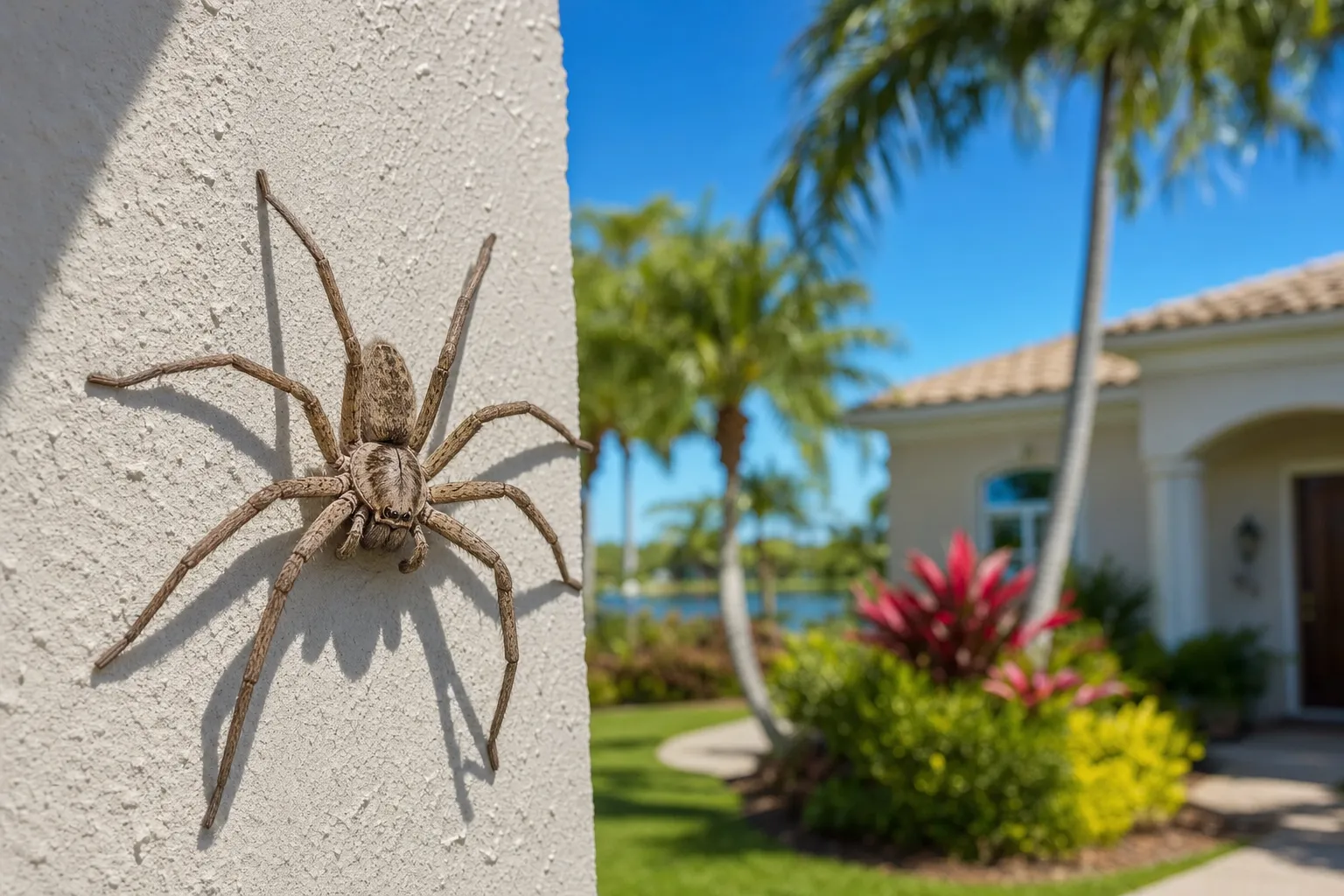
Ever stumbled upon a spider with long, slender legs and wondered what it was? Chances are, you might’ve encountered a nursery web spider. In Florida they’re one of the most common spiders on pool cage screens, lanais, and tall grass — and unlike many of their web-spinning relatives, they don’t build a catching web at all. They hunt on foot, using their fangs and legs to immobilize prey.
If you found this page because one is sitting on your screen enclosure right now, here are the two answers you probably want first.
Are Nursery Web Spiders Poisonous?
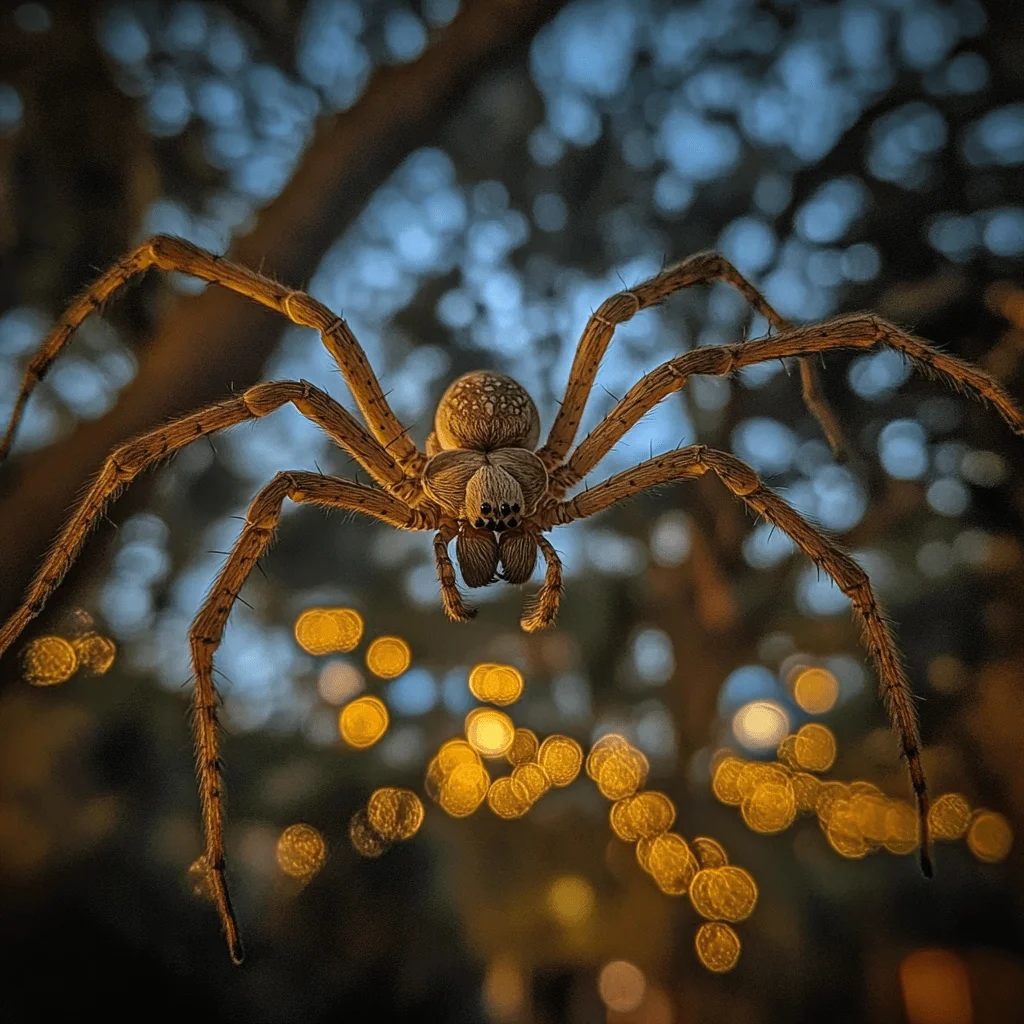
No — not in any way that matters to you or your pets. Like nearly all spiders, nursery web spiders have venom they use to subdue insect prey, but it is not medically significant to humans. Bites are rare and defensive — the classic scenario is a female guarding her egg sac being grabbed or pinned against skin, though like any spider, one can bite if it’s trapped against your body or mishandled.
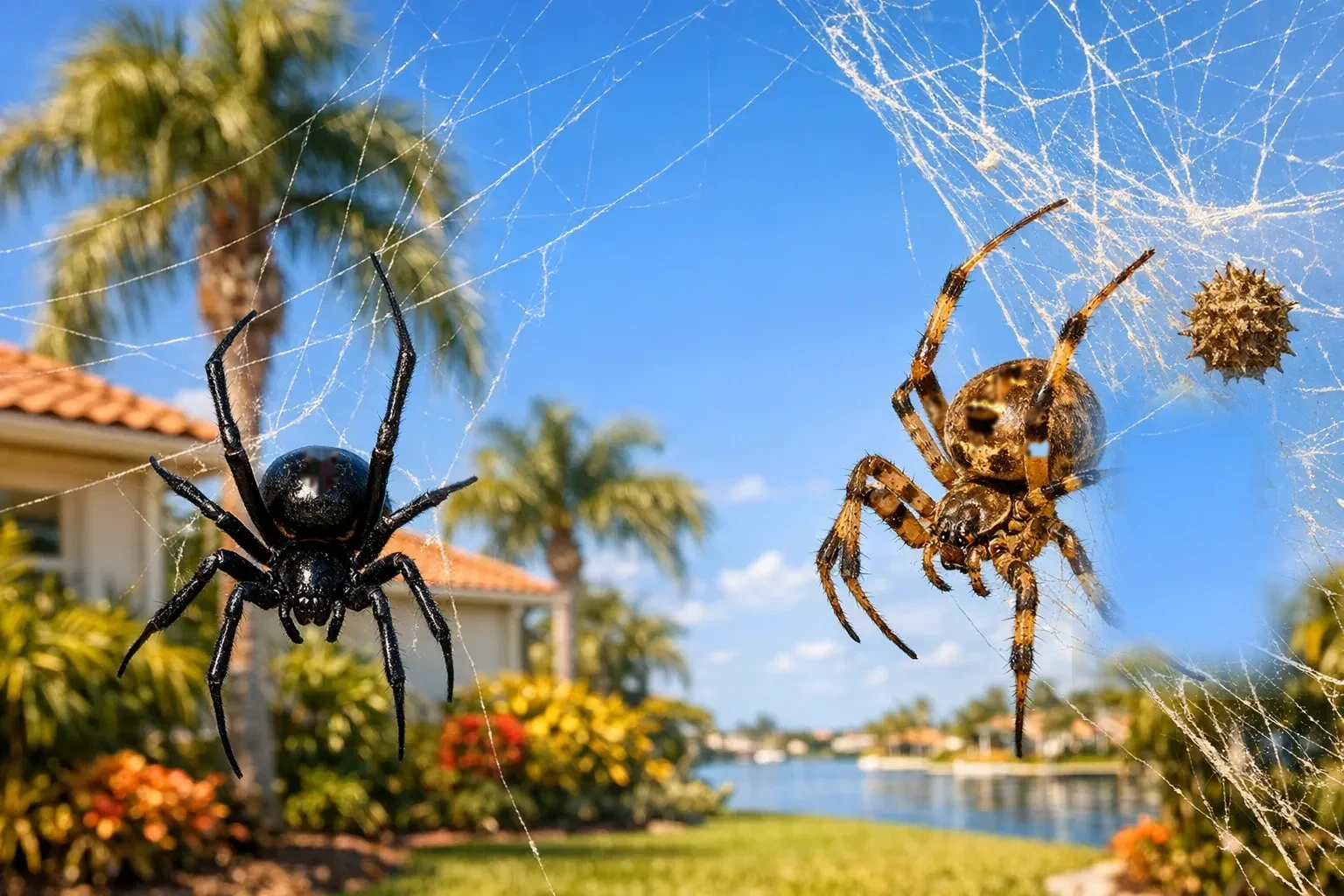
In Florida, the spider group of genuine medical concern is the widow group (southern, northern, brown, and red widow). Nursery web spiders aren’t in that category — and the brown recluse, which people often worry about, does not have an established population in Florida according to UF/IFAS. Isolated hitchhikers occasionally turn up in boxes or moving trucks, but it is not a resident Florida pool-cage spider.
Are Nursery Web Spiders Dangerous?
No. Nursery web spiders are one of the harmless, beneficial spiders that commonly live on Florida screen enclosures — alongside golden silk orbweavers, spiny-backed orbweavers, and long-bodied cellar spiders. They actively reduce the insects you actually don’t want around: they eat mosquitoes, flies, and other soft-bodied pests that come to your lanai lights.
They aren’t aggressive toward people. Their first response to being approached is to run — often with a burst of speed that startles homeowners more than any bite risk ever could. If one is somewhere you don’t want it, a cup-and-cardboard relocation to the yard is genuinely all it takes.
Quick ID: Nursery Web, Wolf, or Fishing Spider?
In Southwest Florida yards, the classic nursery web spider (Pisaurina) is easy to confuse with wolf spiders (Lycosidae) and with fishing spiders (Dolomedes) — which are actually its bigger, water-loving cousins in the same family, Pisauridae. Use this to narrow it down before deciding whether to catch-and-release or call us.
| What to check | Nursery web spider (Pisaurina) | Wolf spider | Fishing spider (Dolomedes) |
|---|---|---|---|
| Where you’ll see it | Pool cage screens, shrubs, tall grass, walls | Ground level — mulch, turf, garage floors | On or beside water: ponds, pools, dock pilings |
| Resting posture | Front two pairs of legs often held together, extended straight forward | Legs spread in a ready-to-sprint stance | Legs splayed wide, sometimes touching the water surface |
| Egg sac habit | Female carries the sac in her jaws, then builds a silk “nursery tent” over it | Female attaches the sac to her spinnerets, then carries spiderlings on her back | Same jaw-carry as Pisaurina (same family) |
| Body look | Slender body, lengthwise stripe, long tapering legs | Stockier, robust body; prominent large eyes with visible eyeshine at night | Noticeably large overall — leg spans can exceed 3 inches |
| Bite concern | Not medically significant | Not medically significant | Not medically significant |
The egg-sac habit is the giveaway most people can actually use: a spider carrying a round white sac in its mouth is a nursery web or fishing spider; a spider with the sac attached to its rear end — or covered in babies — is a wolf spider.
For a broader lineup of what you’re seeing around the house, our Florida spider identification guide covers the full cast, and the wolf spider ID guide goes deep on the most common look-alike.
Where You’ll See Them in Southwest Florida
Nursery web spiders like the same things Florida gives them everywhere: humidity, dense vegetation, still water, and a steady insect supply. Around homes in the Bradenton and Sarasota area, that translates to a few predictable spots:
- Screen enclosures and lanais — pool cages concentrate flying insects at night, which makes them a buffet. This is the single most common place homeowners meet one. (More on that in spiders in your pool cage.)
- Tall grass and shrub beds — their lengthwise striping camouflages against stalks and blades.
- Pond and retention-pond edges — pisaurids can walk on water and even dive briefly to escape predators.
Seeing one occasionally is normal Florida. Seeing lots of spiders usually means the insect population feeding them has grown — which is the actual problem worth treating.
Key Takeaways
- Harmless to People: Nursery web spiders are venomous only to their insect prey — bites are rare, defensive, and not medically significant to humans or pets.
- Active Hunters: Unlike most spiders, nursery web spiders do not rely on webs to catch prey; they hunt using their fangs and legs to immobilize their victims.
- Florida Regulars: They’re among the most common spiders on SWFL pool cages and lanais, where they help control mosquitoes, flies, and other nuisance insects.
- Unique Maternal Behavior: Female nursery web spiders carry egg sacs in their mouths and guard the young in nursery webs until they are ready to disperse, showcasing strong maternal instincts.
- Conservation Status: Nursery web spiders are widespread and not considered at risk, with no special conservation status on various regulatory lists.
Overview of Nursery Web Spiders
Nursery web spiders are a fascinating group known for their unique behaviors and significant role in ecosystems. As skilled hunters and dedicated parents, they exhibit remarkable abilities that set them apart from other spider species.
Physical Description
Nursery web spiders possess bodies similar to other spiders, characterized by a combined head and thorax region called the cephalothorax and an unsegmented abdomen. These two sections are joined by a narrow, flexible pedicel. The cephalothorax features a hard protective covering, the carapace, which provides durability and strength. With keen vision and agile movements, these spiders can track down and capture prey effectively.
Geographic Distribution
Nursery web spiders inhabit diverse regions across the globe. Species like Dolomedes are found in Africa, Oceania, South America, North America, and Asia. In Florida, the species you’re most likely to meet is Pisaurina mira, with Dolomedes fishing spiders holding down the waterfront. These spiders thrive in various ecosystems, including forests, grasslands, and wetlands, helping regulate insect populations and maintain ecological balance.
Seeing More Spiders Than You’d Like?
A spider boom usually means an insect boom. If your lanai or pool cage has become a nightly spider convention, we’ll treat the food source — not just the spiders.
Behavior and Ecology
Nursery web spiders, part of the family Pisauridae, are active hunters known for their unique maternal behaviors. These spiders exhibit various fascinating behaviors and ecological adaptations.
Reproductive Habits
- Mating: Male nursery web spiders present females with prey wrapped in silk. This gift, consumed during mating, determines reproductive success based on its quality. Unlike other species, pheromones in the silk don’t influence mating.
- Egg Sac: Female nursery web spiders carry egg sacs in their mouths until young are almost ready to emerge. Once ready, they attach these sacs to a plant, guarding them until hatching.
- Parental Care: Females display strong maternal instincts, providing sole parental care. They stand guard over nursery webs, protecting young until they disperse.
Habitat Preferences
Nursery web spiders thrive in diverse environments except extremely dry or cold areas. Commonly found near still bodies of water, they can walk on water surfaces and even dive to escape predators. Species like Dolomedes inhabit various continents, while others like Archipirata and Architis are region-specific.
Diet and Prey
Nursery web spiders are active predators, capturing prey while foraging or waiting silently. Their diet primarily consists of insects, aiding in controlling insect populations and maintaining ecological balance. Adaptations like keen vision and agility make them hunters.
By understanding the behavior, reproductive habits, habitat preferences, and diet of nursery web spiders, you gain a comprehensive view of their role in various ecosystems.
Human Interactions
Nursery web spiders, specifically Pisaura mirabilis and Pisaurina mira, frequently interact with humans due to their presence in common habitats like heathlands and grasslands.
Benefits to Humans
Nursery web spiders provide significant benefits to humans by helping manage pest populations. These spiders feed on various insects that damage crops, thereby reducing the need for chemical pesticides. For instance, in agricultural settings, nursery web spiders can significantly lower the population of pests such as aphids and beetles, aiding farmers and gardeners.
Also, nursery web spiders play an essential role in maintaining ecological balance. They contribute to the food chain as both predators and prey. Their predation keeps insect levels controlled, which helps sustain the natural balance in local ecosystems. Besides, they serve as food for birds and other predators, highlighting their importance in the web of life.
Potential Risks
Though nursery web spiders are beneficial, potential risks exist, albeit minimal. Some people might mistake them for more dangerous spiders like wolf spiders due to their similar appearance. But, nursery web spiders are generally harmless to humans. They rarely bite unless provoked, and their venom is not considered medically significant.
In domestic environments, encountering a nursery web spider might cause concern, especially for those with arachnophobia. If you want to reduce encounters, keeping your home and surroundings clean and free of clutter can help deter these spiders.
By focusing on the benefits and potential risks associated with nursery web spiders, you can better understand their role in nature and how to manage any interactions with them. Providing clear structures, real-world examples, and practical advice ensures you gain both the knowledge and tools needed to handle these encounters effectively.
Conservation and Observation
Conserving and observing nursery web spiders offers insights into their behaviors and habitats while ensuring ecological balance. You can find these spiders in multiple environments, providing a rich experience for any nature enthusiast.
Conservation Status
Nursery web spiders, part of the genus Pisaurina, are not considered a conservation concern. They are common in various parts of their range and are found in multiple habitats, including grasslands, heathlands, and woodland borders.
Watching and Studying
Observing nursery web spiders can reveal intriguing aspects of their behavior and interactions within their habitats.
- Habitat: These spiders inhabit fields, meadows, woods, tall grass, shrubs, bushes, and even houses. Look for them in areas with dense vegetation where they can easily blend in.
- Behavior: Active hunters, nursery web spiders create protective tents for their egg sacs. You’ll often see them standing guard outside these tents, showcasing their maternal instincts.
- Identification: Look for long legs, slender bodies, and lengthwise striping. This morphology helps them blend with plant or grass stalks, making them masters of camouflage.
Observing their interaction with the environment, such as hunting or guarding egg sacs, provides valuable information on their role in the ecosystem. By understanding Pisaurina spiders’ behaviors and habitats, you contribute to appreciating and conserving biological diversity.
Frequently Asked Questions (FAQs)
Are nursery web spiders poisonous?
Nursery web spiders possess venom that they use to subdue their prey. However, their venom is not harmful to humans or pets, making them non-threatening to people.
Are nursery web spiders dangerous?
No. They are harmless, beneficial residents of Florida yards and screen enclosures. They avoid people, bite only defensively — most often when pinned against skin or when a female is grabbed while guarding eggs — and the bite is not medically significant. In Florida, the widow group is the spider family of genuine medical concern — nursery web spiders are not part of it.
What attracts nursery web spiders to a pool cage or lanai?
Food and shelter. Screen enclosures trap and concentrate flying insects — especially around lights at night — and the framing gives spiders protected corners to hunt from. A pool cage with lots of spiders almost always has lots of insects feeding them.
Are nursery web spiders aggressive?
Nursery web spiders are not aggressive to humans, though females guard their egg sacs fiercely. If their sac is disturbed, they may bite. The bite can be painful due to the spider’s size but is not dangerous to humans.
How do nursery web spiders contribute to pest control?
Nursery web spiders help control insect populations by preying on insects. This predation helps maintain ecological balance and can reduce the impact of pests in various habitats.
What are the reproductive habits of nursery web spiders?
Female nursery web spiders carry their egg sacs in their jaws until the eggs are ready to hatch. They then spin a nursery web to protect the young spiders until they can fend for themselves.
What is the conservation status of nursery web spiders?
Nursery web spiders are commonly present and are not considered at risk. Their widespread presence and lack of economic impact contribute to their stable conservation status.
How long do nursery web spiders live?
Nursery web spiders typically live about one year. Some females may live longer, especially if they survive through multiple reproductive cycles.
Why is it important to study nursery web spiders?
Studying nursery web spiders can provide insights into their behaviors and ecological roles, aiding in biological diversity conservation and understanding pest control dynamics.