If you own a newer home in Southwest Florida, there’s a decent chance your termite protection came from the builder — and a decent chance a letter is coming (or already came) telling you that coverage is about to expire. Florida’s building code requires new homes to be protected against subterranean termites at construction, but that builder-provided warranty is time-limited, and when it lapses, the protection decision lands on you.
That decision usually comes down to a bait-station program — and inside it hides a question most homeowners have never been asked out loud: do you want to own the stations in your yard, or rent them?
Both models are real, both are common in the industry, and they behave very differently the day you stop paying. Here’s the honest breakdown. (If you first want the basics of how bait stations work, start with our bait station guide or the bait vs. liquid treatment comparison.)
Key Takeaways
- Two ownership models exist. Some programs sell you the stations once at installation; others install them free and charge an ongoing rate for hardware the company still owns.
- The difference shows up when you cancel. Owned stations stay in your yard. Rented stations get dug out and leave with the technician — along with the protection.
- Renting is not a payment plan. The rental portion of the bill doesn’t stop once the hardware has “paid for itself” — it’s a rate that runs as long as the program does.
- Neither model changes the protection. Same stations, same bait, same quarterly checks. The choice is purely about money timing and ownership.
- A licensed pro does the work either way. Waves operates under FDACS License JB351547.
How a Bait-Station Program Works, in One Minute
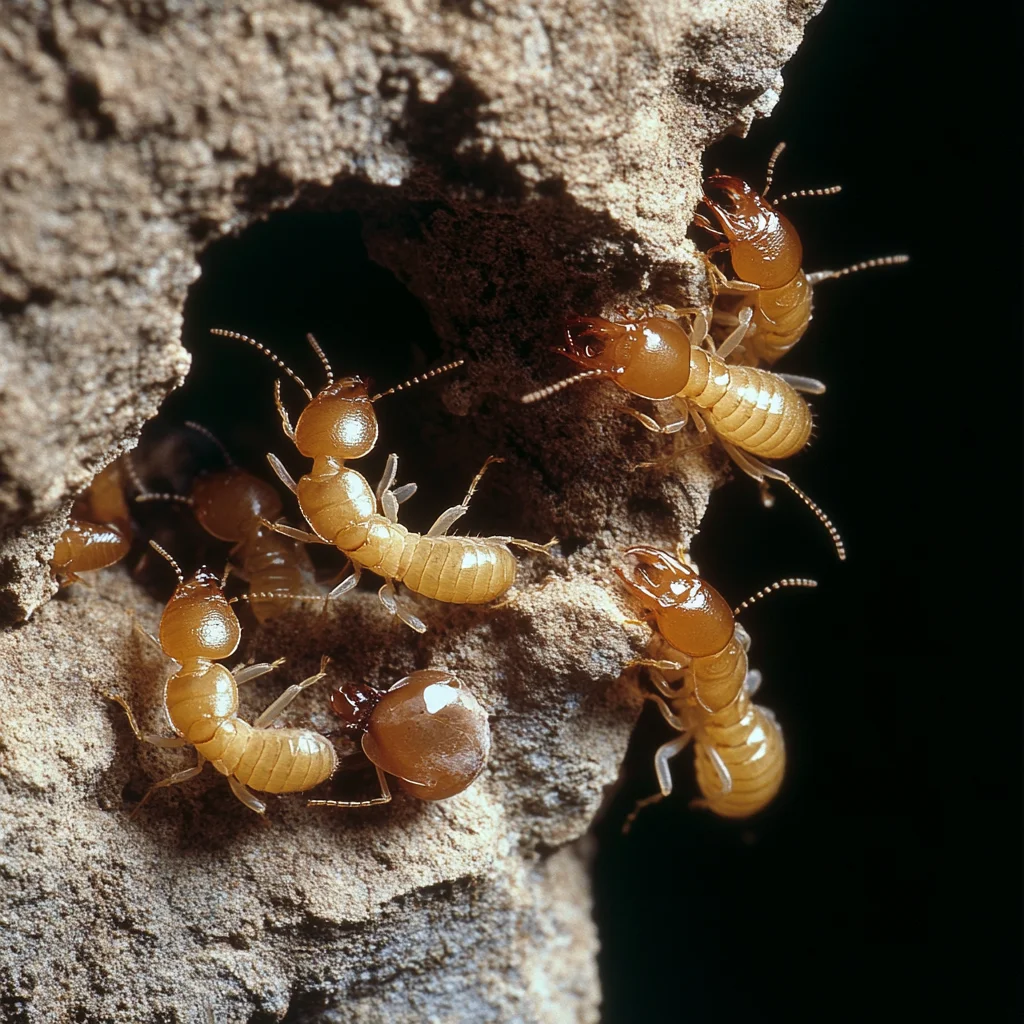
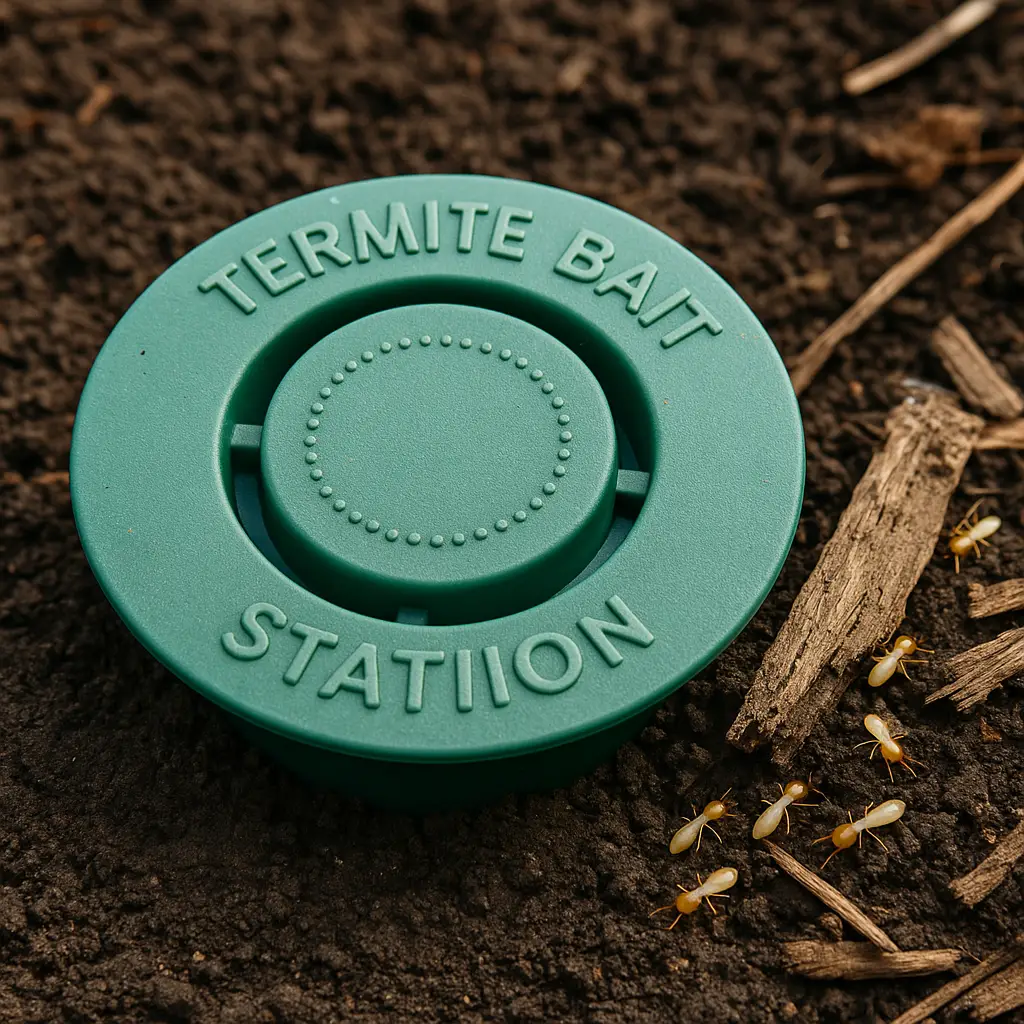
At Waves, we install Trelona ATBS annual bait stations in the soil around your foundation. Trelona’s active ingredient is novaluron — a chitin synthesis inhibitor — in an always-active bait matrix, meaning stations are working from the day they go in rather than waiting for a monitoring hit. Foraging termites find a station, feed, and carry the bait back to the colony; subterranean termite colonies are typically eliminated 3–6 months after they begin feeding on in-ground bait stations.
We check every accessible station on a quarterly visit, document each check in your service report, and replace cartridges by the manufacturer’s criteria rather than the calendar. That part is identical whether you own the hardware or rent it.
What “Renting” Actually Means
Under a rental model, you pay nothing for the stations at installation. The company buys the hardware, installs it, and recovers that cost through the recurring rate — which is why a rented program’s quarterly bill runs higher than an owned program’s.
Three things to understand before you sign one:
- The company owns your stations. They’re on your property, but they’re not your property.
- Cancel, and they come out. The provider retrieves its hardware, and your yard goes back to unprotected. Any warranty tied to the program ends with it.
- The rate doesn’t expire. This is the part that surprises people. The rental portion isn’t amortization that stops when the hardware is “paid off” — it’s a fixed rate for as long as you’re on the program. Over enough years, renters pay more than buyers. That’s the honest trade for starting at zero.
None of that makes renting wrong. It makes renting a cash-flow choice — and for a lot of families staring down a surprise builder-warranty expiration, it’s exactly the right one.
What “Buying” Actually Means
Under an ownership model, you pay for the stations and installation once. After that:
- The hardware is yours, permanently. If you ever end the service, the stations stay in the ground.
- Your ongoing rate covers the work, not the hardware — the quarterly inspections, bait replacement, and documentation.
- Long-run math favors you. Once the up-front cost is behind you, every year of protection costs less than the rental equivalent.
Buy vs. Rent, Side by Side
| What you're deciding | Buy the stations | Rent the stations |
|---|---|---|
| Cost at installation | One-time installation charge | Nothing up front |
| Ongoing rate | Lower — covers service only | Higher — service plus hardware rental |
| Who owns the hardware | You do, permanently | The company |
| If you cancel | Stations stay in your yard | Stations are removed |
| Long-run cost | Lower after the first years | Keeps running as long as the program does |
| The protection itself | Identical | Identical |
Exact numbers depend on your home's perimeter — station count is set by linear footage, so a courtyard villa and a large single-family price differently. Price your own home with the online estimate tool rather than trusting a blog's averages.
We deliberately left dollar figures out of that table. Station count — and therefore price — scales with the linear footage of your foundation, so any “average price” you read online is wrong for your specific house in both directions. Build your estimate online to price the program for your actual home, then ask us for the other ownership structure — we quote both side by side on the same estimate.
The Builder-Warranty Wrinkle
Florida Building Code (R318) requires new homes to be protected against subterranean termites during construction, and builders hand that coverage to you at closing — usually through whichever national provider pre-treated the neighborhood. Two things about that coverage catch homeowners off guard:
- It expires — often just a few years after closing.
- The renewal offer that arrives isn’t your only option. You can renew with the incumbent, or you can have any licensed operator install fresh protection — under either ownership model — and often structure it in the same familiar shape (little or nothing up front) if that’s what your budget needs.
If that letter is sitting on your counter right now, a free termite inspection is the right first step: it establishes your home’s current condition before any coverage decision, and it’s how any legitimate provider should start the conversation.
What About the Warranty Itself?
Ownership covers the hardware; the warranty is what stands behind it. Termite protection in Florida works on an annual renewable warranty — your initial treatment includes the first year of coverage, and renewing it each year is what keeps the warranty in force, with the covered structures and coverage terms spelled out in your signed termite agreement. That’s true under either ownership model. We’ve written a full explainer on how termite bonds work. No termite program, ours included, offers “permanent” protection independent of an active, renewed warranty — walk away from anyone who claims otherwise.
How Waves Handles Ownership
We quote both structures on the same estimate. Buy the stations outright and they’re yours forever; rent them and you start at zero with the rental rate spelled out as its own line — never buried in a bundled number. Switch your mind later in either direction and we re-quote it, no penalty. Every station check lands in your app with its findings either way, and your inspection history stays yours even if the hardware doesn’t.
Start with the online estimate builder — it prices your actual perimeter — or see the full termite control program outline. Prefer a human? ☎️ (941) 297-5749.
Frequently Asked Questions
Is renting termite bait stations a scam?
No — it’s a legitimate, industry-standard model, and it’s how many builder-affiliated programs work. It only becomes a problem when nobody tells you the company owns the hardware, or that the rate outlives the hardware’s cost. Renting trades higher lifetime cost for zero up-front cost. That’s a fair trade as long as you’re choosing it knowingly.
If I rent and later want to own, can I switch?
Ask your provider — at Waves, yes. We re-quote the program as a purchase and the rental rate goes away. The reverse also works if you’d rather free up the up-front cost.
Do rented and owned stations protect the house differently?
No. Same stations, same bait, same quarterly inspection schedule. Ownership changes the billing structure and what happens on cancellation — never the protection.
What happens to my termite warranty if I cancel a rental program?
It ends, and the stations come out of the ground. That’s the real cost of cancelling a rental: you lose the hardware, the monitoring history in the soil, and the warranty in one step. With owned stations, the hardware and any future restart point stay with the house.
My builder’s termite coverage just expired. Do I have to use the same company?
No. Builder coverage is portable in the sense that any licensed operator can protect the home going forward. Get an inspection, compare an ownership quote against the renewal letter, and pick the structure that fits — the incumbent’s renewal is one option, not the only one.