Jump to a section (7)
- 01Where the winter rye habit comes from
- 02What UF/IFAS says about overseeding St. Augustine lawns
- 03The spring transition problem
- 04The water and mowing bill of a winter annual you’ll kill anyway
- 05What a normal dormant SWFL lawn should look like
- 06If winter color truly matters: the honest alternatives
- 07Frequently Asked Questions
Winter rye over a St. Augustine lawn sounds like an easy way to keep the yard green through the holidays. In North Port, UF/IFAS guidance says South Florida lawns don’t need it, and the rye brings weeks of extra watering, weekly mowing and a spring handoff that can set your St. Augustine back. This post covers what UF/IFAS says about overseeding, what the winter rye costs you in upkeep, and what a normal winter lawn looks like here. For how a year-round program works on a North Port yard, see our page on lawn care in North Port.
If you would rather have someone look at your lawn before you buy seed, request a lawn care quote.
Where the winter rye habit comes from
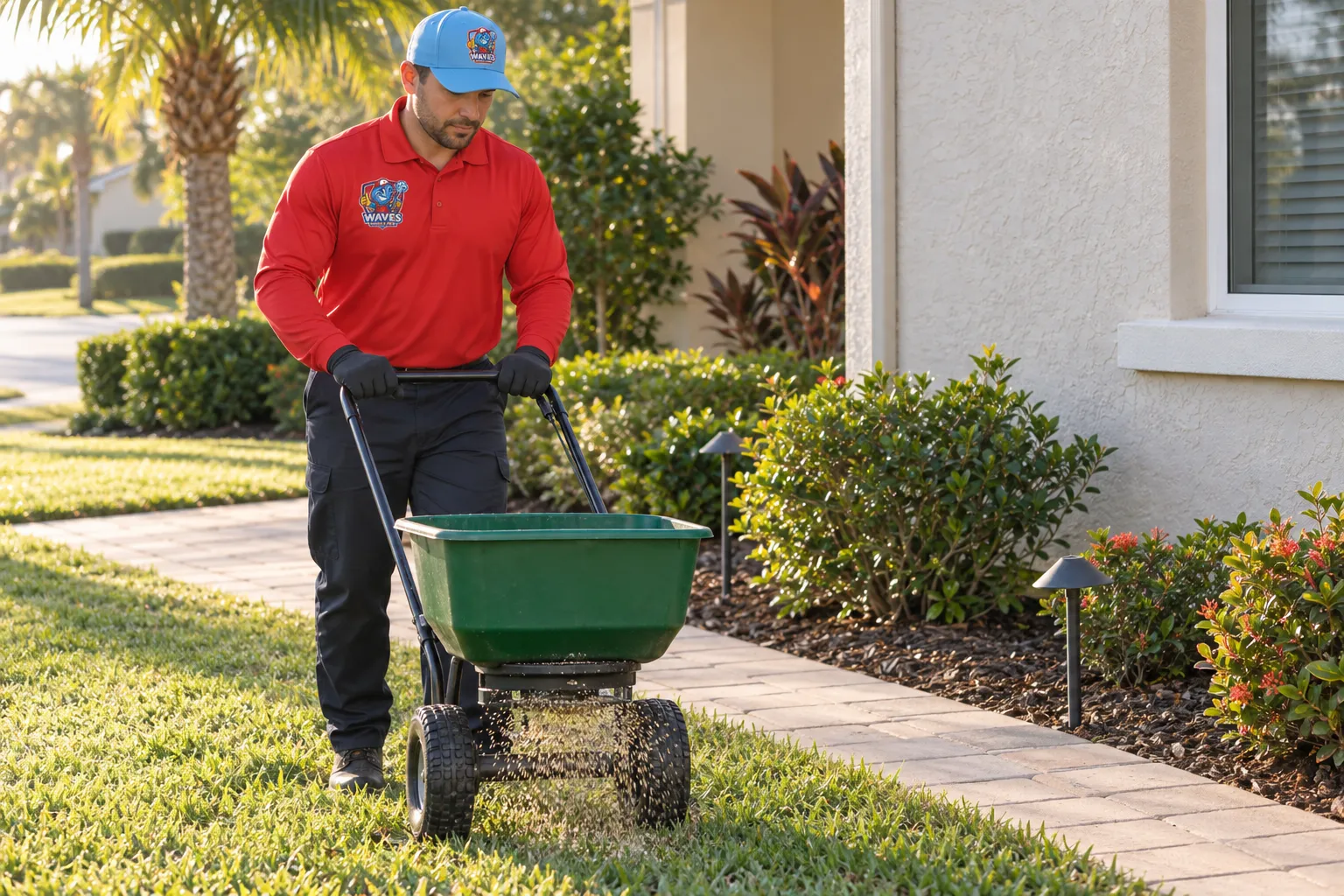
Overseeding means planting a temporary cool-season grass over your permanent lawn so the yard stays green through winter. It has a real place. The UF/IFAS fact sheet Overseeding Florida Lawns for Winter Color (ENH14, December 2010 revision) says the practice is mainly used on golf courses, athletic fields and high-profile landscapes, and that ryegrass is the best choice for home lawns.
It also makes sense where lawns turn brown. UF/IFAS Gardening Solutions calls North and Central Florida lawns good candidates for overseeding. If you moved here from a place where the lawn went brown every November, winter rye probably felt like part of the routine.
North Port sits in a different zone. The UF/IFAS St. Augustinegrass guide (ENH5) defines South Florida as everything south of a line from Vero Beach to Tampa, and that puts North Port on the South Florida side.
What UF/IFAS says about overseeding St. Augustine lawns
UF/IFAS stops short of banning it. For South Florida, the guidance boils down to this: you probably don’t need it.
- Gardening Solutions says South Florida lawns won’t need overseeding, because they typically stay green all year.
- ENH14 says that in frost-free areas of South Florida, lawns generally do not go dormant, and overseeding is probably not necessary for winter color.
- ENH14 does cover St. Augustine. Its seedbed steps say not to mow a St. Augustine lawn lower than 3 inches before you overseed. So UF/IFAS treats overseeding St. Augustine as something you can do, while saying South Florida lawns probably don’t need it.
St. Augustine’s own winter needs pull the other way. The UF/IFAS Gardening Solutions St. Augustinegrass page tells Central and North Florida homeowners to reduce watering and skip fertilizer in the cool months. A rye overseed asks for frequent watering, regular mowing and fertilizer on top of that same grass.
The spring transition problem
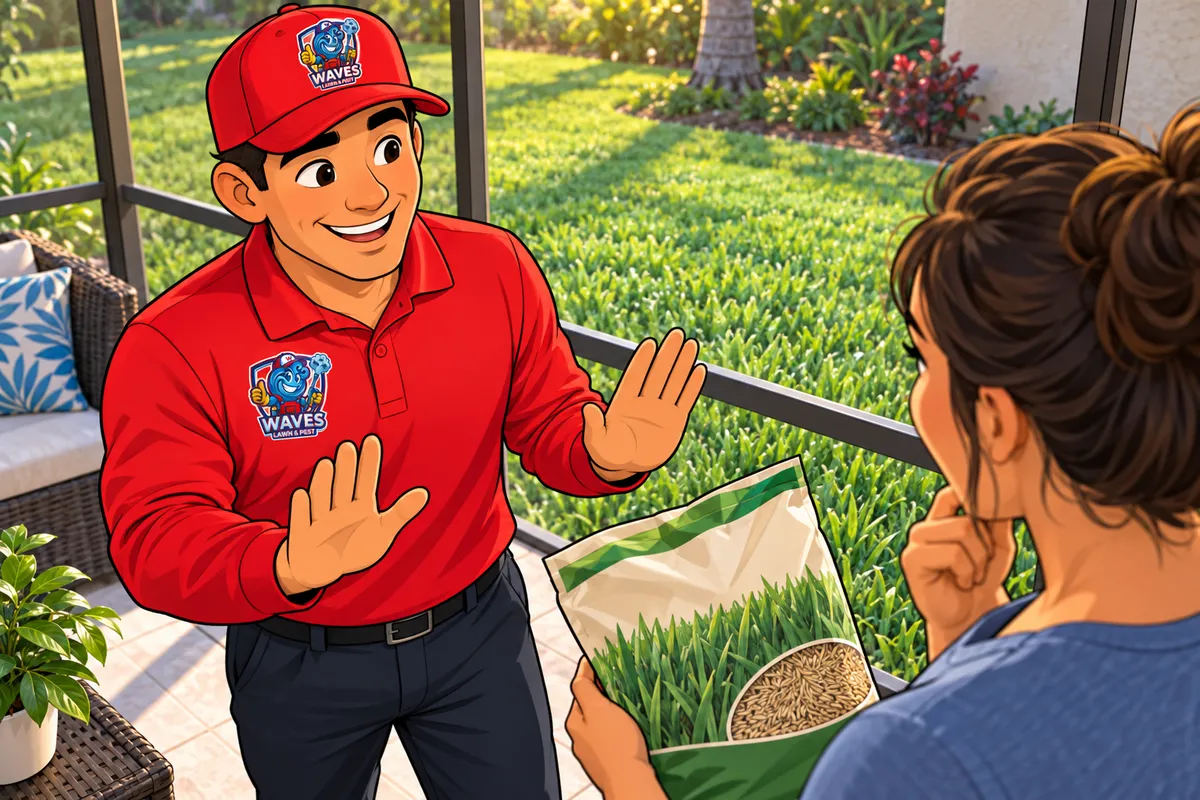
The rye’s exit is where St. Augustine takes the hit. Gardening Solutions says grasses used for overseeding die off as temperatures rise in the spring. ENH14 adds the catch: during that overlapping season, the permanent lawn grass can be weakened by the highly competitive ryegrass.
The rye doesn’t always leave on schedule either. ENH14 says ryegrass normally dies out in late spring, but if the weather stays cool and the lawn is watered often, it can persist. To push the handoff along, ENH14 tells South Florida homeowners to:
- Stop fertilizing the rye after February.
- Water as little as possible while keeping the permanent grass out of drought stress.
- Keep mowing the ryegrass as closely as possible each week.
Once your St. Augustine resumes growth, ENH14 says to go back to your regular lawn care.
Pro tip: inside North Port city limits, the city’s fertilizer ordinance has a restricted period of April 1 through September 30 that prohibits nitrogen and phosphorus fertilizer on turf. That restricted window starts two months earlier than Sarasota County’s June 1 start, so check which rule covers your address before you plan any spring feeding.
The water and mowing bill of a winter annual you’ll kill anyway
A rye lawn is a second lawn to keep alive until spring. ENH14 spells out the work:
- Germination watering. Light watering once or twice a day until the seed germinates, generally 7 to 10 days, then daily watering for another 2 to 3 weeks until the seedlings are established. Check your local watering rules before you commit to that schedule.
- Mowing. Properly fertilized ryegrass grows very quickly, so weekly mowing is often required.
- Full maintenance. ENH14 says an established winter lawn needs the same care as a permanent lawn: mowing, watering, fertilizing and pest control.
- Disease risk. ENH14 says ryegrass is very susceptible to pythium, which hits hardest on overwatered, overfertilized rye in warm, humid weather.
- Every year. Ryegrass must be reseeded each fall to get a green winter lawn again.
Gardening Solutions says the same in fewer words: once the winter lawn is established, it requires watering, mowing and fertilizing. On sandy soil, that watering adds up.
What a normal dormant SWFL lawn should look like
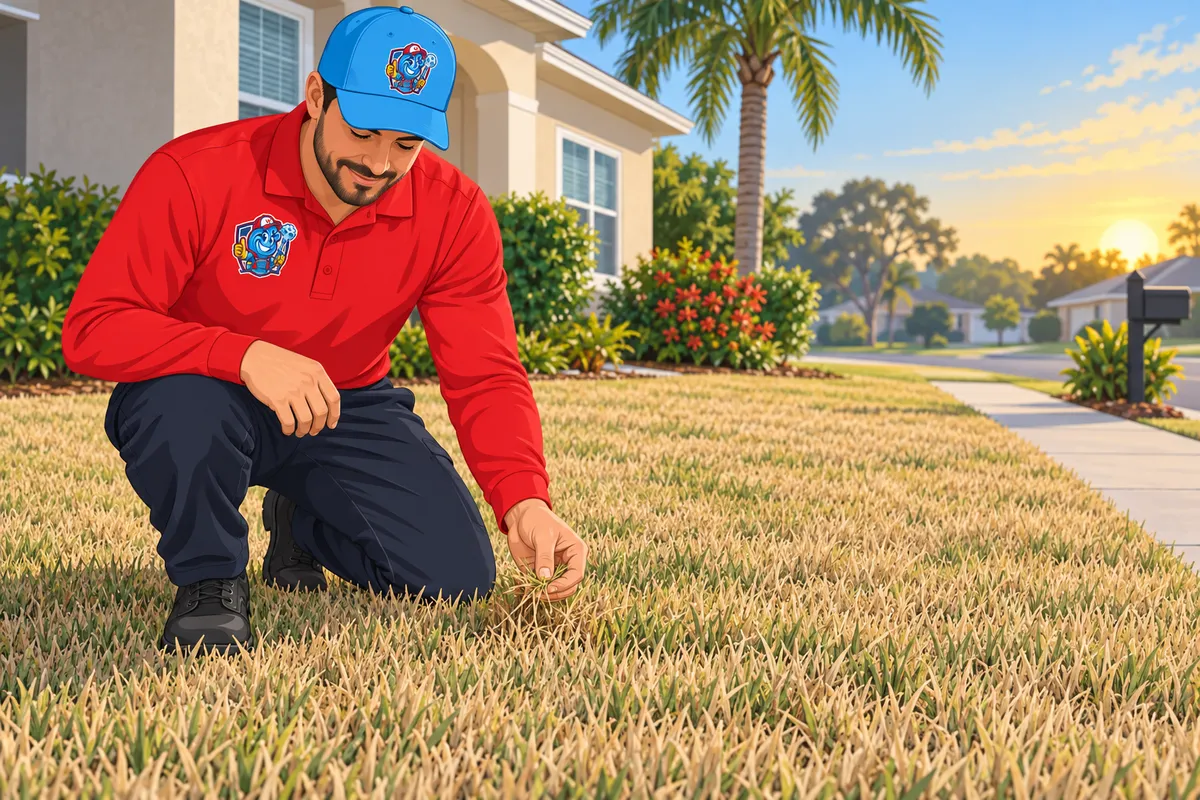
A tan or partly tan St. Augustine lawn in January is normal. ENH5 says St. Augustine goes into winter dormancy in parts of the state and turns brown or tan until springtime. ENH14 calls winter browning a natural process and says there is nothing wrong with the grass.
In North Port you may not see much browning at all, since Gardening Solutions says South Florida lawns typically stay green through the year. Bahia is common on North Port’s larger platted lots, and Floratam St. Augustine on irrigated home lawns. For a closer look at what dormancy looks like next door, see our post on dormant lawns in Venice.
What not to do while the lawn rests: don’t scalp it to tidy it up, and don’t treat a tan lawn as a dead one. Our St. Augustine mowing mistakes post covers the mowing side. Here is how to tell resting grass from a problem: ENH5 describes dormant St. Augustine staying brown or tan only until springtime. If patches stay brown after the rest of the lawn greens up, call a pro to check for disease such as large patch, which ENH5 says is most noticeable in spring and fall.
If winter color truly matters: the honest alternatives
You have two real options besides rye.
- Lawn colorant. Gardening Solutions describes turf colorants as paints and dyes that have traditionally been used on golf courses. It says they give a green lawn all winter without the mowing or watering an overseeded lawn requires.
- Accept the dormancy. In North Port, the lawn may stay mostly green anyway, and a tan stretch after a cold front is the grass resting.
Waves Pest Control’s lawn program covers turf fertility, weed, insect and disease control, and diagnosing what is wrong with a lawn. It doesn’t include mowing or irrigation repair, which go to a landscaper or irrigation contractor. If you want help reading what your lawn is doing this winter, ask about a lawn care quote, or start with our lawn care in North Port page.
Frequently Asked Questions
Should I overseed my St. Augustine lawn with ryegrass in North Port?
UF/IFAS Gardening Solutions says South Florida lawns won’t need overseeding, and ENH14 calls it probably not necessary in frost-free South Florida. You can still do it, but plan on weeks of daily watering, weekly mowing and a spring transition that can weaken the St. Augustine.
When does winter ryegrass die out in Florida?
Gardening Solutions says overseeded grasses die off as temperatures rise in the spring. ENH14 says ryegrass normally dies out in late spring but can hang on if the weather stays cool and the lawn is watered often.
Is my brown St. Augustine lawn dead in winter?
Probably not. ENH5 says St. Augustine goes dormant in parts of Florida and turns brown or tan until spring, and ENH14 calls that a natural process. If patches stay brown after the rest of the lawn greens up, have the lawn checked.